




Last month, I had the opportunity to visit a household plastic injection molding factory. The production manager shared a heartbreaking story: They had just scrapped an entire batch of 20,000 fan casings destined for Europe. The reason wasn’t a wrong plastic formula, but a night shift worker mistakenly installing an old mold. It wasn’t until 8 hours later, at the end of the shift, that the QC (Quality Control) staff took samples for measurement and discovered the defect. Tons of plastic scrap had to be reground, machine runtime was wasted, and worst of all, they missed their delivery deadline. This story is a costly testament to “blind” quality control reliant on manual human checks. That’s when you realize that without a Manufacturing Execution System (MES) to control quality at the source, any effort to reduce scrap is just empty rhetoric on paper.
Key Takeaways:An MES (Manufacturing Execution System) is not just reporting software; it acts as a real-time quality “filter” right on the shop floor. MES prevents scrap (NG rate) by locking machine operations if a worker violates procedures, scanning barcodes to ensure 100% material accuracy (Poka-Yoke), and instantly alarming when a machine shows signs of deviating from standard temperature or pressure parameters. Instead of waiting for QC to conduct random checks at the end of the shift, MES turns every step and every minute of machine operation into an automatic quality gatekeeper, helping factories detect defects from the very first product and preventing them from passing to the next stage.
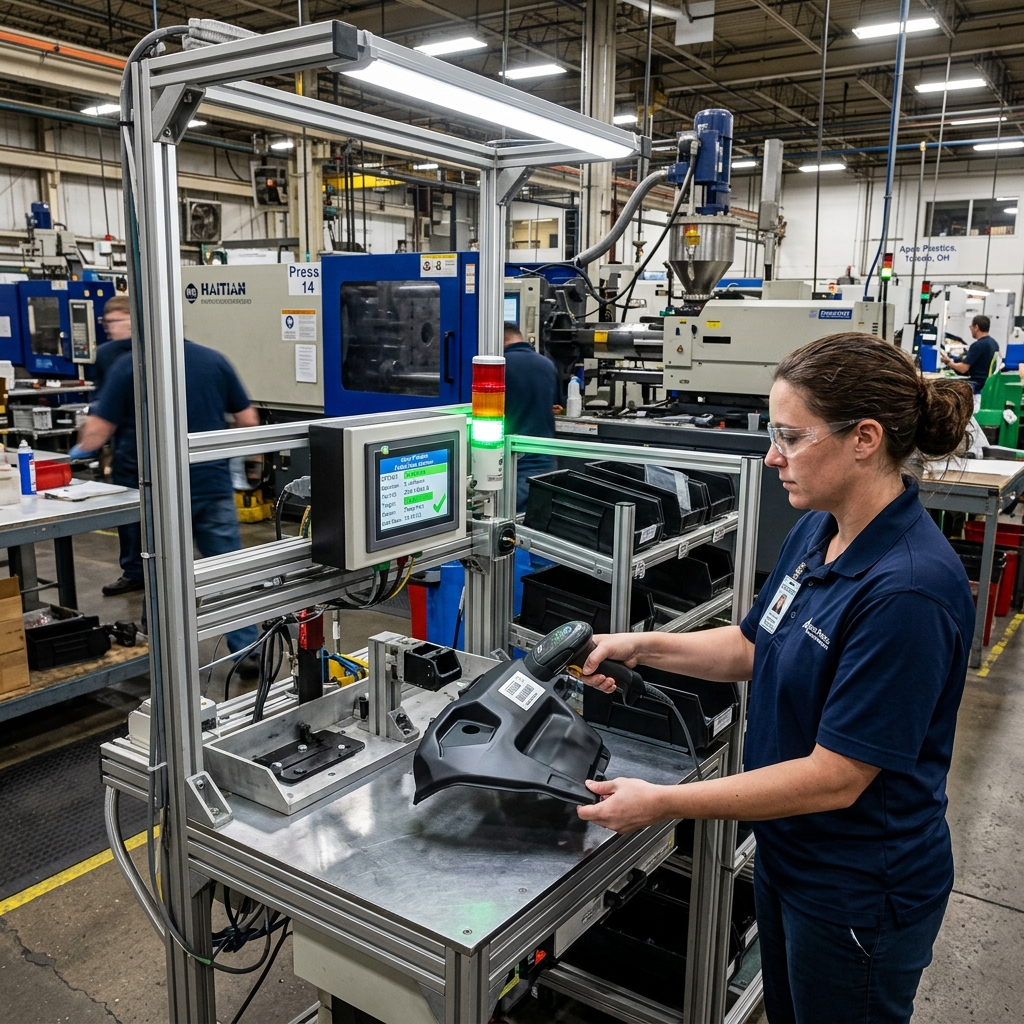
1. Stopping material errors at the source (Electronic Poka-Yoke)
Most severe scrap errors in production stem from feeding the wrong material code. Imagine a tired night shift worker accidentally grabbing a bag of PP plastic pellets instead of ABS to pour into the hopper. Under manual management, this error would silently persist until the finished products emerged cracked or brittle. However, when applying an MES system, the process is fully digitized using barcodes. Before feeding materials, the worker must use a terminal scanner to scan the material lot barcode and the production order barcode. The MES instantly cross-references this with the Bill of Materials (BOM) on the server. If the code is wrong, the MES beeps an alarm and automatically sends a PLC signal to lock the machine, preventing the motor from starting. This “Electronic Poka-Yoke” mechanism completely eliminates human error, ensuring 100% accuracy of the inputted materials.
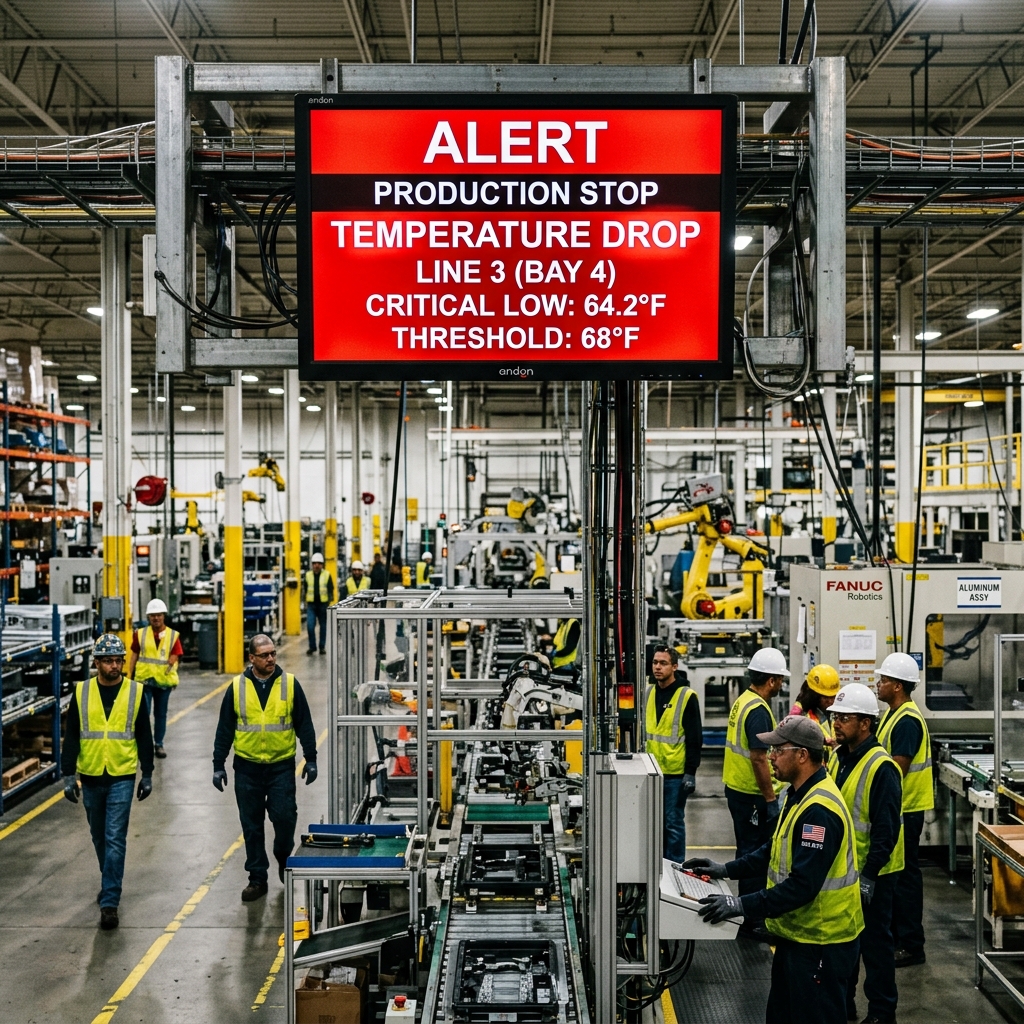
2. Real-time machine parameter monitoring to prevent hidden defects
A plastic injection machine, a stamping press, or an industrial oven never breaks down suddenly; they always exhibit abnormal signs before producing scrap. For instance, if the temperature of a plastic drying oven drops 5 degrees below standard due to a worn heating element, the plastic won’t melt properly, leading to air bubble defects. Traditional management requires workers to manually log parameters on a paper chart every two hours—a time gap wide enough to produce thousands of NG products. In stark contrast, an MES system connects directly to the machine’s IoT sensors to continuously read temperature, pressure, and cycle data every second. The moment the oven temperature drops beyond the allowable tolerance, the MES immediately flashes a red light on the Andon screen, sends an SMS to the maintenance supervisor, and even issues an automatic machine stop command. This immediate intervention saves the entire batch rather than waiting for a useless paper report.
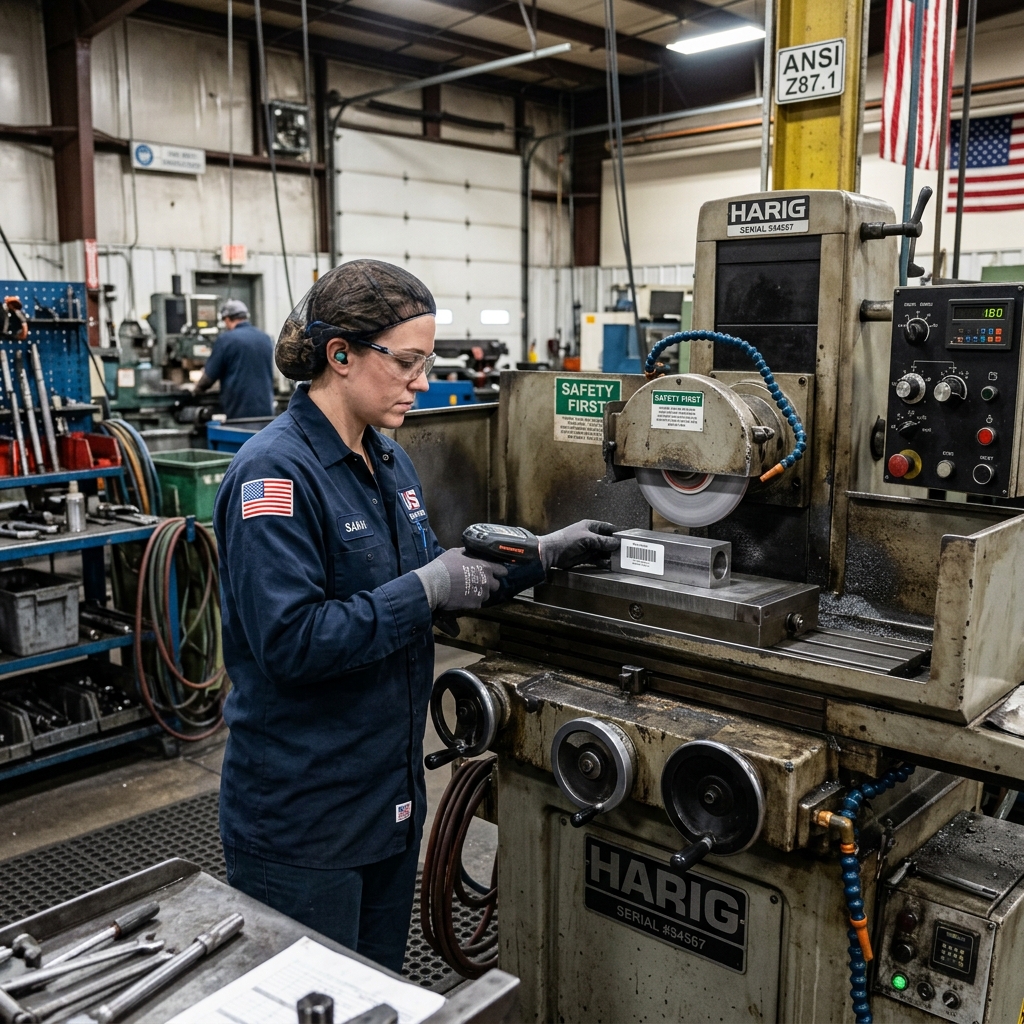
3. Strict Routing Control
In precision machining or electronic component assembly factories, products must pass through multiple stages in a strict sequence (e.g., Cutting -> Milling -> Heat Treatment -> Grinding). If a worker accidentally skips the Heat Treatment step and moves straight to Grinding, the improperly hardened metal structure will ruin the product or break expensive grinding tools. The MES system completely solves this by managing the routing flow. Whenever a basket of semi-finished goods arrives at the Grinding station, the worker must scan the barcode on the basket. The MES checks the history: Does this basket have a digital signature confirming the completion of the Heat Treatment stage? If not, the system refuses to log it, hides the machining drawing on the screen, and prohibits the Grinding machine from operating. This gatekeeper ensures no product can “leapfrog” the process, maintaining consistent and accurate quality.
Comparison Table: Manual Quality Control vs. MES System
| Control Criteria | Manual Management (Paper, Excel) | MES System |
|---|---|---|
| Detecting material errors | Detected only after goods are produced and defective. | Stopped right before the machine runs thanks to Barcode scanning. |
| Machine parameter monitoring | Hand-logged every 1-2 hours, high data latency. | Data pulled directly from machines (IoT) every second, Real-time alerts. |
| Detecting skipped processes | Relies on worker memory and carefulness. | System refuses the next stage if the previous one is incomplete. |
| Response time to defects | Waits until shift end or random QC sampling. | Immediate Andon alert in the first minute, automatic machine stop. |
| Defect traceability | Flipping through logbooks, shift-to-shift blame games. | Takes only 3 seconds to trace the exact worker, machine, and faulty material lot. |
4. Five real-world examples proving MES reduces NG Rate
- Case study 1: Sheet metal stamping factory. An automotive parts factory struggled because workers frequently forgot to spray mold lubricant every 500 strokes, causing mold scratches and ruining the next 2,000 products. With MES, the system locks the press after exactly 500 strokes, forcing the worker to press a confirmation button for lubrication before resuming. The surface scratch rate plummeted from 4% to 0.1%.
- Case study 2: PCBA assembly plant. An SMT workshop often faced missing solder defects because workers mistakenly picked a 10K ohm resistor reel instead of 100K ohm (their casings look identical). After implementing MES, workers must scan the reel barcode and the Pick & Place machine code. The machine only starts if the MES confirms a 100% match, completely ending wrong-component board failures.
- Case study 3: Plastic packaging factory. A plastic film extruder suffered a jammed mixing hopper, reducing the color masterbatch ratio and producing faded film. The MES pulled weight data from the hopper’s Loadcell, detected the colorant discharge was 50 grams below the BOM limit within 2 minutes, and instantly sounded an alarm. The defect was fixed with only 10 meters of wasted film, instead of the usual 1,000 meters.
- Case study 4: Precision CNC turning workshop. After machining 3,000 parts, a turning insert wears out, causing micrometer tolerance deviations. Previously, workers forgot to change the tool, creating mass scrap. The MES integrated a Tool Life Management counter. When the insert reaches product 2,990, the Terminal flashes a yellow warning. At exactly 3,000, the CNC machine’s command flow is locked, forcing the worker to call the supervisor, insert a new tool, and scan to confirm.
- Case study 5: Food processing plant. In a bakery, oven temperature dropped 10 degrees, but the mechanical dial showed it as normal. The MES took direct signals from an accurate Thermocouple inside the oven. Upon detecting the temperature deviation lasting over 3 minutes, the MES automatically stopped the conveyor feeding bread into the oven, saving dozens of trays from being underbaked.
Frequently Asked Questions (FAQs) about NG control on MES
My workers are mostly older; will they know how to use a barcode scanning screen?MES software is designed with a Poka-Yoke (mistake-proofing) mindset. The interface on the Terminal has only 2-3 massive buttons: green for correct, red for error. Workers don’t need to type on a keyboard; they simply use a handheld barcode scanner. Even the most tech-illiterate person takes only 30 minutes to get used to it.
If my shop floor is full of older mechanical machines without PLCs, how does MES manage parameters?For fully mechanical machines, we use external sensors (like optical counters, current clamps for power, or independent temperature sensors) retrofitted onto the machine. These sensors transmit signals to an IoT Gateway data collector and push them to the MES, giving you Real-time data without touching the machine’s old circuit boards.
Can the system categorize scrap (NG) by specific root causes?Absolutely. When QC detects a defect or a worker declares scrap, they select an error code on the screen (e.g., Scratch defect, Warping defect, Missing part). At the end of the day, the MES generates a Pareto chart showing which error code causes 80% of your scrap, at which machine, and by which operator, allowing you to target fixes precisely.
Will constantly stopping the machine for MES alerts reduce my overall output?Initially, you will see more machine stops because quality blind spots that were previously hidden are exposed. However, the actual Yield Rate (good products) increases significantly. Stopping for 5 minutes to fix an error early is always cheaper than running the machine blindly all day to produce a pile of scrap metal for recycling.
When a mass defect is found, how fast is MES backward traceability?Just enter the defective product’s Lot Number into the search bar. Within 3 seconds, the MES draws a tree diagram: What time it was produced, on which machine, by which worker, with which mold, and from which material lot imported on what date from which supplier. You instantly have the evidence to hold the right party accountable.
InfoAsia Việt Nam trở thành nhà cung cấp dịch vụ phần mềm số hóa nhà máy sản xuất cho thương hiệu giày hàng đầu thế giới NEW BALANCE
Công ty TNHH Mây Tre Hà Linh
SAP ERP MES and IOT Project for FVIV Factor
Buwon Industry Co, Ltd
KANGLONGDA VIETNAM PROTECTION TECHNOLOGY COMPANY LIMITED
Shini Group
TA TING PLASTIC (HAI DUONG ) CO., LTD
CÔNG TY TNHH MTV BIÊN HOA SCM