




A shipment of 500,000 printed circuit boards (PCBs) was returned by an international partner simply because a defective solder roll was detected at the Surface Mount Technology (SMT) stage. The Production Director immediately requested traceability to isolate the defective batch. However, paper-based records and disparate Excel spreadsheets forced the QA/QC team to spend three grueling days digging through archives just to pinpoint which boards used that specific solder. The consequences were severe: the entire shipment had to be scrapped, resulting in hundreds of thousands of dollars in damages, not to mention the risk of being blacklisted from the partner’s supply chain. Had this plant possessed a specialized MES system, it would have taken less than 3 seconds to scan the Lot code and intercept the defect right on the production line, well before the finished goods were packaged.
Key Takeaways:
– 100% Traceability: Tightly manage the Lot/Serial codes of every minute component (such as IC chips, capacitors, and inductors) through to the final product, strictly adhering to the rigorous standards of the electronics industry.
– Real-time QC on the Line: Detect and isolate No Good (NG) products immediately at the workstation, establishing an Interlocking mechanism to prevent defective components from drifting to the next stage.
– Overall Equipment Effectiveness (OEE) Monitoring: Continuously measure the run time of SMT machines and wave soldering equipment to analyze bottlenecks and minimize unexplained Downtime.
– Paperless Shopfloor: Fully digitize Work Orders, technical drawings, and Standard Operating Procedures (SOPs), pushing them directly to shopfloor displays.
– Seamless Multi-tier Integration: A manufacturing execution system does not operate in a silo; it communicates bidirectionally with the ERP system, ensuring highly accurate Actual Costing and synchronizing real capacity.
1. Why does the electronics components industry desperately need a true MES system?
The electronics component manufacturing sector is characterized by incredibly high speeds, short product lifecycles, and highly complex Bill of Materials (BOM) featuring thousands, sometimes tens of thousands, of microscopic components per board. When an SMT line mounts tens of thousands of components in a single hour, relying on human effort to control consumption rates, log defects, or track output is an impossible task. Traditional manual management methods are the direct cause of rampant, unexplained Scrap, frequent minor machine breakdowns that disrupt the supply chain, and the embarrassing inability to prove product origins during partner Audits.
Under the mounting pressure of global standards, an MES system acts as the direct coordinating brain on the shop floor. This solution digitizes every breath of the plant, elevating data from mindless machinery to management dashboards in real time. Instead of waiting until the end of the shift to discover how many defective products were produced, the Production Director can immediately see that soldering station #3 has a defect rate exceeding 2% and halt the machine for calibration. This marks the turning point from reactive to proactive management, thoroughly applying Lean Manufacturing principles into practice.
2. Analysis Table: Symptoms of Waste and the Cure from an MES system
To clearly visualize the power of technology, let’s contrast the chronic “illnesses” facing electronics plants with the definitive cures provided by the system.
| Current Symptoms of Waste | Immediate Consequences for the Plant | Definitive Cure from an MES system |
|---|---|---|
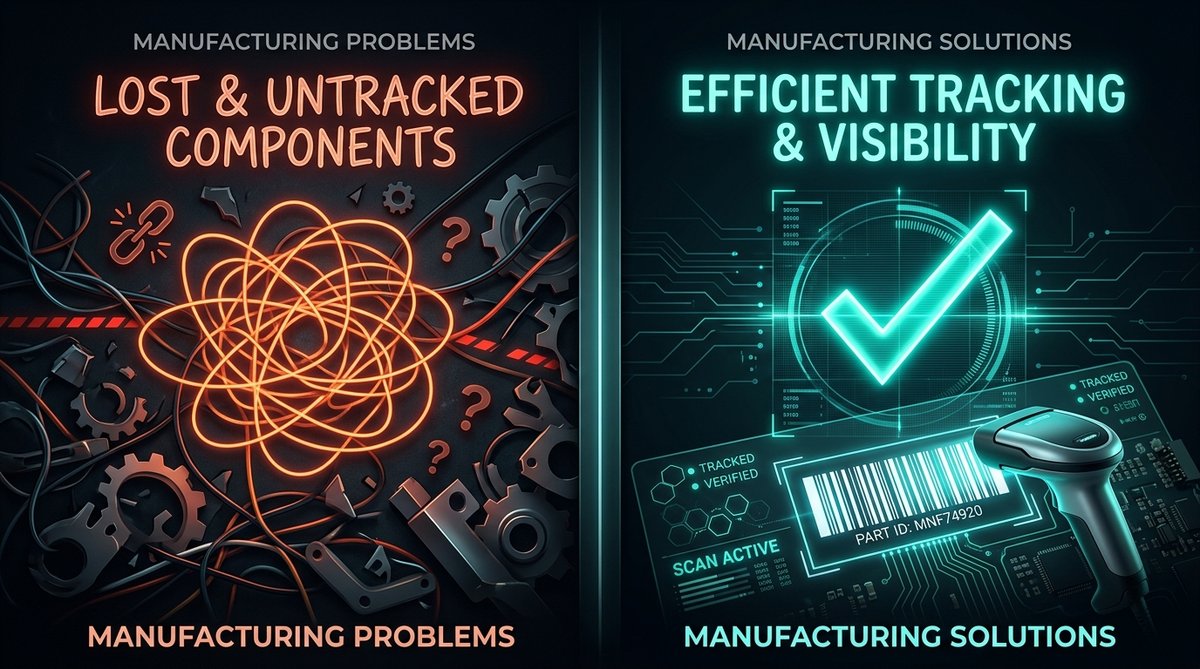
| Lost Components: Unsure which boards component roll A was assembled into during last night’s shift. | Wasting 3-5 days searching during a product Recall, facing compensation claims and the loss of major clients. | Scanning Barcodes/QR codes to link Lot/Serial via the Beas Manufacturing Terminal, instantly generating Genealogy Traceability. |
| Equipment Blind Spots: The SMT machine stops repeatedly, but the supervisor only finds out when walking the floor, unaware of the root cause. | Severe drop in capacity, missed delivery schedules, and sudden spikes in idle labor costs. | Beas APS Dashboard delivers real-time OEE alerts, logging error codes directly from the machine’s PLC for immediate maintenance intervention. |
| Phantom Costing: Accounting calculates costs entirely based on theoretical consumption rates (standard BOM) due to a lack of actual consumption data. | Distorted financial figures; the Board of Directors remains blind to how much solder or chemical waste is actually occurring on the line. | Synchronizing actual material consumption data to the ERP system for each Work Order to ensure 100% accurate Actual Costing. |
| Process Risks: Workers use an outdated version of a circuit schematic printed last week to assemble a new batch. | The entire manufactured batch violates technical specifications, forcing massive Rework or total scrapping. | Pushing the latest versions of technical drawings and SOPs directly to workstation screens, Interlocking to prevent the use of obsolete documents. |
Illustration
3. Three “Lifesaving” Features of an MES system in Electronics Manufacturing
3.1. Closed-loop Quality Management and Interlocking Mechanism
The quality control capability of an MES system is not just about logging pass or fail results; it creates an absolute protective filter right at each workstation. When a board passes through an Automated Optical Inspection (AOI) station and the system detects an open solder joint, the defect data is instantly pushed to the server. The Interlocking mechanism triggers immediately, automatically locking the board from being scanned for the subsequent Function Check Test (FCT) stage. Real-world example: A smartphone camera assembly plant in Bac Ninh used to struggle with workers accidentally skipping the warranty sticker step. Thanks to the process interlocking feature, the system mandates a successful warranty barcode scan before unlocking the next step to box the finished product, driving human error rates down to 0%.
3.2. Multi-dimensional Genealogy Traceability
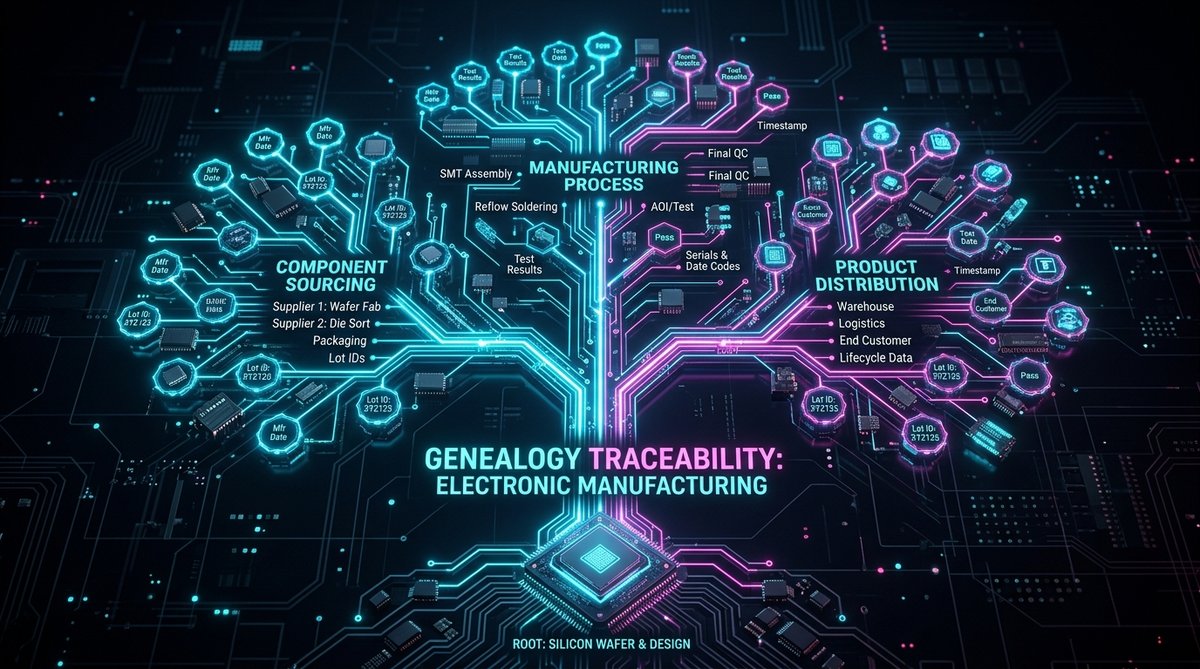
In the electronics sector, traceability is not merely a feature; it is the mandatory “passport” to enter the supply chains of multinational corporations. A specialized MES system builds a multi-dimensional product genealogy tree, allowing you to trace backward (from finished product down to individual components) and trace forward (from a component roll up to all finished products that utilized it). Consider this scenario: A purchasing partner flags a batch of controller chips at risk for short-circuiting. Through the traceability interface, the Quality Director only needs to input that chip’s Lot code. The system instantly draws a tree diagram displaying exactly which warehouse holds the 1,500 boards containing the chip, which customers received them, and which worker assembled them at what time. The entire process takes 5 seconds instead of weeks of digging through ledgers.
3.3. Direct Machine Integration
To completely eliminate latency and data manipulation in manual production reporting, the MES solution connects directly to processing equipment (like SMT machines, soldering stations, and curing ovens) via standard IoT protocols. Data on completed product quantities, Cycle times, and machine operating statuses automatically flow into the data center. From a Cost Accountant’s perspective, this feature is a true liberation. A plant machining plastic housings for network devices historically suffered from unexplained resin shrinkage. Upon connecting their injection molding machines to the MES, they spotted a discrepancy between the machine’s actual cycle count and the scrap volume reported by workers. Armed with objective data, they uncovered an oven temperature error that was warping products, fixing it immediately and saving 15% on monthly material consumption.
Illustration
4. Seamless Integration with Standard ERP Workflows
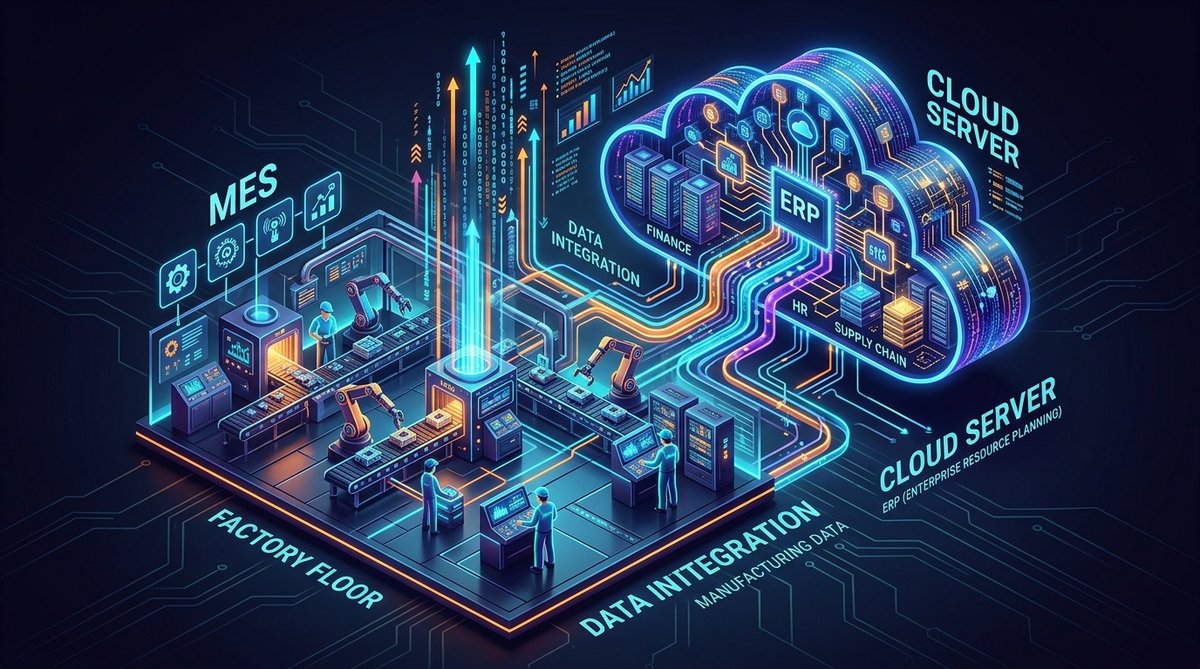
A common pitfall for many businesses is investing in shop floor management software but leaving it isolated from accounting and purchasing modules. An MES system only truly unleashes its maximum power when it is seamlessly “implanted” into the ecosystem of the ERP software. When the sales department closes an order on the ERP, the production order automatically cascades down to the MES to allocate tasks. Conversely, when the shop floor completes a batch, the MES triggers the finished goods receipt and material Backflushing on the ERP entirely automatically. This connection extinguishes all disputes between the production floor and the finance department, creating a Single Source of Truth for the entire business operation.
Illustration
FAQs – Addressing Common Questions on MES system Implementation for Electronics Plants
Q1: Is it feasible to connect legacy SMT machines to an MES system, or are we forced to invest in new equipment?
A1: Your enterprise absolutely does not need to discard old machinery. Professional MES solutions today provide IoT Gateways or intermediary PLCs to read electrical signals (such as stroke counts, green/red/yellow status lights) from legacy machines, translating them into digitized data smoothly pushed to the central server.
Q2: Our assembly workers are accustomed to looking at paper drawings. Can they learn to use interactive screens?
A2: Workstation interfaces (like the Beas Manufacturing Terminal) are designed with a minimalist mindset (UI/UX), featuring large touch buttons and barcode scanner support. Real-world implementations show that workers only need 1 to 2 shifts to become proficient, as they simply “scan the Barcode and follow on-screen instructions” instead of fumbling through paper pages.
Q3: Why shouldn’t we just use the built-in manufacturing module of our accounting software instead of investing separately in a dedicated MES system?
A3: Manufacturing modules within accounting software typically stop at the level of static Bill of Materials (BOM) declarations and end-of-day summary statistics. They lack Real-time QC capabilities, cannot Interlock processes when errors occur, and cannot measure Overall Equipment Effectiveness (OEE). While an accounting module might temporarily suffice to “manage” a shop floor, to actively “control and optimize” a high-paced plant, a dedicated MES system is a mandatory investment.
The competition in electronics component manufacturing no longer hinges on who has a larger factory footprint, but rather on who controls costs and quality more rigorously. Do not let your company’s profits continue to leak through the cracks of manual management systems.
Register today at INFOASIA to experience a Demo of an MES system customized specifically for your plant’s operational blueprint!
InfoAsia Việt Nam trở thành nhà cung cấp dịch vụ phần mềm số hóa nhà máy sản xuất cho thương hiệu giày hàng đầu thế giới NEW BALANCE
Công ty TNHH Mây Tre Hà Linh
SAP ERP MES and IOT Project for FVIV Factor
Buwon Industry Co, Ltd
KANGLONGDA VIETNAM PROTECTION TECHNOLOGY COMPANY LIMITED
Shini Group
TA TING PLASTIC (HAI DUONG ) CO., LTD
CÔNG TY TNHH MTV BIÊN HOA SCM