




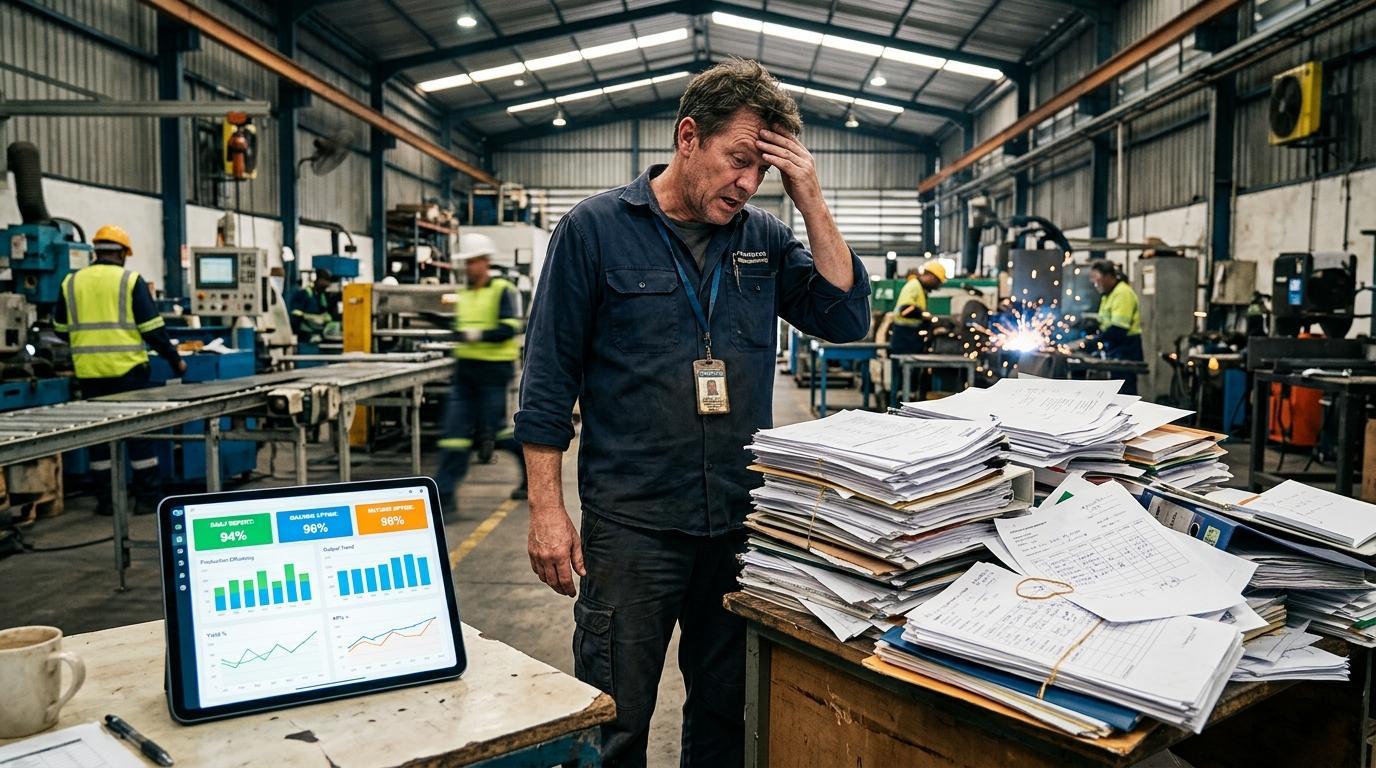
At 5:00 PM on a Friday, a plastics factory is in chaos due to a massive batch of defective products. The production manager frantically flips through crumpled paper reports from the morning to find the cause. The accountant is frustrated because material waste has spiked, but it’s unclear at which stage. The CEO calls to question the delivery schedule for the partner. This chaotic scene is the clearest evidence that manual management has reached its limits. That is when the MES system (Manufacturing Execution System) steps in to break the deadlock, turning arguments into accurate, real-time data reports on a digital screen, while seamlessly connecting with the head office’s enterprise management software.
Key Takeaways:
- Transparent data: The system records information directly from machines and operators, completely eliminating the delays and errors of traditional paper reports.
- Eradicating bottlenecks: By monitoring progress in real-time, managers can easily spot which stage is slowing down and instantly reallocate resources.
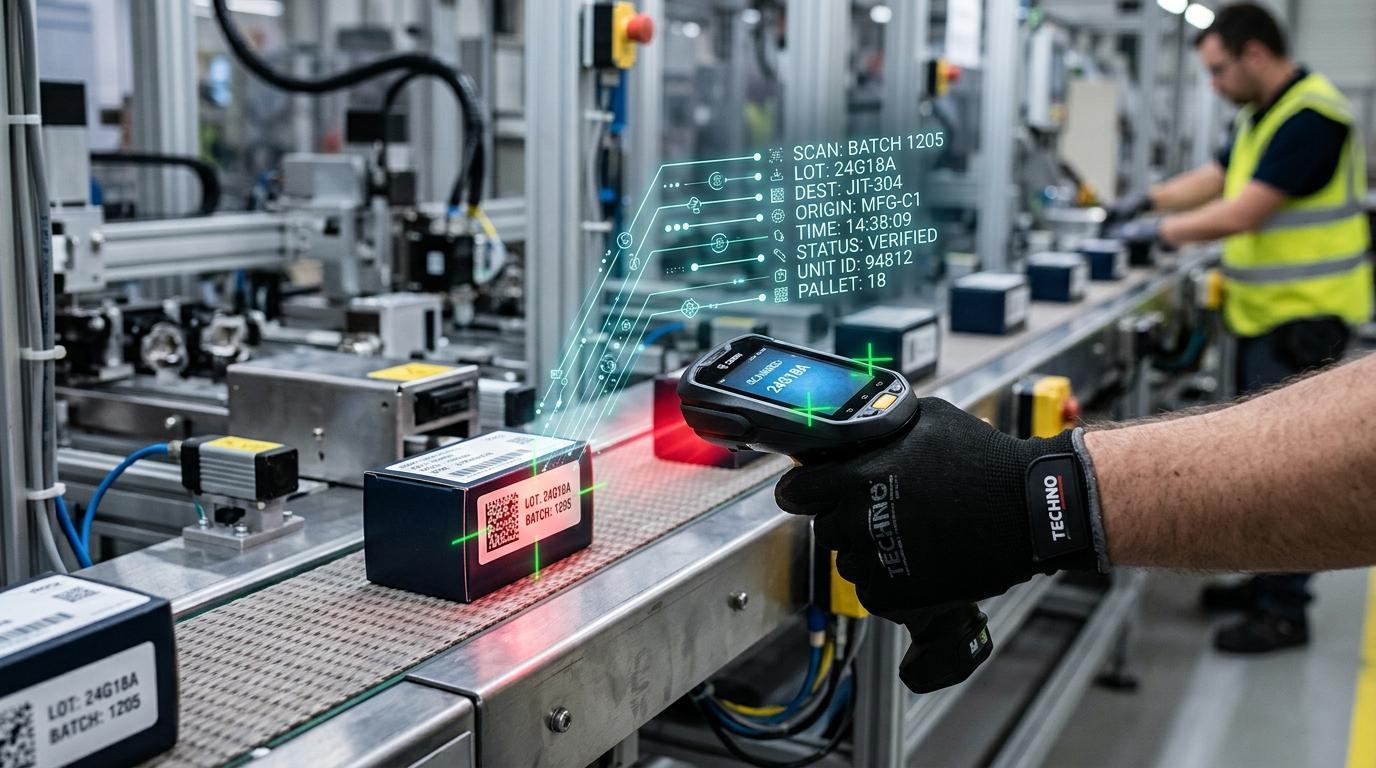
- Instant traceability: No more digging through files; a single barcode scan on the Terminal reveals the detailed genealogy of an entire batch.
- Proactive quality control: Issues alerts immediately when operational metrics exceed safety thresholds, helping to prevent defects before a batch is finished.
- Optimizing OEE (Overall Equipment Effectiveness): Provides a true picture of actual machine capacity, serving as a solid foundation for implementing Lean Manufacturing.
1. Completely Eliminating Delays and “Phantom Reports” from the Shop Floor
How many times has the board of directors received a shift report the next morning, only to realize that the production figures do not match the actual raw materials issued from the warehouse? Implementing an MES system completely solves this “phantom reporting” issue by digitizing all data collection operations. Instead of workers manually writing in logbooks after every shift, production output and material consumption are updated instantly via industrial touch screens. Data from machines flows directly to the control center, accurately reflecting every beat of the assembly line. This not only frees the manager from messy paperwork but also provides cost accountants with “speaking” numbers in real-time. When all information is transparent and instantly visible, the factory puts an end to productivity fraud and cross-departmental finger-pointing. (For example: At an electronics assembly plant, using a specialized MES solution helped them reduce the data discrepancy time between the warehouse and the shop floor by 90%, from 8 hours to less than 5 minutes).
2. Quickly Identifying and Resolving “Bottlenecks”
In a complex production line, just one delayed stage is enough to paralyze the entire system and put delivery schedules at risk. The second immense benefit of an MES system is its ability to illuminate the darkest corners of the process, helping managers clearly see the actual capacity of each workstation. Through intuitive charts on the Beas APS Dashboard, managers can track machine running speeds, idle times, and defect rates at each stage. If plastic injection machine No. 3 suddenly drops in capacity because the mold temperature is not optimal, the system flashes a red warning immediately. From the practical perspective of someone directly running the shop floor, discovering a bottleneck a few minutes early is vital, allowing for timely deployment of extra staff or line rebalancing before it’s too late. (For example: A textile factory used to struggle with thousands of pending products at the packaging stage; since adopting MES, they accurately measured cycle times, reallocated their workforce, and completely wiped out this congestion).
3. Proactive Quality Control and Lot Traceability
In the past, Quality Assurance (QA/QC) merely meant taking random samples at the end of the line and writing results on paper. Today, with a modern management system, quality is “embedded” into every stage. Routing control features force workers to pass a tolerance check at step A before moving the semi-finished product to step B. More importantly, Lot Traceability is a powerful “lifesaver” when a factory faces a product recall crisis. By issuing Lot Numbers and managing them via barcode scanners, the MES system stores the entire history: who the operator was, which material lot from which supplier was used, on which machine, and under what environmental conditions. With just one mouse click, the quality department can pinpoint the exact defective batch without having to destroy the entire month’s export shipment. (For example: A food processing plant exporting to Europe successfully passed a strict partner audit thanks to its ability to trace a finished tin of sardines back to the spice lot code and raw material import date in exactly 30 seconds).
4. Factory “Health Check” Checklist Before Investing in an MES System
To know if your factory is truly “hurting” enough to need specialized medicine, consult the self-assessment symptom checklist below. If your factory exhibits more than 3 signs, it is time to seriously consider this digital solution:
| Waste & Defect Symptoms on the Shop Floor | Solution from the MES System | Urgency Level |
|---|---|---|
| Production output reports to the office are always delayed by at least 1 shift or 1 day. | Update directly via the Beas Manufacturing Terminal for 100% Real-time data flow. | HIGH |
| Workers frequently use the wrong version of Engineering Drawings or BOMs. | Centralized data synchronization; touch screens display the latest SOP/BOM documents. | VERY HIGH |
| Every time there is a mass defect, it takes weeks to dig through paper records to find the root cause. | Lot Traceability via Barcode in just a few seconds. | HIGH |
| Not knowing the exact cause of machine Downtime (breakdown vs. waiting for materials). | Automatically categorizes Downtime reasons, providing core data to calculate OEE. | MEDIUM |
5. Calculating True OEE to Pursue Lean Manufacturing
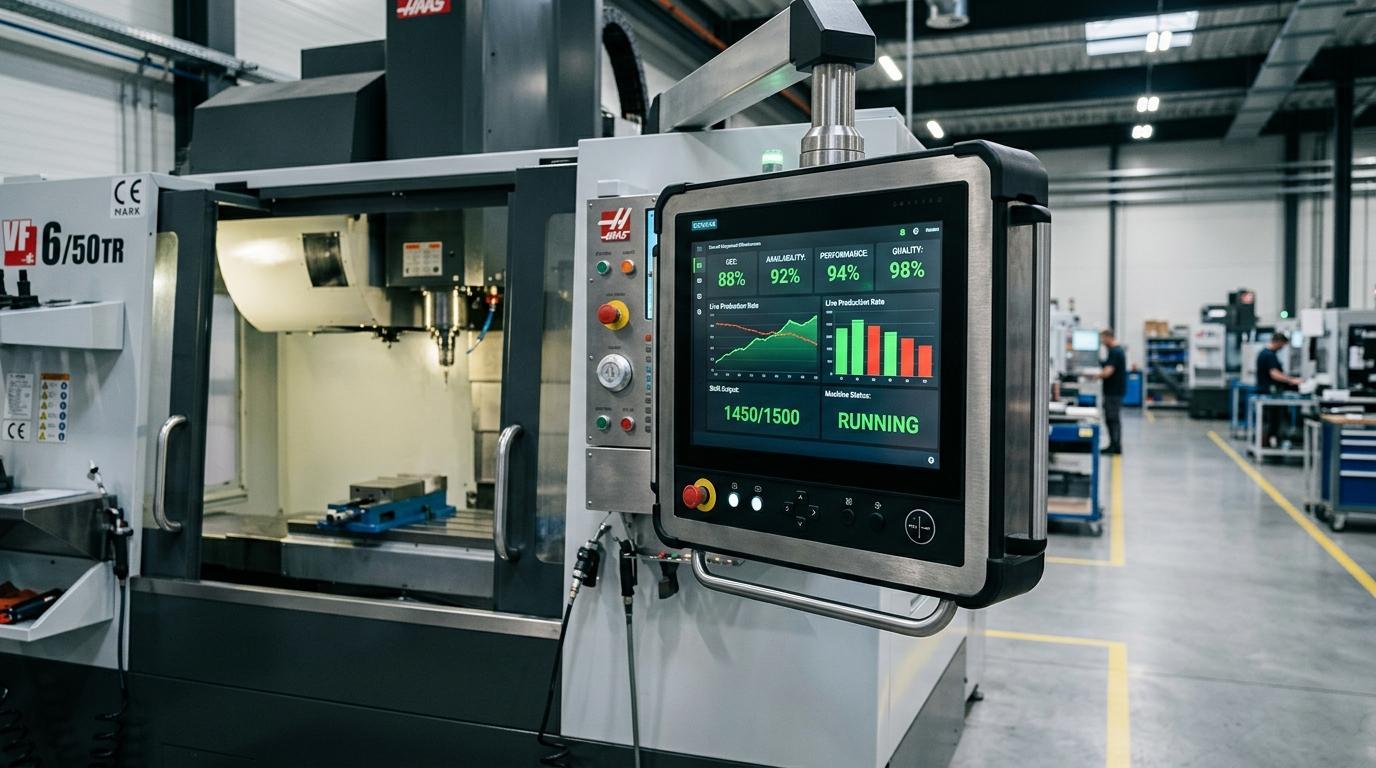
You cannot optimize what you cannot measure. The OEE (Overall Equipment Effectiveness) index is the heart of the Lean Manufacturing philosophy, but it is meaningless if the OEE figure is calculated based on “cooked” manual data reports. The fifth benefit of an MES system is providing a raw, brutally honest dataset about machine status. It accurately measures effective running time (Availability), production speed versus design (Performance), and the standard product rate (Quality). Exposing this truth might initially put pressure on the shop floor team, but from the CEO’s strategic viewpoint, it is a goldmine for continuous improvement (Kaizen). Once every redundant movement and wasted waiting time is exposed, the board can make precise decisions on upgrading predictive maintenance or refining processes. (For example: A precision engineering factory used to boast an artificial OEE of 85%, but when measured transparently with digital data, the actual OEE was only 45% due to excessively long mold setup times; by correctly identifying the weakness, they refined the line and increased actual capacity by 1.5 times after one year).
FAQs – Practical Questions from the Shop Floor
Q1: The shop floor workers are mostly older and not tech-savvy, so how can they use the MES system?
A1: Solutions like the Beas Manufacturing Terminal are minimally designed specifically for industrial environments. The interface features giant buttons and intuitive warning colors. In reality, workers only need to use a barcode scanner or swipe a magnetic card to log statuses, completely eliminating complex typing, so older workers can easily get accustomed within less than a week.
Q2: Is equipping a workstation (Terminal) for every production line too expensive?
A2: It is not necessary to equip expensive hardware. You can perfectly use low-cost industrial tablets or touch screens attached to barcode scanners. Most importantly, the savings generated from reduced scrap and increased productivity (ROI) will cover the hardware costs in just a few short months.
Q3: Is it necessary to clean up and reorganize factory processes before installing the software?
A3: Absolutely necessary! Core software is merely a tool that multiplies power. If you digitize a messy process, you get a “digital mess”. The project implementation phase is a golden opportunity for consultants and managers to break down and rebuild processes, standardize material codes, and restructure workflows for maximum optimization.
Conclusion
The transition from grease-stained paper reports to brightly lit Dashboards is not just a technological leap, but a transformation in management mindset. Contrary to popular fear, an MES system does not strip power away from the production manager; instead, it equips them with a sharp “radar” to command the shop floor. If your factory is ready to break free from the confinement of paperwork, contact InfoAsia’s enterprise management software immediately. Register to experience a deep-dive MES solution Demo customized specifically for your factory’s operational layout at INFOASIA to feel the power of Real-time data!
InfoAsia Việt Nam trở thành nhà cung cấp dịch vụ phần mềm số hóa nhà máy sản xuất cho thương hiệu giày hàng đầu thế giới NEW BALANCE
Công ty TNHH Mây Tre Hà Linh
SAP ERP MES and IOT Project for FVIV Factor
Buwon Industry Co, Ltd
KANGLONGDA VIETNAM PROTECTION TECHNOLOGY COMPANY LIMITED
Shini Group
TA TING PLASTIC (HAI DUONG ) CO., LTD
CÔNG TY TNHH MTV BIÊN HOA SCM