




IoT technology is revolutionizing the entire warehouse management process in modern factories. In a fast-paced production environment, inventory control requires absolute precision. Traditional management systems are exposing many major flaws. Data is fragmented, latency is high, and human errors occur constantly. By applying this solution, businesses can completely resolve those bottlenecks. Smart sensors will continuously collect data and instantly warn of any risks.
Key Takeaways:
- Real-time monitoring: The connected network of things collects data 24/7 without interruption.
- Complete automation: Devices communicate and transmit data to each other automatically.
- Instant alerts: Prevent the risk of goods damage and machinery failures.
- Deep integration: IoT data is pushed directly to the ERP platform for analysis.
1. The pain of warehouse keepers lacking IoT technology
1.1. Blind data and delays
Have you ever managed a 5,000-square-meter warehouse? Searching for a component pallet is like finding a needle in a haystack. The warehouse keeper must use a walkie-talkie to ask every forklift driver. They do not know the exact real-time location of the goods. Data on the software and reality often conflict. Month-end inventory checks are always a nightmare. The lack of IoT technology keeps everything stagnant.
1.2. Risks regarding storage conditions
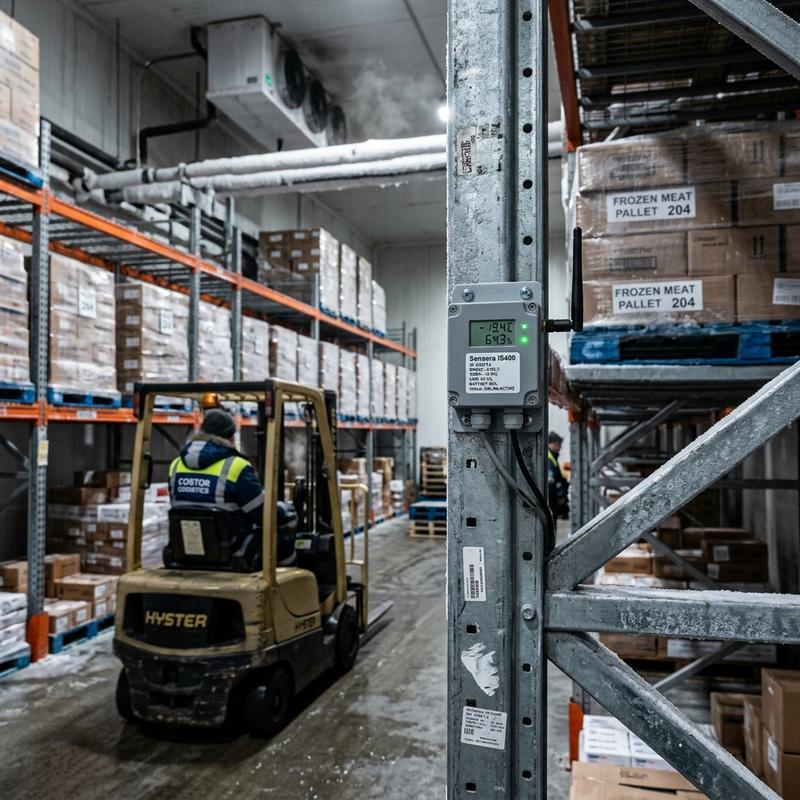
Many items like pharmaceuticals or chemicals are very demanding. They need to be stored at precise temperatures and humidity levels. Manually recording temperatures on a clipboard is highly risky. Workers might forget to log it or write fake data. This lack of transparency leads to degraded product quality. Customers will complain and return the goods.
Illustration
2. IoT technology changes the game in warehouse management
2.1. Environmental sensors and RFID
The smart sensor system brings sharp “senses” to the warehouse. RFID tags are attached directly to each goods pallet. RFID antennas will automatically record when a pallet passes through the door. The inbound and outbound process happens entirely automatically. No one needs to hold a barcode scanner. Besides, temperature sensors continuously send data. If the warehouse temperature exceeds the limit, the alarm siren will sound.
2.2. AGV self-driving vehicles and smart robots
The future of warehouses cannot lack AGVs. These robots are equipped with smart sensors for self-navigation. They receive commands directly from the warehouse management software. AGVs automatically move to the racks and pick the exact pallet. Thanks to the connected network, AGVs communicate with each other to avoid collisions. This helps increase the picking speed by 3 times. Workplace accidents are also reduced to the lowest level.
2.3. Practical example: Managing plastic totes
You have thousands of plastic totes constantly circulating in the shop floor. These totes contain expensive components and go through many assembly lines. With this solution, each tote is attached with a tiny RFID tag. The workshop doors are equipped with radio wave antennas. When a vehicle carrying totes passes by the door, the system records it automatically. Nobody needs to stop and scan barcodes manually. You know exactly which workshop the component tote is currently in. If a tote gets lost, the system will alert immediately. IoT technology helps stop the risk of asset loss.
3. Integrating IoT data into the big picture
3.1. The perfect combination
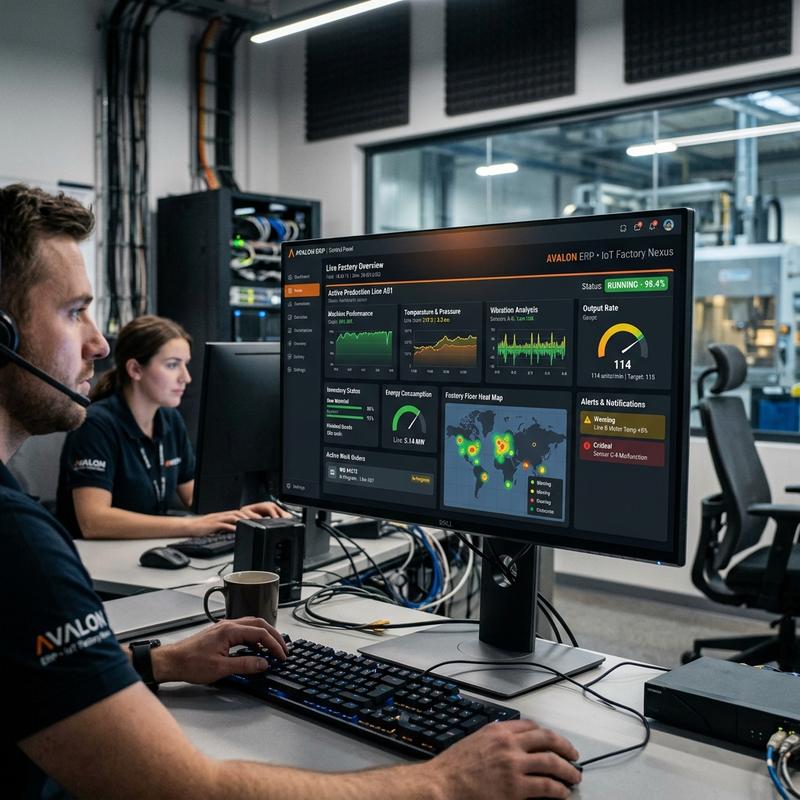
Data from smart sensors will be useless if it stands alone. It needs to be analyzed and processed centrally. This is where the manufacturing execution solution comes into play. You can refer to industry standards from Boyum Solutions. They provide platforms that connect directly with IoT sensors. Machine data on the shop floor is pushed straight to the management screen.
Illustration
3.2. IoT technology in supply chain management
When combining this technology with an MES System, the factory will have a digital brain. All material shrinkage activities become transparent. Cost accountants do not need to wait until month-end to reconcile. If you want to scale up, build a solid data core. Check out ERP software solutions now to synchronize your supply chain. Your business will save countless resources.
4. FAQ – Frequently asked questions about factory IoT technology
Is the cost of implementing this system too expensive for SMEs?
Currently, the cost of IoT hardware like sensors and beacons has dropped significantly. You do not need to invest in the entire system at once. You can start by installing temperature sensors for the cold storage. Then expand to location tracking using RFID tags later.
Can IoT be used if the Wi-Fi network in the factory is very weak?
Industrial IoT devices do not solely depend on Wi-Fi. They often use Low Power Wide Area Network (LPWAN) connectivity standards. Examples include LoRaWAN or NB-IoT technologies. These waves penetrate metal obstacles very well and have extremely long coverage.
How long does it take for warehouse staff to get used to the new system?
The nature of IoT technology is automation and running in the background. Devices automatically collect data and report continuously. Warehouse staff barely have to perform any additional manual operations. They only need to learn how to read alerts on a tablet or phone screen.
InfoAsia Việt Nam trở thành nhà cung cấp dịch vụ phần mềm số hóa nhà máy sản xuất cho thương hiệu giày hàng đầu thế giới NEW BALANCE
Công ty TNHH Mây Tre Hà Linh
SAP ERP MES and IOT Project for FVIV Factor
Buwon Industry Co, Ltd
KANGLONGDA VIETNAM PROTECTION TECHNOLOGY COMPANY LIMITED
Shini Group
TA TING PLASTIC (HAI DUONG ) CO., LTD
CÔNG TY TNHH MTV BIÊN HOA SCM