




According to internal surveys, over 70% of mid-sized manufacturing plants in Vietnam lose at least 5% of their materials and scrap annually simply due to a lack of process control on the shop floor. 5% might sound small, but on a scale of tens of billions in raw materials, that is your entire net profit quietly slipping down the drain. Why does this happen? Because the factory director doesn’t know that Machine No. 3 has been idling for 2 hours, or that a batch of plastic was mixed with the wrong virgin ratio. That is the dark curtain an MES system is designed to tear down.
Key Takeaways:
- Core concept: To answer what an MES system is, it is a manufacturing execution software acting as a digital camera attached directly to every corner of the factory, connecting machine data to the ERP software system.
- Eliminate data latency: No more paper reports submitted at the end of the shift. Data is recorded in real-time as soon as workers interact at the terminals.
- Optimize practical capacity: The system automatically extracts downtime and accurately calculates Overall Equipment Effectiveness (OEE) to eliminate bottlenecks.
- Traceability: Allows saving the “family tree” of each finished product, preventing risks of penalties or canceled contracts from strict foreign partners.
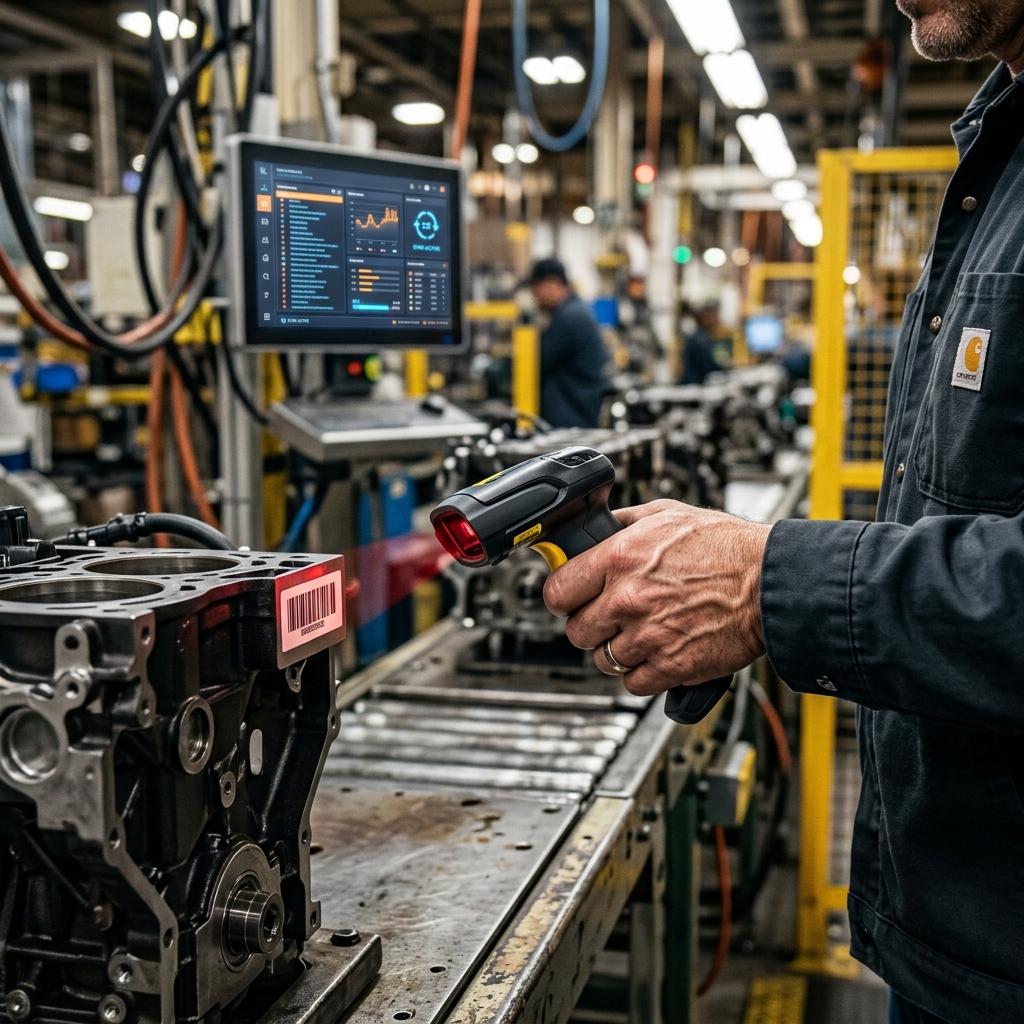
1. The harsh truth on the shop floor without digital tools
Most businesses today believe that equipping accounting software or designing their own Excel spreadsheets is enough to manage production. However, when a Work Order is printed on paper and handed down to the shop floor, the management department is almost “blind” regarding its progress.
They don’t know how many extra meters of fabric the workers used, whether the furnace temperature dropped, and most importantly, they cannot intercept a technical defect from stage 1 before it slips into the final packaging stage. The absence of specialized software solutions like an MES system turns the factory into a “black box.” Inputs and outputs can be measured, but no one can measure the losses occurring inside that black box.
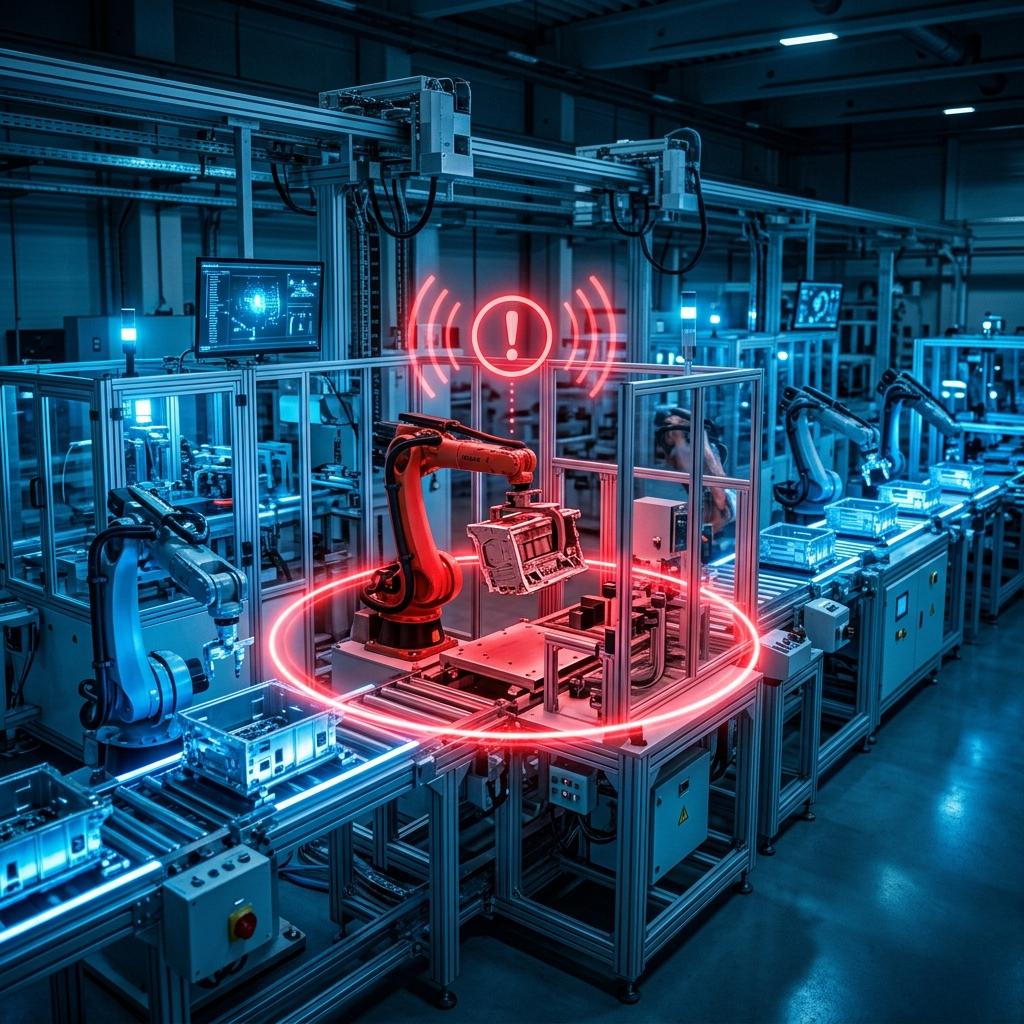
2. What is an MES system and how does it eliminate waste?
Simply put, an MES system (Manufacturing Execution System) is the control brain on the ground, while ERP is the strategic brain in the sky. Instead of waiting for workers to write things down manually, MES software (like the Beas Manufacturing solution) sets up electronic operator stations (Terminals) along the production line.
When workers start their shift, they just scan the Barcode on the work order. When a machine breaks down, they touch the screen to select the downtime reason. By directly digitizing human behavior and machine status, MES pushes data straight to the director’s screen (Dashboard). Every incident is detected the moment it happens. The concept of Lean Manufacturing only truly makes sense when you possess such an instant data stream.
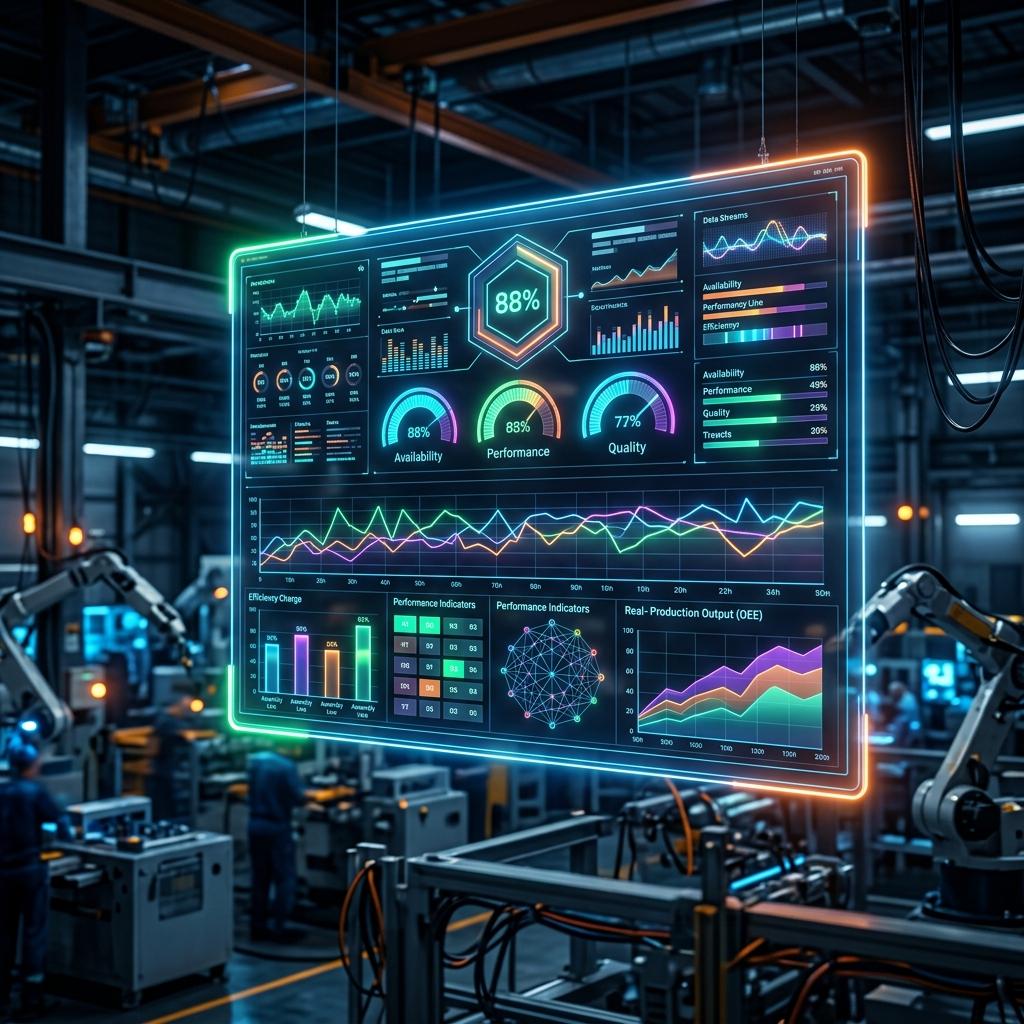
3. Comparison matrix: Symptoms and when to upgrade technology
How do you know if your factory has reached its limit and needs an emergency rescue from an advanced MES system? Cross-check with these 4 critical symptoms:
| Waste symptoms at the factory | Root Cause | Solution from manufacturing execution software |
|---|---|---|
| Progress blindness: Having to call and run down to the shop floor constantly to check if an urgent order has finished stage 2. | No digital tools to record the volume of completed work in real-time. | Equip Terminals. Workers report progress with a simple Barcode scan. |
| Batch traceability nightmare: Taking up to 3 days digging through archives just to find which batch Supplier A’s materials were used for. | Managing Lot/Serial with scattered paper logs and stock cards. | 360-degree automated Traceability. It takes just 5 seconds to redraw the entire product family tree. |
| Sky-high scrap rates: Defective products happen at the cutting stage but are only discarded at the final packaging step. | Lack of cross-Quality Control (QC) mechanisms between stations to stop errors at the source. | Set technical barriers: The system refuses to let semi-finished goods move to the next station if the defect rate exceeds the limit. |
| “Delusional” OEE index: Productivity reports always hit 90%, but deliveries are still constantly late. | Staff manually forge machine run times, hiding downtime waiting for materials. | Collect independent operational data, automatically separating machine Setup time, actual run time, and Downtime. |
4. Explore practical Case Studies
- Case Study 1 (Plastics Industry – Director’s perspective): The most expensive cost in a recycled plastic factory is controlling the blending ratio (BOM). By connecting the MES system directly to electronic scales at the mixing tank, we accurately control every gram of virgin plastic resin loaded in, completely preventing workers from arbitrarily adding materials.
- Case Study 2 (Seafood Industry – Warehouse Manager’s perspective): The defrosting shelf-life of tuna is very short. The FEFO (First Expired, First Out) algorithm of the shop floor management software automatically points out the exact Pallet position to export on the handheld scanner, saving tons of raw materials from being thrown away due to forgetfulness.
- Case Study 3 (Mechanical Industry – Scheduler’s perspective): The APS Dashboard exposes the entire practical capacity picture of 10 CNC milling machines. I can see that machine No. 2 is overloaded while machine No. 5 is idle, thereby Dragging & Dropping Work Orders to another machine to break bottlenecks and shorten delivery lead time.
- Case Study 4 (Assembly Industry – Accountant’s perspective): Thanks to tracking the actual machine run time of each worker closely, I can accurately calculate the Direct Labor Cost allocated to each work order, instead of averaging it out evenly like before.
5. Tough Q&A Corner (FAQs)
Question 1: Does this system have to run in parallel with an ERP?Answer: It can run independently, but that will create a Data Silo. When you integrate directly with overall management software, every change on the shop floor (from material loss to labor hours) immediately flows back into the company’s financial ledger. You buy software to synchronize, not to create more manual data entry work for accountants.
Question 2: Older workers with poor eyesight, can they operate the software?Answer: The shop floor Terminal interface is not like an office computer screen. It is designed with a Touch-screen mindset featuring large buttons and clear warning colors. Workers just hold a Barcode scanner gun and touch the “Start” button, no keyboard typing required. Just 1-2 hours of training and they can master the operation.
Question 3: Is the cost of deploying this MES system equal to our entire revenue?Answer: If you weigh the cost of buying paper and ink, the salaries paid to 3 Excel data entry staff every month, and especially the massive amount of money you lose because defects aren’t stopped in time, the MES system cost is incredibly tiny. Solutions for SMEs today all have pre-packaged versions, with deployment times measured in months and extremely fast Return on Investment (ROI).
Question 4: How does the system know if a machine is stopped due to an electrical fault or out of materials?Answer: When connected to IoT, sensors will notify the software that the stamping machine has stopped operating for over 3 minutes. At this point, the terminal screen will flash red and force the worker to select a downtime reason (Power outage, Broken blade, Out of blanks…) from a predefined list. This data is a “gold mine” for the maintenance team to analyze and plan preventive repairs in the future.
Do not let your factory sink in a data fog. Register to experience a specialized MES system demo customized exclusively for your factory’s operational layout at INFOASIA today.
InfoAsia Việt Nam trở thành nhà cung cấp dịch vụ phần mềm số hóa nhà máy sản xuất cho thương hiệu giày hàng đầu thế giới NEW BALANCE
Công ty TNHH Mây Tre Hà Linh
SAP ERP MES and IOT Project for FVIV Factor
Buwon Industry Co, Ltd
KANGLONGDA VIETNAM PROTECTION TECHNOLOGY COMPANY LIMITED
Shini Group
TA TING PLASTIC (HAI DUONG ) CO., LTD
CÔNG TY TNHH MTV BIÊN HOA SCM