




When deciding to invest in next-generation enterprise resource planning (ERP) systems, most business leaders spend the majority of their time comparing software features, cloud capacity, or licensing costs. However, reality from hundreds of digital transformation projects has proven a harsh rule: No matter how excellent the software is, it will fail if placed in the hands of an incompetent contractor.
Choosing the right AI ERP implementation partner is not merely about finding an entity to install source code, but selecting a “chief architect” to shape the entire operational mindset of the enterprise for the next decade. This article dissects the hidden risks in implementation, the standards for evaluating contractors, and the practical battle-tested capabilities of InfoAsia.
1. Decoding the Causes of Failure: Why Do Many AI ERP Projects “Die Young”?
Many organizations expect that simply “throwing” artificial intelligence technology into an old system will automatically yield profits. The truth is much harsher:
- The “Garbage In, Garbage Out” Trap: If the implementation company lacks data standardization capabilities, they will merely move messy manual processes and dirty data into the AI environment. The result is that the system will produce completely skewed forecasts, multiplying costs exponentially.
- Lack of Localized Business Mindset: Many consulting firms import foreign management models verbatim without fully understanding the specific accounting legalities (VAS) or the operational habits of Vietnamese workers, leading employees to find ways to avoid using the software.
- The Post Go-Live Void: Many contractors retreat immediately after handing over the system and receiving full payment, leaving the enterprise struggling with how to fine-tune machine learning models when the market fluctuates.

This image serves as an illustration for the article to help readers understand better
2. The Golden Standard for Evaluating an AI ERP Contractor’s Capabilities
To protect multi-million dollar budgets, leadership must evaluate partners based on stringent technical and practical criteria rather than just listening to flashy presentations:
- Open Data Architecture Control (Data Governance): The contractor must demonstrate the ability to build clean data pipelines, seamlessly connecting financial modules, warehousing, and IoT sensor systems on the factory floor.
- Extensive Experience in Complex Manufacturing Problems: The partner must have a deep understanding of multi-level bill of materials (BOM) management, lean scheduling, and optimizing changeover times on the shop floor.
- Global Technology Partner Ecosystem: Possessing high-level certifications from major software vendors (such as the exclusive Gold Partner tier of SAP) is the strongest guarantee for access to core technologies.
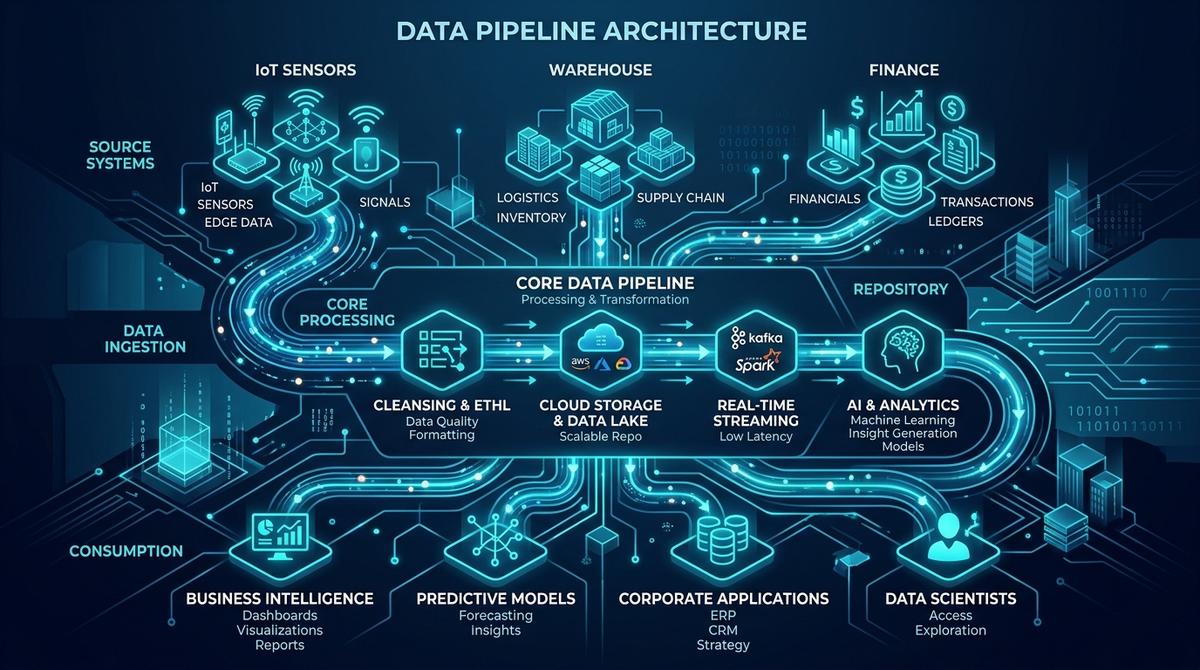
This image serves as an illustration for the article to help readers understand better
3. Comparison Chart: Risks of the Wrong Partner vs. Value of the Right Expert
To clearly see the difference between a conventional integration unit and a true AI ERP implementation expert, the table below summarizes the critical aspects:
| Evaluation Criteria | Conventional Implementation Contractor | Specialized AI ERP Expert (Like InfoAsia) |
|---|---|---|
| Initial Survey Phase | Rote installation based on existing customer requirements, little process critique. | Conducts Business Process Reengineering (BPR) and thoroughly cleans original data before digitization. |
| Nature of Delivered Technology | Delivers static software, only recording historical data (Descriptive). | Delivers a closed-loop automation system (Closed-loop AI), forecasting real-time trends. |
| Crisis Management Capability | Confused when data flow conflicts or hardware integration errors arise. | Smoothly handles API synchronization problems, multi-layer security according to international standards (ISO 27001). |
| Long-Term Commitment | Terminates professional responsibility after handing over instruction manuals. | Provides 24/7 technical support, continuously fine-tuning algorithms according to business fluctuations. |
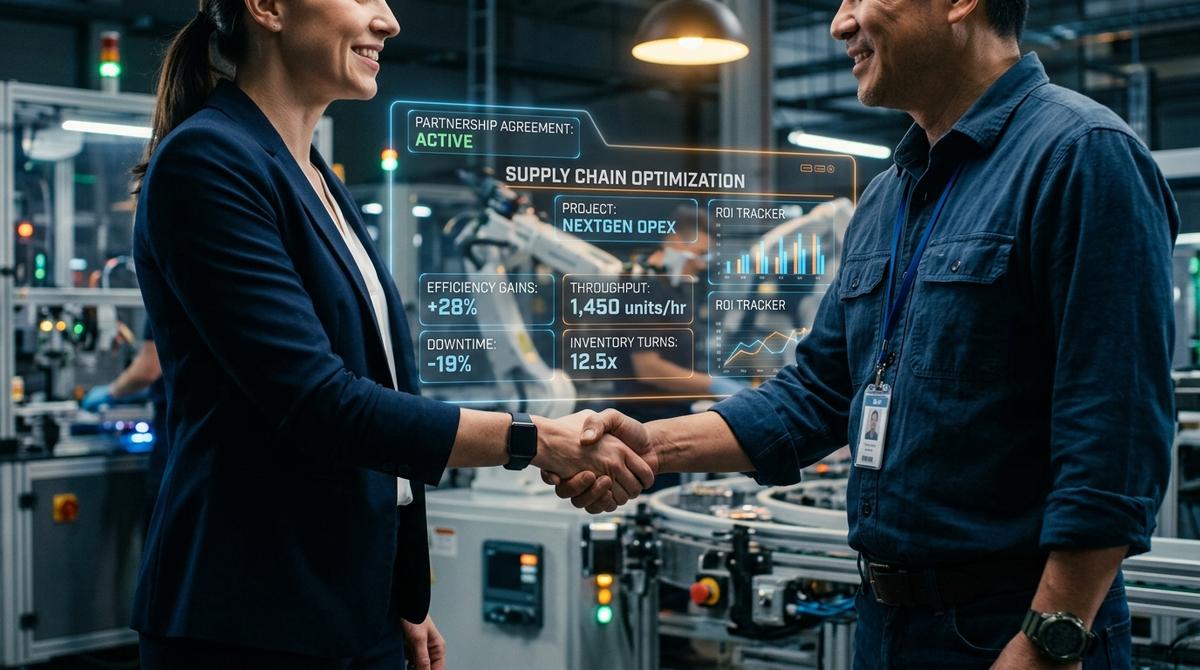
This image serves as an illustration for the article to help readers understand better
4. InfoAsia – A Guarantee of Competence in SAP ERP Implementation and Smart Solutions
Amidst a fiercely competitive technology market, InfoAsia asserts its position as a name that guarantees quality, prestige, and peak practical capability.
- Solid Backing from an International Corporation: Founded in 2016, InfoAsia is a member company directly under Cadmen Taiwan – a technology conglomerate with a rich operating history since 1980 and a steadfast exclusive Gold Partner of SAP.
- Battle-Tested Mark Through Major Projects: InfoAsia has made a strong mark by successfully implementing factory management systems and integrating smart supply chains for many large multinational corporations (such as the automation project for global shoe brand New Balance, FVIV factory, Buwon Industry, Shini Group, etc.).
- Exclusive “Tailor-Made” Methodology: Instead of applying a one-size-fits-all formula for every customer, InfoAsia combines the robustness of an international standard platform with flexible customization capabilities, helping Vietnamese enterprises optimize investment capital and sustainably master technology.
5. Frequently Asked Questions (FAQs)
Q1: Do Small and Medium Enterprises (SMEs) necessarily need to work with large contractors?
Answer: It is absolutely necessary if the enterprise has a strong orientation to scale up. Reputable units like InfoAsia provide lean solution packages (like SAP Business One integrated with smart tools), helping SMEs optimize initial costs while still possessing an international standard management platform.
Q2: How to verify the authenticity of an implementation company’s capabilities?
Answer: Enterprises should ask contractors to take them on a tour of actual factories that have been successfully implemented, verify the SAP Partner certification directly on the official system, and request a PoC (Proof of Concept) trial run on sample data.
Q3: Will company operational data be leaked when combined with smart models?
Answer: Absolutely not. Professional implementation units always adhere to strict security standards like ISO 27001 and SOC 2, applying multi-layer encryption and detailed decentralization down to each data field.
Q4: How long does a standard project implementation roadmap typically take?
Answer: For SMEs, the standard time is usually 3 to 6 months. For large-scale manufacturing corporations, the roadmap extends from 9 to 18 months under the strict supervision of technical experts.
Q5: How does InfoAsia support customers after the project officially goes live?
Answer: InfoAsia provides continuous 24/7 technical support services, periodically evaluates the accuracy of automated data flows, and accompanies the customer’s long-term business development strategy.
Conclusion
The success of a technological revolution does not lie in the AI machine itself, but in the skill of the operating engineer. Choosing the right AI ERP implementation company with rich practical experience and a deep understanding of factory management problems like InfoAsia will help enterprises take shortcuts, eliminate the risk of budget waste, and build a solid launchpad to dominate the market.

InfoAsia Việt Nam trở thành nhà cung cấp dịch vụ phần mềm số hóa nhà máy sản xuất cho thương hiệu giày hàng đầu thế giới NEW BALANCE
Công ty TNHH Mây Tre Hà Linh
SAP ERP MES and IOT Project for FVIV Factor
Buwon Industry Co, Ltd
KANGLONGDA VIETNAM PROTECTION TECHNOLOGY COMPANY LIMITED
Shini Group
TA TING PLASTIC (HAI DUONG ) CO., LTD
CÔNG TY TNHH MTV BIÊN HOA SCM