




In the global landscape of digital transformation, integrating Artificial Intelligence (AI) into Enterprise Resource Planning (ERP) systems is no longer a fleeting technology trend. It has become a strategic turning point, empowering organizations to completely resolve fragmented data issues and comprehensively optimize operational performance.
The convergence of centralized management platforms and advanced machine learning algorithms is reshaping how businesses make decisions. This article dissects the technical essence, core technology modules, deployment strategies, and the leading practical capabilities of InfoAsia in the AI ERP era.
1. What is an AI ERP? (Core Components and Practical Examples)
AI ERP (Artificial Intelligence in Enterprise Resource Planning) is the deep integration of cutting-edge AI technologies into the core management system, automating complex tasks and providing intelligent forecasting based on real-time data.
To understand how AI modules operate in real-world scenarios, we can analyze the key components with illustrative examples:
- Machine Learning (ML):
- Concept: Enables the system to learn from historical data to identify trends without prior manual programming.
- Practical Example: In the warehouse management module of an electronic component factory, machine learning algorithms automatically analyze historical sales data and seasonal fluctuations to accurately forecast raw material demand (functioning similarly to an MRP system but with self-learning capabilities). Consequently, it auto-adjusts safety stock levels, helping to reduce excess inventory by up to 25%.
- Natural Language Processing (NLP & LLM):
- Concept: Helps computers understand, interpret, and communicate in human language, allowing users to converse directly with the system.
- Practical Example: Instead of navigating through complex menus to find the monthly revenue report, a sales director simply types or speaks to a virtual assistant: “Show me a bar chart comparing the revenue of product line A between this quarter and the last.” The system instantly extracts the data and displays a visual chart within seconds.
- Predictive Analytics:
- Concept: Uses statistical algorithms to determine the likelihood of future events.
- Practical Example: Based on vibration and temperature data collected from IoT sensors on a plastic injection molding line, the AI ERP performs predictive maintenance. It issues a warning 7 days before a component is at risk of failure, completely avoiding sudden machine downtime that could cost thousands of dollars.
- Robotic Process Automation (RPA) & Computer Vision:
- Concept: Automates repetitive tasks and analyzes visual data from images/videos.
- Practical Example: During the outbound quality control (QC) phase, an AI Computer Vision-integrated camera system scans the component’s surface, automatically detecting microscopic scratches easily missed by the human eye. Simultaneously, an RPA bot automatically logs the defect code into the warehouse system without manual data entry.
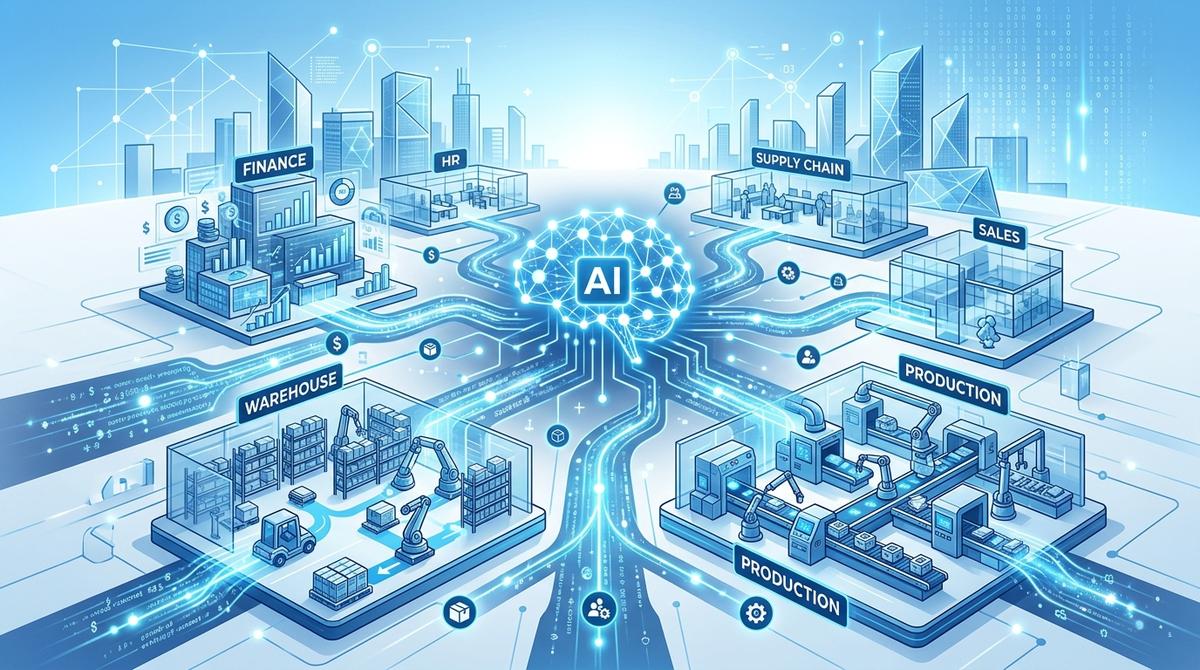
This image serves as an illustration for the article to help readers understand better
2. The Essence and Shift from Traditional ERP to AI ERP
Standard ERP software generations have long served as a Single Source of Truth, managing everything from finance and supply chains to production. However, older generations typically operate on a passive recording mechanism (Descriptive Analytics) and rely entirely on static, human-established rules (Rule-based).
When combined with Artificial Intelligence, the system vigorously transforms into a state of proactive management and Cognitive Automation:
- Multidimensional and Unstructured Data Processing: Beyond managing structured numbers in financial spreadsheets, AI ERP analyzes unstructured data from text contracts, images, audio, and IoT device logs at the factory to uncover hidden patterns.
- Closed-loop AI: The system doesn’t stop at issuing alerts for humans to process; it directly triggers automated actions such as adjusting production schedules, forecasting cash flow, or detecting anomalies right on the assembly line to nip risks in the bud.
3. Completely Resolving “Data Blind Spots” and the Risk of Internal Knowledge Loss
One of the biggest barriers causing enterprises to fail when applying AI is the state of dirty and fragmented data.
- The Danger of Isolated Excel Files: Many organizations, as they scale, still abuse personal Excel files. When the personnel in charge resign, all accumulated operational knowledge and data are completely lost.
- Institutionalizing Knowledge into Software: An AI ERP system requires businesses to digitize and cleanse all data from the root. By centralizing historical data onto a single platform, the organization not only protects its information assets but also transforms operational experience into sustainable automated algorithms.
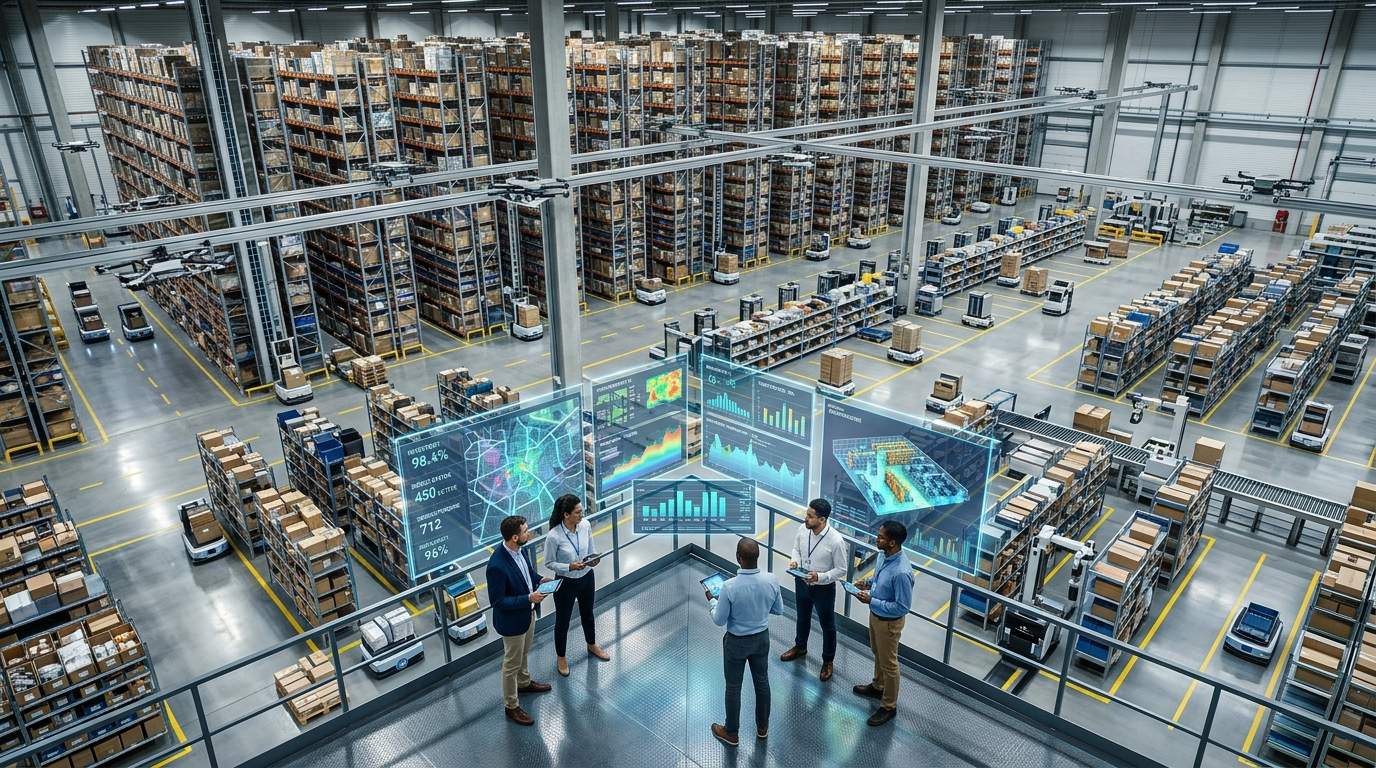
This image serves as an illustration for the article to help readers understand better
4. In-Depth Comparison: Traditional ERP vs. AI ERP
To clearly see this groundbreaking difference, the comparison table below outlines the operational structures between the two models:
| Comparison Criteria | Traditional ERP (Legacy) | AI ERP System (Next-Gen) |
|---|---|---|
| Nature of Data Processed | Structured data, primarily serving retrospective reporting (Descriptive Analytics). | Processes structured and unstructured data in parallel, forecasting analysis (Predictive/Cognitive). |
| Level of Automation | Highly dependent on manual operations, automated by static rules (Rule-based). | Closed-loop intelligent automation using Machine Learning and AI virtual assistants. |
| Market Responsiveness | Slow response, takes extensive time to synthesize data and compile manual reports. | Real-time decision-making, automatically optimizes the supply chain. |
| Asset Management Efficiency | Prone to knowledge loss risks when personnel leave due to reliance on isolated Excel files. | Institutionalizes all knowledge and operational processes directly into a clean, centralized data system. |
5. Outstanding AI Trends in the Latest ERPs
AI technology in ERP systems continuously evolves to bring outstanding value to enterprises. Below are the mainstream trends shaping the market:
- Hyperautomation: Tightly integrates AI, software robots (RPA), and Low-code/No-code technologies to maximally automate complex process chains from order intake to final delivery.
- AI-Powered Decision-Making: The new ERP generation doesn’t just issue warnings or suggestions; it directly executes coordination decisions in real-time (e.g., auto-rescheduling machine runs when materials are short, functioning similarly to an advanced APS scheduling module).
- Industry-Specific AI: Customizes AI models closely aligned with specific sectors: dynamic pricing in retail, predictive maintenance in manufacturing plants, or distribution optimization in logistics.
6. Strategic Benefits and the Quantitative ROI Problem When Deploying AI ERP
Integrating AI into the ERP platform brings powerful economic performance boosts for businesses:
- Increase Overall Productivity: According to market research from Forbes, applying RPA and ML helps automate administrative tasks, minimize human error, and free up resources for strategic activities.
- Optimize Total Cost of Ownership (TCO): Cuts operational costs by eliminating cumbersome manual data entry processes and optimizing Work-in-Process (WIP) inventory levels.
- Data-Driven Decision Making: Completely eliminates “guesswork” management based on intuition or reliance on personal storage files, ensuring all leadership decisions closely align with market realities.

This image serves as an illustration for the article to help readers understand better
7. InfoAsia – The Pioneer in Deploying SAP ERP and Smart Solutions in Vietnam
The success of a digital transformation project depends not only on AI technology but is determined by the consulting capacity and data architecture standardization of the deployment unit.
- Solid Foundation and Extensive Experience: InfoAsia (founded in 2016) is a member company under Cadmen Taiwan – a technology conglomerate with a developmental history since 1980, firmly holding the position of Exclusive Gold Partner of SAP. InfoAsia possesses a team of seasoned experts in consulting, configuring, and integrating international standard management systems such as SAP ERP, MES manufacturing execution software, and smart solutions.
- Practical Footprint Across Large-Scale Projects: InfoAsia has affirmed its capabilities by successfully deploying ERP systems and IoT-integrated factory automation for many large international corporations (notably the digitization project for the global footwear brand New Balance, FVIV factory, Buwon Industry, Shini Group, etc.).
- Accurate Localized Solutions: InfoAsia provides a methodical deployment methodology, helping businesses cleanse data from the root, seamlessly blending global standard technological capacity with the domestic financial and accounting legal framework (VAS).
8. Frequently Asked Questions (FAQs) About AI ERP Systems
Q1: Can Small and Medium-sized Enterprises (SMEs) access AI ERP systems?
Answer: Absolutely. Reputable deployment units like InfoAsia offer flexible solution packages (such as SAP Business One integrated with basic smart features), helping SMEs optimize initial investment costs while still possessing international standard management capabilities.
Q2: How do you solve the dirty data problem before introducing AI into the ERP system?
Answer: This is a mandatory step. Businesses need to conduct Business Process Reengineering (BPR) and cleanse historical data. InfoAsia always accompanies clients in surveying and standardizing input data to create a clean foundation before activating AI algorithms.
Q3: Will applying AI in ERP leak sensitive company data?
Answer: No. Modern ERP platforms and AI-integrated cloud infrastructures comply with the strictest security standards, such as the international security standard ISO 27001 and SOC 2, committing to safe data processing and absolutely not sharing it with third parties.
Q4: How long does an AI ERP deployment project typically take?
Answer: It depends on the organization’s scale. For SMEs, the standard roadmap is usually 3 to 6 months. For large manufacturing corporations, deployment time can range from 9 to 18 months under strict expert supervision.
Q5: How does InfoAsia support customers after the system officially goes live?
Answer: InfoAsia provides 24/7 technical support services, closely monitoring the accuracy of automated data flows, periodically fine-tuning system performance, and accompanying the business’s scale development.
9. Conclusion
The AI ERP system represents an inevitable step forward in the digital transformation era, helping businesses transition from passive management to intelligent, data-driven autonomy. When invested in with a methodical strategy and the companionship of an experienced practical consulting unit like InfoAsia, an organization will build a solid operational foundation, optimize costs, and be ready to break through powerfully in the market.

InfoAsia Việt Nam trở thành nhà cung cấp dịch vụ phần mềm số hóa nhà máy sản xuất cho thương hiệu giày hàng đầu thế giới NEW BALANCE
Công ty TNHH Mây Tre Hà Linh
SAP ERP MES and IOT Project for FVIV Factor
Buwon Industry Co, Ltd
KANGLONGDA VIETNAM PROTECTION TECHNOLOGY COMPANY LIMITED
Shini Group
TA TING PLASTIC (HAI DUONG ) CO., LTD
CÔNG TY TNHH MTV BIÊN HOA SCM