




Owning SAP software means your enterprise possesses the management platform used by the world’s leading corporations. However, SAP is essentially just a standard framework. For this system to truly come “alive” and integrate seamlessly with your specific business flows, it is imperative to partner with a capable SAP company in Vietnam (Implementation Partner).
Below is a detailed breakdown of SAP’s operational principles, common technical barriers, and a set of criteria to help you identify a genuine implementation partner.
1. The Core Architectural Principles of SAP (First-Principles Thinking)
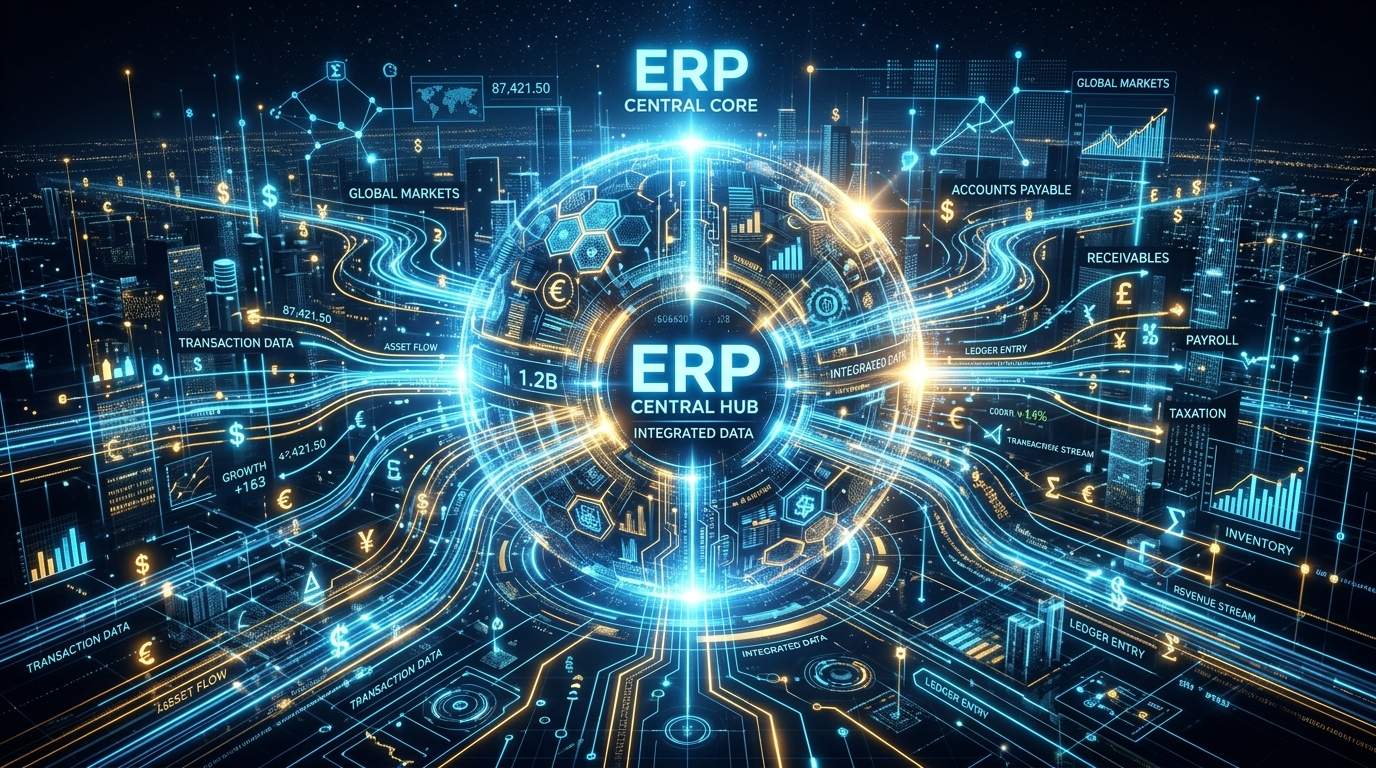
To accurately assess the importance of an implementation partner, we need to look at SAP from its most fundamental principles. SAP is not merely data-entry software for storing information. At its core, it is an engine that translates physical actions into the language of Finance.
The enterprise’s financial picture (Balance Sheet, Income Statement) is the ultimate destination for all input data. You can learn more about the power of this platform in our article explaining the SAP system.
- Journal Entry Consistency: No action stands alone in SAP.
- Real-world example: When a warehouse employee creates a goods issue slip for a sale, physically, a truck leaves the gate. In the SAP system, at that exact moment, the software automatically records a Debit (Cost of Goods Sold) and a Credit (Inventory) journal entry. Warehouse data and accounting data operate as a unified entity.
- Real-time Data Discipline: Information is entered only once at the point of origin. Accountants do not need to wait until month-end to consolidate figures from other departments.
2. Three Technical Barriers Hindering SAP Projects in Vietnam
Purchasing software licenses is easy, but the system configuration process often encounters severe technical hurdles. If the implementation company lacks sufficient capability, the project will fall into a deadlock.
- Database Processing Bottlenecks: As data volumes swell, multi-dimensional financial or inventory reports often take excessive time to extract. The root cause typically lies not in the server hardware, but in unoptimized data query commands.
- The Burden of License Costs: SAP charges based on the number of user accounts (refer to the policies on the global SAP homepage). Issuing accounts to all employees (including those who only occasionally use it to approve vouchers or create purchase requests) will create a massive operational expenditure (OPEX) burden.
- Misalignment with Accounting Standards (Localization): SAP is a global software, but enterprises must comply with Vietnamese Accounting Standards (VAS). Incorrectly configuring Work in Process (WIP) cost accumulation flows or inventory valuation methods will ruin the entire tax and management reporting system.
3. Criteria for Identifying a High-Capability Implementation Company
To overcome the aforementioned barriers, the Board of Directors needs to select an implementation partner based on a rigorous evaluation structure with three core criteria:
- Top-Down Architectural Thinking: A professional partner always begins by defining macro objectives with the C-level executives: “What reporting metrics does the enterprise need?” From there, they reverse-engineer the micro-level data entry processes for employees to ensure that the input data accurately serves the output reports.
- Hybrid Expertise (Accounting & Technology): The consulting team must have a deep understanding of Accounting and Finance operations to correctly establish the chart of accounts and cash flow structures, before translating them into technical operations on the software.
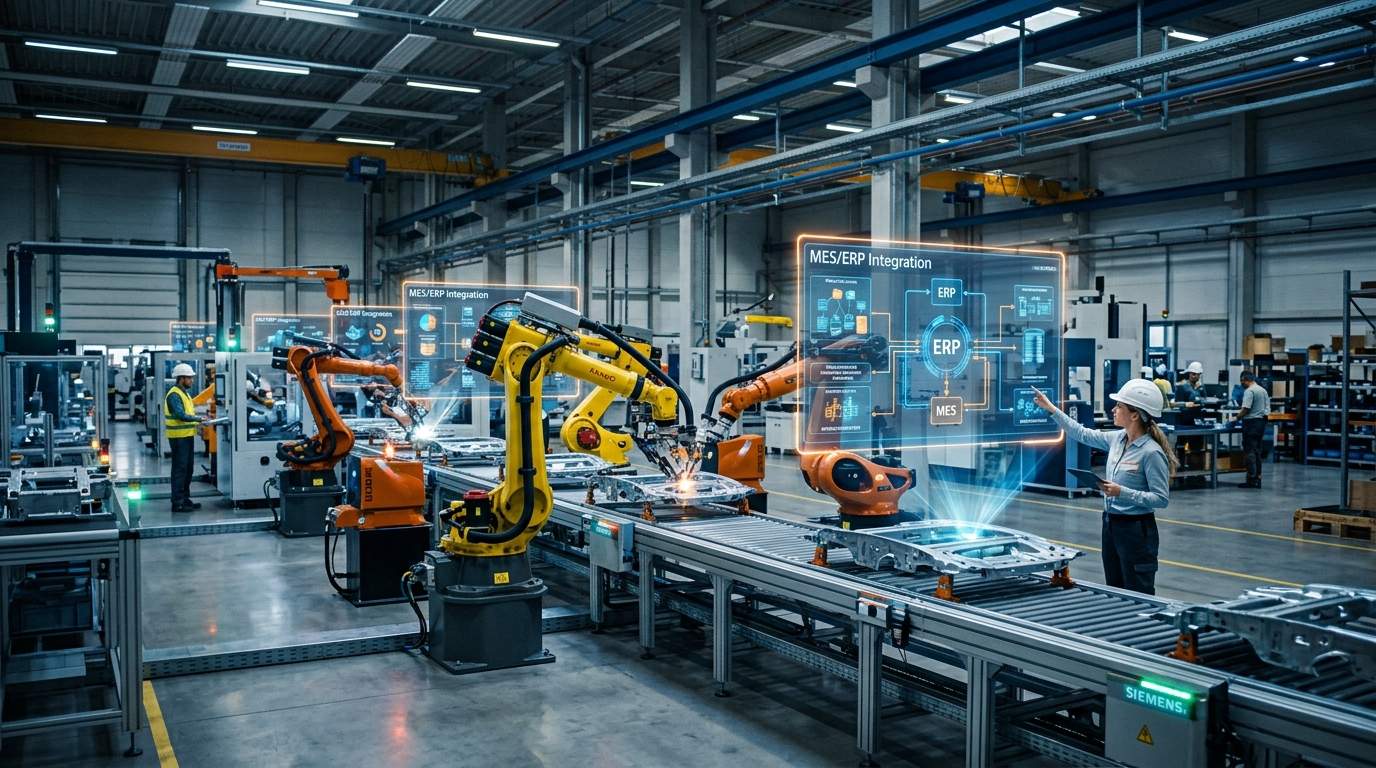
- Deep Technical Customization Capability: The ability to write and intervene in data storage scripts (Stored Procedures) to meet specific reporting needs that the native system does not support out-of-the-box. This is also why many modern factories integrate a MES manufacturing execution system to capture data more closely.

4. InfoAsia – Your Partner for Comprehensive ERP Architecture and Digital Ecosystems
Within the network of technology partners in Vietnam, InfoAsia affirms its position as a specialized consulting and implementation company for management ecosystems. We do not merely install software; we design a comprehensive management architecture focused on financial accuracy and investment cost optimization.
The core strengths that define InfoAsia’s capabilities:
- In-depth Implementation of ERP & Manufacturing Accounting Systems: InfoAsia’s team of experts has a profound understanding of the core ERP platform. Specifically, through the integration of the Beas Manufacturing solution, we help factories fully automate the complex tasks of Work in Process (WIP) accounting, cost allocation, and highly accurate Standard Costing. Enterprises can learn more about the signs indicating it is time to upgrade to an ERP system.
- License Cost Optimization via DI API: InfoAsia utilizes the SAP DI API programming interface to develop internal Web/App platforms. Features such as Purchase Requests or Purchase Orders are replicated externally. Hundreds of employees can legitimately use the system without the enterprise having to pay any additional License fees.
- Mastery of High-Speed SQL Server Techniques: InfoAsia thoroughly resolves even the most complex management reports. By writing and performing Performance Tuning for database scripts (Stored Procedures, Views), the management system always extracts data smoothly, without any “bottlenecks” even when document volumes reach millions of records.
- Operational Flow Integration with InfoAsia e-Office: While the core ERP platform stores the main data, the InfoAsia e-Office digital workplace system manages the approval workflows. All proposals, submissions, and contracts from the management software are synchronized directly to e-Office for the Board of Directors to sign and approve on mobile devices, creating a zero-latency, paperless workflow.
Adopting digital transformation solutions is a major procedural overhaul. Partnering with a SAP company in Vietnam that possesses deep financial principles, data engineering mastery, and cost-optimization solutions like InfoAsia is a strategic move, helping your enterprise operate leanly and achieve sustainable profit breakthroughs.
5. Frequently Asked Questions (FAQs)
Why should an enterprise choose a partner with expertise in both accounting and technology?
Because the true nature of management systems is not just about collecting data (IT) but transforming that data into an accurate financial picture. If the implementation unit does not understand accounting standards (VAS) and cost accounting (like WIP or manufacturing allocation), the output data will be completely skewed, rendering the reporting system useless.
Can the system connect with external devices in the factory?
Yes, via APIs and MES systems. Automatically collecting data from machines and barcode scanners on the shop floor and synchronizing it in real-time to the core system is entirely feasible, helping to minimize errors caused by manual data entry.
How can we solve the problem of exorbitant User License costs?
This is one of InfoAsia’s core strengths. Instead of purchasing expensive licenses for the entire staff, we develop satellite applications using DI API technology. Employees only need to log into the internal app to create requests, and the system will automatically synchronize the valid data flow to the core software without consuming additional license resources.

InfoAsia Việt Nam trở thành nhà cung cấp dịch vụ phần mềm số hóa nhà máy sản xuất cho thương hiệu giày hàng đầu thế giới NEW BALANCE
Công ty TNHH Mây Tre Hà Linh
SAP ERP MES and IOT Project for FVIV Factor
Buwon Industry Co, Ltd
KANGLONGDA VIETNAM PROTECTION TECHNOLOGY COMPANY LIMITED
Shini Group
TA TING PLASTIC (HAI DUONG ) CO., LTD
CÔNG TY TNHH MTV BIÊN HOA SCM