




In the era of Industry 4.0, a smart factory cannot simply operate on paper instructions or fragmented accounting software. To achieve absolute optimization, enterprises need a seamless data architecture from the executive room (Top-floor) down to the production line (Shop-floor). That is when the integration between enterprise resource planning (ERP) systems and manufacturing execution systems (MES) becomes a prerequisite.
However, deploying both of these systems simultaneously is an extremely complex technical and financial puzzle. Selecting an ERP and MES implementation company with sufficient stature, deep understanding of both software languages and factory practices is the key that determines the success or failure of the project.
Below is an in-depth analytical picture of the intersection between ERP and MES, along with criteria to choose the right implementation partner.
Key Takeaways:
- The combination of ERP (The Brain) and MES (The Nervous System) is a mandatory condition to build a seamless data flow from the Top-floor to the Shop-floor.
- The lack of this integration causes fatal “pain points”: WIP accounting errors, delayed costing, and fractured operational information flow.
- A synchronized ecosystem helps automate Standard Costing, real-time quality alerts, and smart warehouse operations (RFID/Barcode).
- Core criteria for choosing a partner: Possessing Hybrid Knowledge, deep data customization capabilities, and Top-Down architectural design thinking.
- InfoAsia provides a comprehensive solution based on the SAP Business One and Beas Manufacturing core, bringing absolute synchronization in finance and production execution.
1. The Core Nature of the ERP and MES Ecosystem (First-Principles Thinking)
To understand why a factory needs both systems, we need to dissect the nature of a manufacturing enterprise’s operations from the most basic principles. According to IBM’s technology encyclopedia, every factory has two parallel flows: The information/financial flow and the physical flow.
- ERP (Enterprise Resource Planning): Acts as the “Brain”. ERP processes financial flows and macro-level planning. It answers questions like: How much revenue is needed this month? Which supplier should we buy raw materials from to get the best price? What are the labor costs and overhead allocations?
- MES (Manufacturing Execution System): Acts as the “Motor Nervous System”. MES handles the physical flow directly on the shop floor. It receives orders from the ERP and answers immediate questions: What item code is machine number 3 running? What is the defect rate for this morning’s shift? Has the batch of materials released from the warehouse at 8:00 AM been put into assembly yet?
Real-world example: Upon receiving an order for 50,000 electronic components, the ERP software will calculate whether there are enough materials in stock and schedule a purchase. When the materials arrive, the production order is pushed down to the MES. The MES software will coordinate workers, record every beat of the SMT machine in real-time, and report the completed quantity back to the management software to automatically update inventory.
2. The “Data Fracture” Pain in Unintegrated Factories
Many enterprises invest in very expensive management software but manage production on the shop floor using Excel or a fragmented, custom-built tracking tool. The absence of a capable ERP and MES implementation company to link these two systems leads to fatal “pain points”:
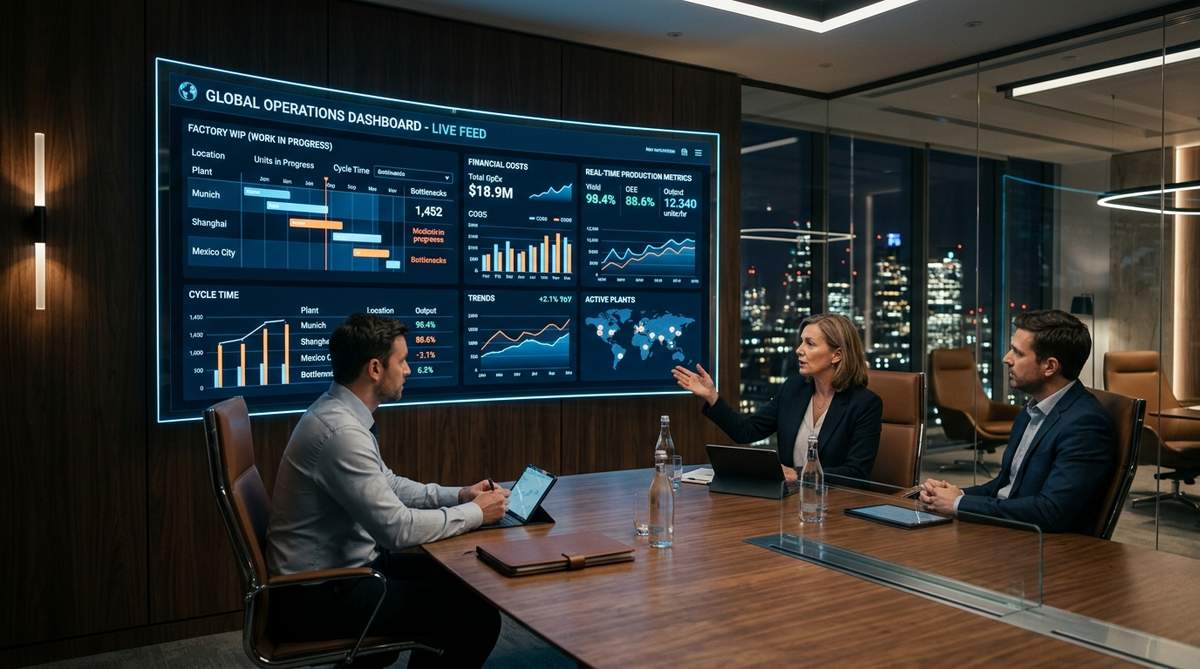
- The “Black Box” of WIP Accounting: Accountants cannot precisely know, as of the 15th of the month, how much raw material value is sitting as work-in-progress on the assembly line. Manually closing WIP numbers at the end of the month often leads to massive errors.
- Delay in Absorption Costing: Because material consumption data and machine runtime are not pushed automatically from execution stations to the accounting software, personnel must wait until month-end to allocate absorption costs. This prevents the board of directors from immediately knowing whether a freshly produced batch is profitable or at a loss.
- Discrepancy Between Software and Physical Reality: The system requires workers to continuously input data, but traditional barcode scanning slows down the production pace. High-level management data always lags behind reality by 1 to 2 days. To resolve this, many factories have to integrate additional advanced planning and scheduling modules (APS software) to automatically untangle bottlenecks.
3. The Comprehensive Integration Solution
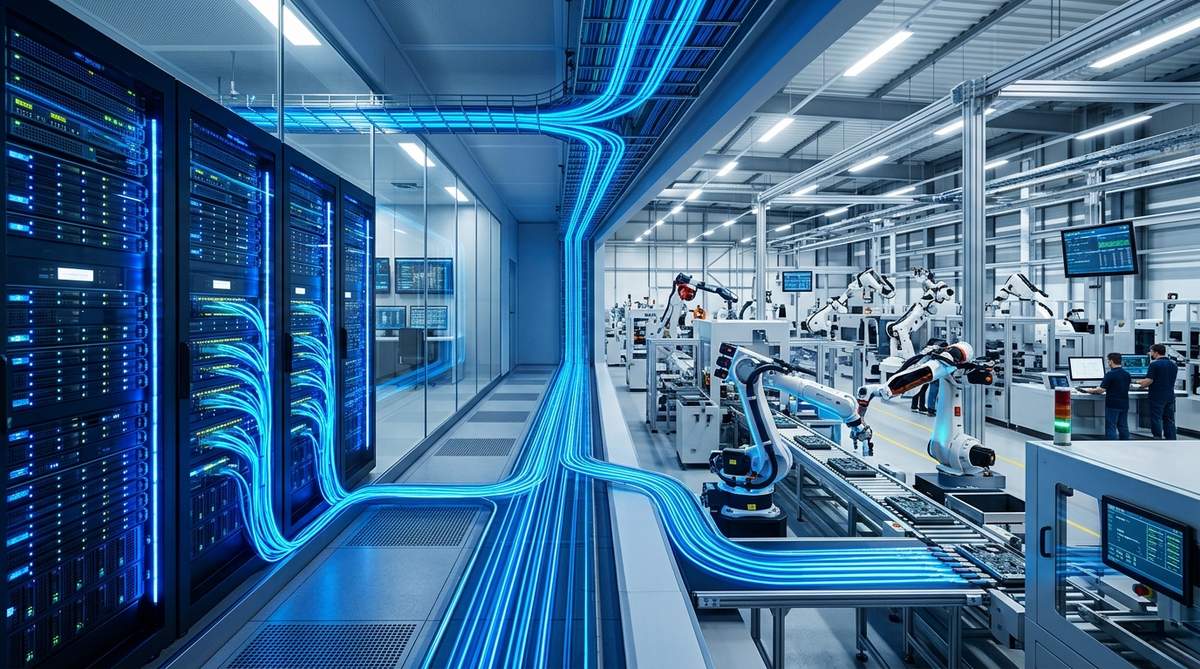
A standardized integrated ecosystem will erase the boundary between the back office and the production floor, truly transforming the enterprise into a smart factory.
- Automated Standard Costing: When the manufacturing execution system records a completed routing step, the database will automatically trigger calculation scripts to record material consumption entries and receive finished goods into inventory without accountants having to type anything manually.
- Real-time Quality Alerts: If sensors detect that the defect rate exceeds the allowable threshold, the production line will automatically halt the manufacturing order while simultaneously pushing an alert notification to the factory manager’s dashboard.
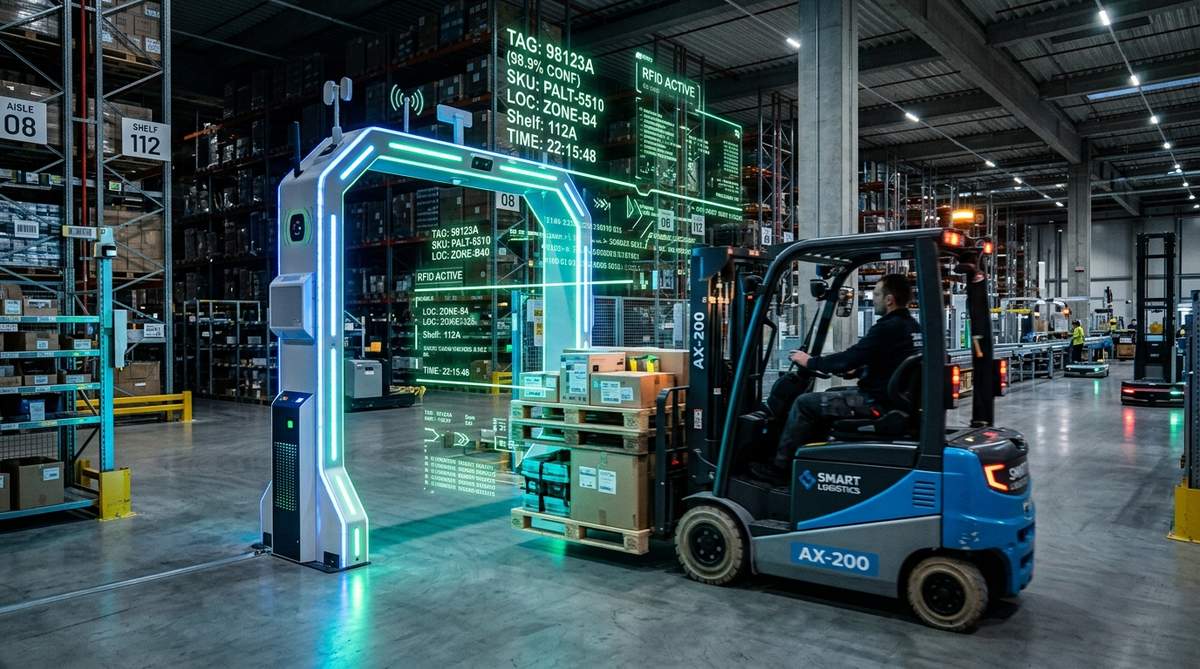
- Smart Warehouse Ecosystem: Instead of forcing workers to use manual barcode scanners, modern data flows are connected to an automated RFID tag ecosystem. Goods moving through magnetic gates will automatically trigger goods issue/receipt commands, turning software data into an immediate Digital Twin of the factory.
4. Core Criteria for Choosing an Implementation Partner
Deploying two massive software architectures simultaneously is a high-risk project; not just any IT company can do it. The leadership board needs to screen partners based on 3 rigorous sets of standards:
- Possessing Hybrid Knowledge: The implementation unit cannot solely consist of programming experts. They must absolutely have consultants who deeply understand Finance (to establish accounting standards, cost allocation) AND thoroughly grasp production management practices (to build BOM norms, design Routing processes on the shop floor).
- Deep Technical Customization Capability: Every factory has its own unique characteristics. The implementation partner must have deep data manipulation capabilities (such as writing SQL Server queries, designing Views, Stored Procedures) to create specialized management reports that the original system does not readily offer.
- Top-Down Architectural Thinking: The implementation company must start from the macro business objectives of the C-level, and only then design the detailed data flow down to each individual Workstation to serve those high-level reports.
5. InfoAsia – Vietnam’s Leading ERP and MES Ecosystem Implementation Expert
In the enterprise management technology market in Vietnam, InfoAsia asserts its position as a specialized consulting and implementation partner. We do not just provide a tool, but deliver a management platform perfectly tailored for complex manufacturing sectors (such as electronic components, precision mechanical engineering, manufacturing commerce).
The differentiators that define InfoAsia’s capabilities:
- Core Strength from International Management Platforms: InfoAsia is an expert in deploying the SAP software platform combined with the advanced production management module Beas Manufacturing. This architecture creates absolute synchronization between financial accounting figures and execution data on the assembly line, thoroughly solving the problem of product costing and WIP warehouse management.
- Mastering Database Technology: InfoAsia’s team of experts possesses extremely high professional competence in writing and optimizing advanced SQL Server scripts (Stored Procedures, Views). Thanks to this, InfoAsia can parse and link massive data tables to design high-speed management dashboards, meeting the most distinct analytical requirements of the enterprise.
- Hardware and Software Integration: InfoAsia has experience consulting and designing infrastructure transformation steps for factories, typically transitioning from manual barcode scanning systems to automated RFID ecosystems. This helps factories multiply their speed of recording production data.
- Seamless Operational Workflow with InfoAsia e-Office: To close the loop, InfoAsia’s software ecosystem is also interconnected with the InfoAsia e-Office digital workplace solution, helping to digitize all signing, approval, and document routing activities of the factory’s administrative block.
6. Frequently Asked Questions (FAQs)
1. Why shouldn’t we buy software from two different vendors?
Buying from two different vendors often leads to data standard conflicts and difficulties in establishing Application Programming Interfaces (APIs) between the two systems. Choosing a single ERP and MES implementation company ensures data flows seamlessly, clearly assigns accountability, and optimizes maintenance costs.
2. Is it necessary for small and medium factories to deploy both systems simultaneously?
It depends on the budget and current digitalization level. Small and medium enterprises can deploy an enterprise resource planning system first to stabilize financial and warehouse processes, then integrate the manufacturing execution module when the production line demands a higher level of real-time monitoring.
3. How long does it take to successfully deploy this integrated ecosystem?
A standard integration project for a factory usually lasts from 6 to 12 months, depending on the complexity of the Routing process, the number of machines to be connected, and the initial data readiness of the enterprise.
4. What platform does InfoAsia use to deploy this ecosystem?
InfoAsia prioritizes deploying solutions based on the international standard software ecosystem, utilizing SAP Business One (acting as the “Brain”) perfectly integrated with Beas Manufacturing (acting as the advanced production management module on the shop floor).
Conclusion
The integration of management and manufacturing execution systems is a major overhaul of both processes and technology. Partnering with an entity that possesses sufficient financial capacity, understands manufacturing deeply, and owns specialized deep customization techniques like InfoAsia is the most strategic step, helping your factory truly enter the era of smart operations and sustainable profit optimization.

InfoAsia Việt Nam trở thành nhà cung cấp dịch vụ phần mềm số hóa nhà máy sản xuất cho thương hiệu giày hàng đầu thế giới NEW BALANCE
Công ty TNHH Mây Tre Hà Linh
SAP ERP MES and IOT Project for FVIV Factor
Buwon Industry Co, Ltd
KANGLONGDA VIETNAM PROTECTION TECHNOLOGY COMPANY LIMITED
Shini Group
TA TING PLASTIC (HAI DUONG ) CO., LTD
CÔNG TY TNHH MTV BIÊN HOA SCM