




When a business enters a phase of scale and growth, managing dozens or even hundreds of projects simultaneously is a massive challenge. Budget overruns, delayed schedules, or projects stepping on each other’s toes due to poor resource synchronization occur frequently. This is the pivotal moment when an organization needs the presence of a dedicated management department. So, what exactly is a PMO? What role does this department play in ensuring project success? Let’s decode the details with InfoAsia in the article below.
1. What is a PMO?
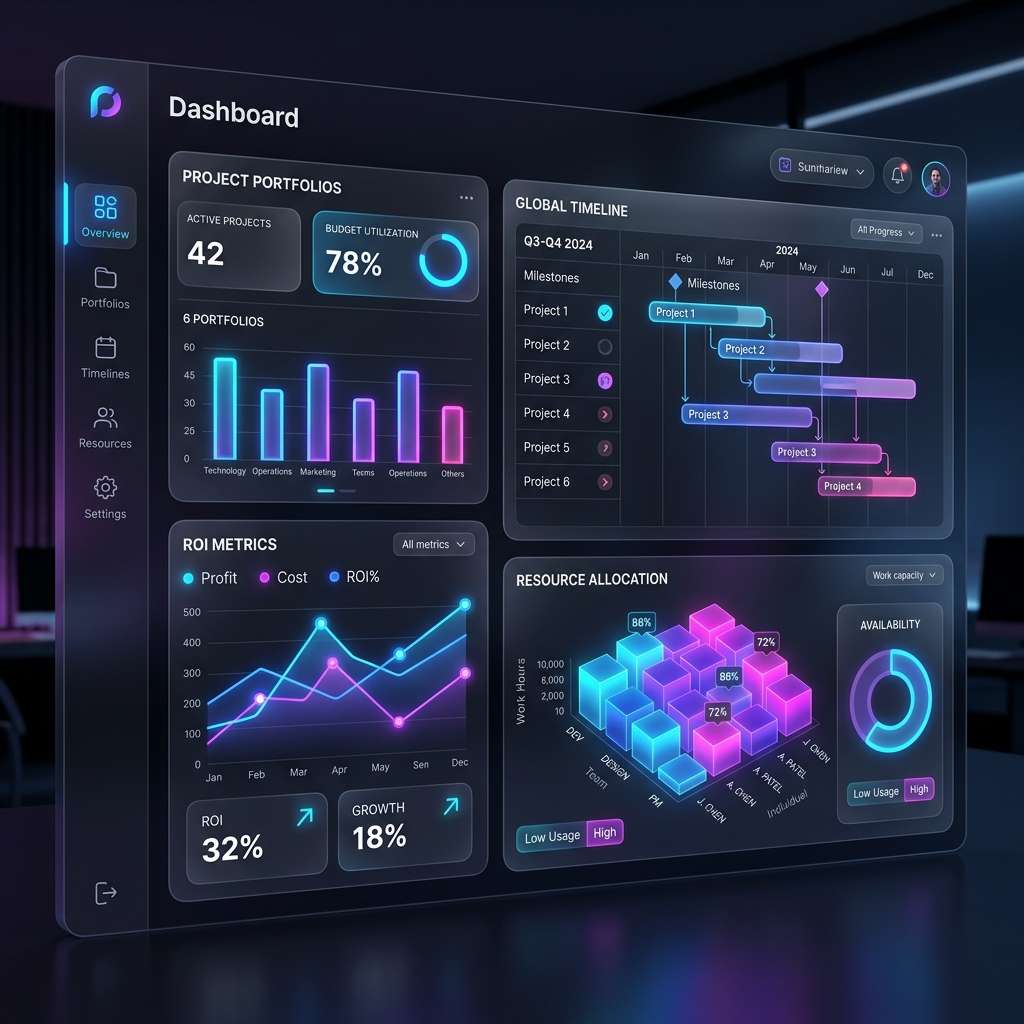
PMO (short for Project Management Office) is a dedicated department or group within a business responsible for establishing, maintaining, and ensuring that project management standards are executed consistently across the organization.
Unlike individual project teams that focus solely on completing a specific objective, a PMO operates from a macro perspective. The PMO can be likened to the “conductor” of a corporate orchestra. They don’t directly play every instrument (they don’t run the projects directly), but rather coordinate, provide methodologies, monitor progress, and ensure all projects play a tune that aligns with the overarching development strategy set by the board of directors.
The history of this concept dates back to the 1950s within highly complex aerospace and defense projects. Today, it has become a mandatory management standard across many industries: from Information Technology (IT) and finance-banking to industrial manufacturing and healthcare.

2. The 3 Core PMO Models in Business
No single model is perfect for every company. Depending on the corporate culture and management maturity level, the Project Management Institute divides this structure into 3 models with increasing degrees of control:
- Supportive: Acts as a knowledge “library.” This department provides templates, standard procedures, management software, and training courses. They offer consultation upon request and leave full decision-making power to the Project Managers. Degree of control: Low.
- Controlling: Going beyond just providing tools, this model requires project teams to strictly adhere to established standards, frameworks, and methodologies. They conduct regular project audits to ensure compliance. Degree of control: Medium.
- Directive: This is the highest level. The department directly takes control of the entire project portfolio. Project Managers become direct reports to this department. The PMO directly allocates budgets and personnel, taking responsibility for the final outcomes. Degree of control: High.
3. The “Conductor” Role in the Organization
The presence of this department brings strategic transformations to the operational apparatus:
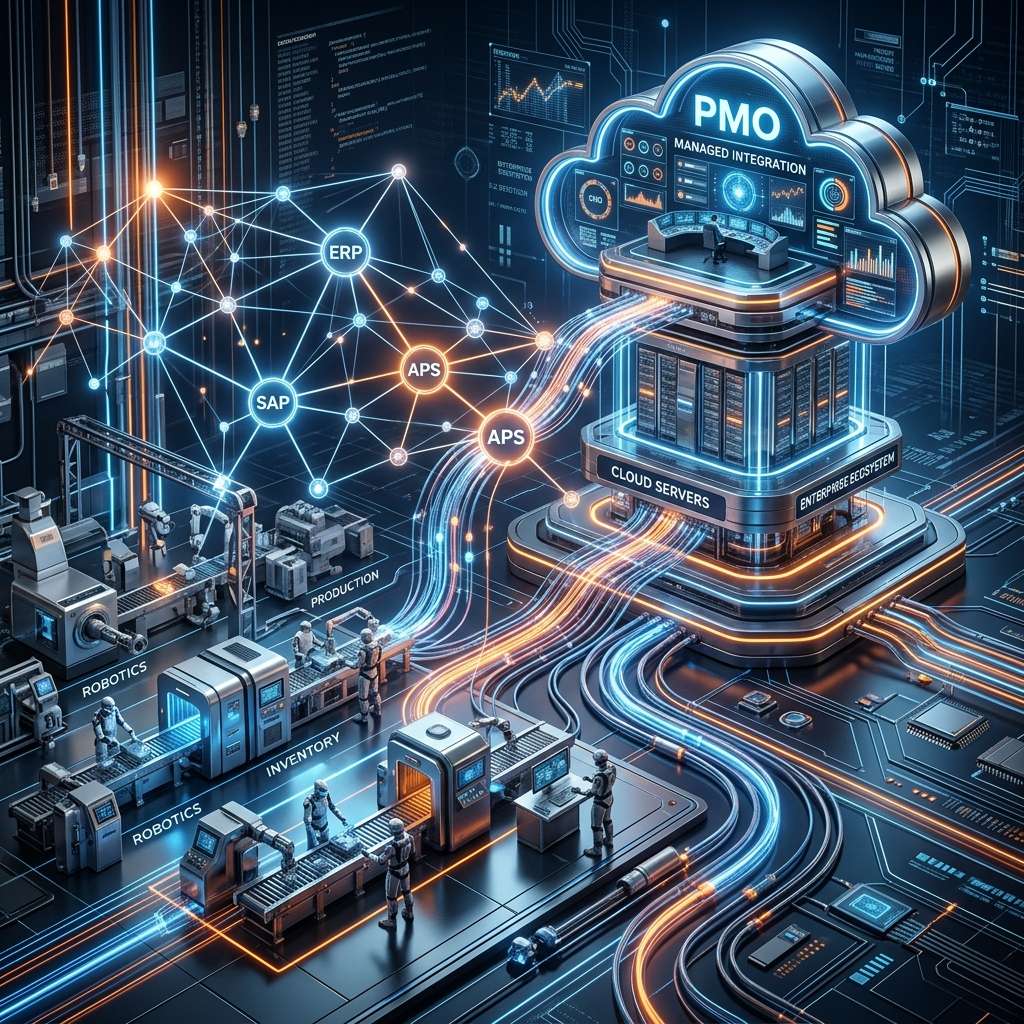
- Strategic Bridge: Evaluates and selects projects that yield the highest Return on Investment (ROI) and align best with the Board of Directors’ vision.
- Process Standardization: Puts an end to the “every project does its own thing” scenario. Establishes a uniform set of processes, KPIs, and measurement tools, minimizing errors and wasted time.
- Resource Management: Maintains a bird’s-eye view of where all resources (personnel, finances, machinery) are allocated, thereby cross-coordinating across projects to prevent overloads in one area and idleness in another.
- Portfolio-Level Risk Management: Identifies cascading risks early on (when a delay in Project A impacts Project B) and reports to C-level executives for timely resolution.
4. Distinguishing Between PMO and Project Manager (PM)
Many businesses often confuse the functions of a PMO and a PM. Clearly distinguishing these two concepts helps the system avoid overlapping authority.
5. Technology Application: Integrating ERP Systems and Manufacturing Software
| Criteria | Project Manager (PM) | Project Management Office (PMO) |
| Scope | Focuses on ONE (or a few) specific projects. | Manages the PORTFOLIO comprising all projects within the company. |
| Objective | Achieves project goals (On time, on budget, quality met). | Achieves the strategic goals of the entire enterprise. |
| Responsibility | Plans, tracks tasks, and resolves daily project issues. | Establishes standards, provides software, and measures system-wide efficiency. |
| Vision | Micro, short-term, and medium-term (Aligned with project lifecycle). | Macro, long-term (Aligned with company development strategy). |
In the digital era, it is impossible to manage dozens of projects using Excel. Adopting core enterprise management software is mandatory for real-time data transparency.
5.1. High-level Project Management with SAP Systems
For large corporations, managers often utilize solutions from the SAP ecosystem to manage project portfolios. According to official SAP documentation:
The system utilizes SAP Portfolio and Project Management (SAP PPM) solutions to synchronize the project portfolio with corporate strategy, as well as to evaluate financial and capacity feasibility before approving new projects.
Additionally, the SAP Project System (PS) module within SAP S/4HANA or SAP ERP tightly monitors the budget, schedule, and actual costs of each project, updated in real-time from other departments (accounting, procurement). This integration ensures there is always a “single source of truth,” eliminating data discrepancies in project reports.
5.2. Optimization in the Manufacturing Management Environment (APS)
In industrial manufacturing, the role of this department is closely tied to optimizing plant capacity. Based on the manufacturing management philosophy from Boyum Solutions:
Instead of just passively fighting fires, a modern factory leverages APS (Advanced Planning and Scheduling) software to simulate project scenarios using “What-If” functionalities.
Simultaneously, it leverages data from the MRP (Material Requirements Planning) system to accurately calculate material needs, ensuring that new projects (e.g., launching a new product line) do not deplete the supplies of existing production lines. By connecting the project plan with actual (finite) production capacity, the factory eliminates order bottlenecks, transitioning from a reactive state to smooth and proactive production scheduling.
6. International Frameworks and Standards for PMOs
To avoid “crossing the river by feeling the stones,” organizations can reference international standards to build a solid foundation right from the start:
- PMI (Project Management Institute) Standards: Applies the PMBOK Guide to standardize processes, terminology, and establish rigorous competency standards for project teams.
- AIPMO (Association of International PMOs) Standards: Takes a “lifecycle” approach. This means the department is not static but evolves from inception and maturity until it becomes a strategic entity determining the survival of the enterprise.
- Value Ring Model (PMO Global Alliance): This is a practical tool focusing on determining ROI (Return on Investment). It forces the organization to answer: “What services are we providing, and how do they bring measurable value to our internal customers?”.
7. A 4-Step Roadmap for Effective PMO Implementation in Business
If your organization intends to establish this department, follow this roadmap to avoid failure:
- Assessment: Analyze where current projects are failing (Over budget? Delayed schedule? Out of sync?). Clearly identify the pain points before prescribing a solution.
- Design: Based on company culture, choose a Supportive, Controlling, or Directive model. Do not choose the Directive model initially if the company is unaccustomed to rigid management.
- Digitization: Invest in project management software or core systems (as analyzed in section 5) to have transparent measurement tools and permission controls.
- Pilot & Scale: Let the new department manage a few key projects as a pilot. Once clear efficiency is demonstrated, scale the process across the entire company.
Conclusion
Faced with fierce competition, the concept of a PMO is no longer just theoretical; it has become a tool for forging the core competencies of leading organizations. Possessing a professional Project Management Office, combined with core software solutions, helps businesses not only complete projects on time but also transform ideas into competitive advantages that yield sustainable profits.

InfoAsia Việt Nam trở thành nhà cung cấp dịch vụ phần mềm số hóa nhà máy sản xuất cho thương hiệu giày hàng đầu thế giới NEW BALANCE
Công ty TNHH Mây Tre Hà Linh
SAP ERP MES and IOT Project for FVIV Factor
Buwon Industry Co, Ltd
KANGLONGDA VIETNAM PROTECTION TECHNOLOGY COMPANY LIMITED
Shini Group
TA TING PLASTIC (HAI DUONG ) CO., LTD
CÔNG TY TNHH MTV BIÊN HOA SCM