




ERP software is becoming the master key to solving overall management challenges. In the digital economy era, as business scale expands, operational “pain points” become more apparent. Relying on disconnected software, tangled Excel spreadsheets, or manual management methods is no longer sufficient to handle the massive volume of data.
So, what exactly is ERP? How does it deeply intervene in the operational apparatus? And most importantly, when is the “ripe” time for your business to decide to invest in this solution? Let’s explore the big picture with InfoAsia and compare it against the 5 alarming signs below.
Key Takeaways:
– Understand the definition and role of ERP as a “Single Source of Truth” for all organizational data.
– Grasp the functions of the 4 core modules: Finance, Human Resources, Manufacturing, and Supply Chain.
– Break down implementation barriers through a phased investment strategy (Phased approach).
– Self-diagnose your business’s health through 5 “alarming” signs requiring immediate technological application.
– Anticipate the future with ERP technology trends integrating AI, Machine Learning, and Low-code.
1. What is Enterprise Resource Planning (ERP)?
ERP (Enterprise Resource Planning) is not merely a software application, but a core technological ecosystem acting as the “backbone” of an organization.
Previously, the accounting department used one software, human resources used another, and warehousing was managed on its own system. This fragmentation created “Data Silos,” causing information to be disjointed, inaccurate, and taking significant time to reconcile.
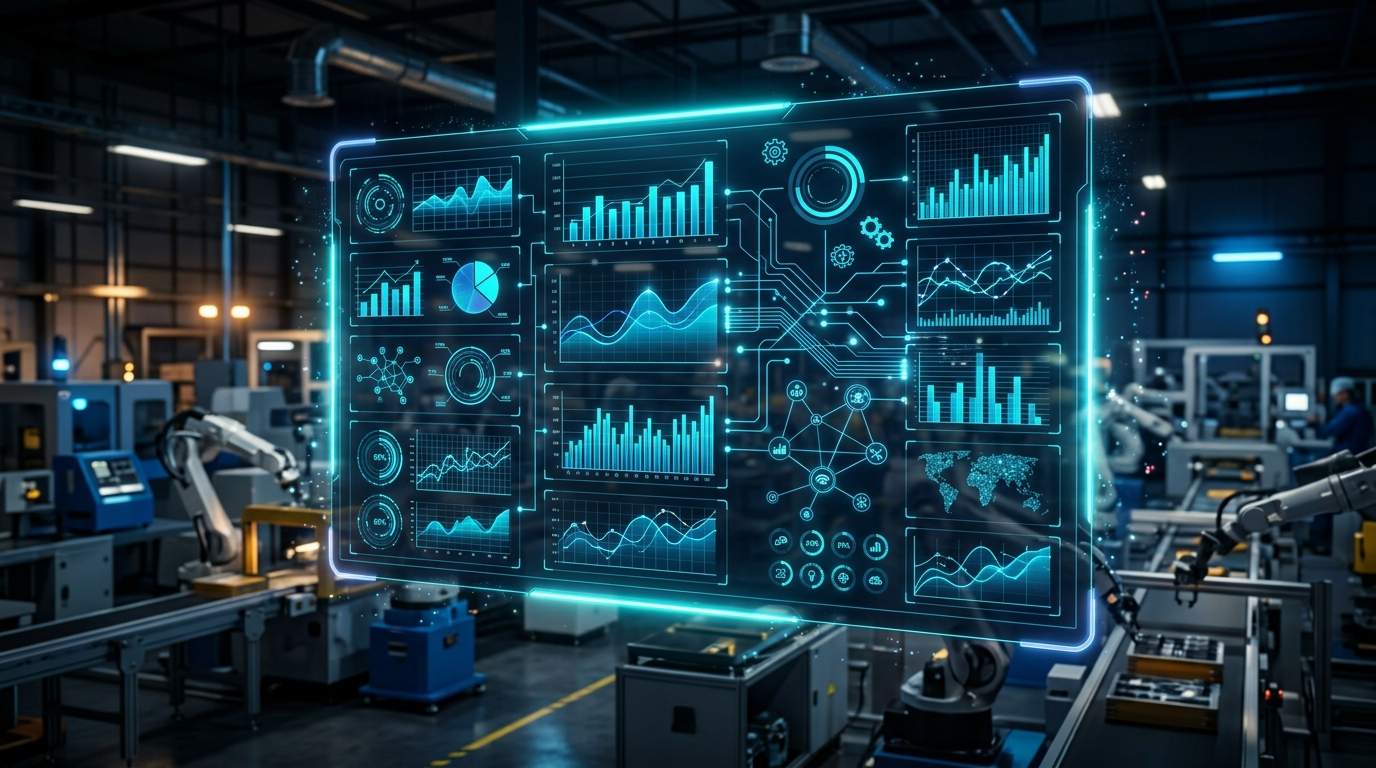
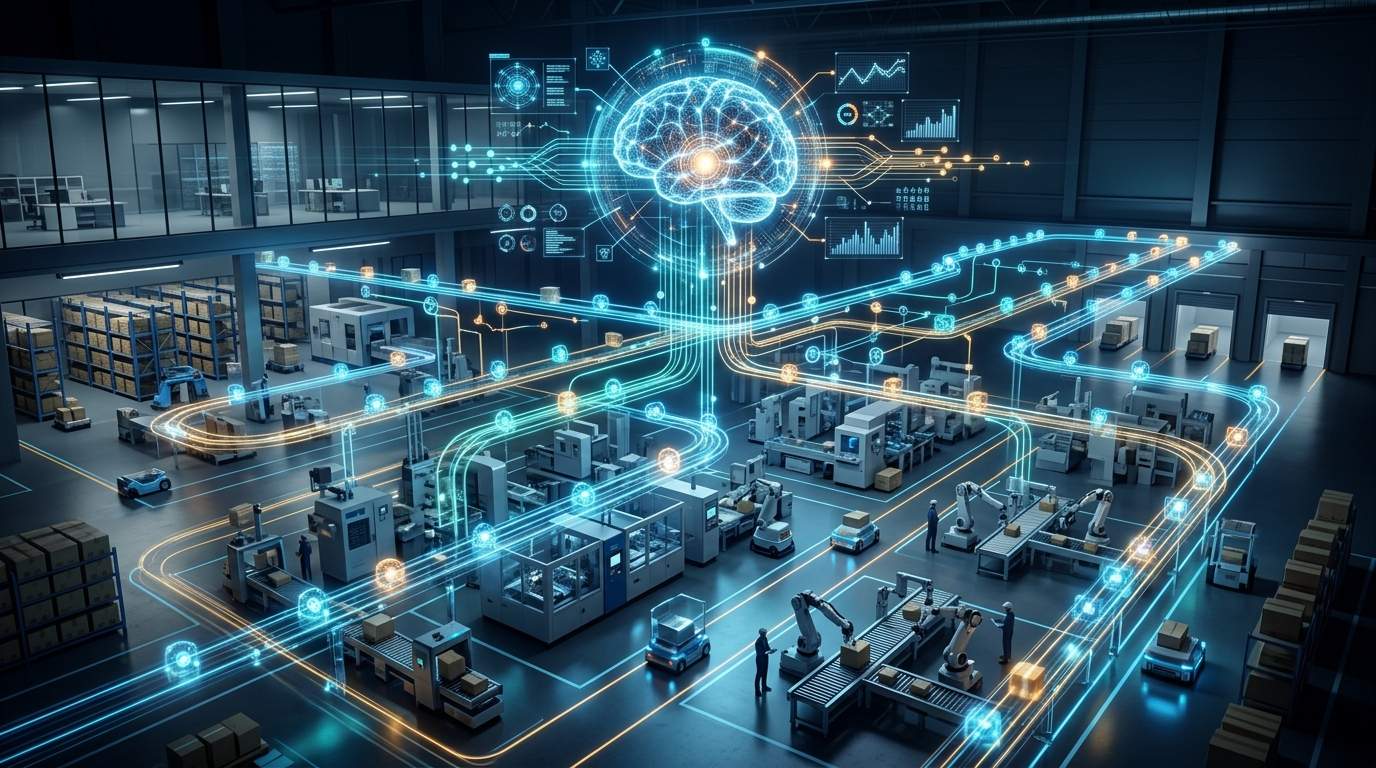
Modern ERP Software breaks down that barrier. By consolidating all business processes (Finance, Procurement, Manufacturing, Warehousing, Human Resources, Sales) into a single database (Single Source of Truth), ERP creates a transparent, interconnected, and synchronized working environment in real-time. When a sales executive closes a deal, the warehouse immediately receives the dispatch order, accounting records the projected revenue, and the system automatically deducts inventory – all happening in just a few seconds.
2. Core Modules That Build the Power of ERP Software
There is no single perfect software for every business, but modern ERP technology is designed in flexible modules, allowing enterprises to assemble the most necessary pieces. Here are the 4 backbone modules:
Finance and Accounting
This module does more than just basic ledger bookkeeping. It provides intuitive dashboards, empowering Chief Financial Officers (CFOs) to track cash flow, liabilities, profits, and expenses in real-time. By automating repetitive tasks such as bank reconciliation, invoicing, or period-end tax reporting, ERP helps eliminate human errors and ensures the highest level of legal compliance.
Human Resource Management (HRM)
Moving far beyond timekeeping and payroll, the HR module on ERP helps organizations manage the complete “lifecycle” of an employee. From recruitment, performance evaluation (KPIs/OKRs), and contract management to career progression paths. The system also supports a self-service portal where employees can request leave or view payslips, significantly reducing the administrative workload for the HR department.
Manufacturing Management
This is the “heart” of factories. The manufacturing module of an ERP digitizes the entire process: from setting up the Bill of Materials (BOM), Material Requirements Planning (MRP), to tracking the progress of each production order on the shop floor. With real-time data, factory managers can accurately calculate production costs, optimize machinery capacity, and control defect rates, ensuring on-time delivery.
Supply Chain Management (SCM) & Warehousing
If a business is still managing inventory with paper or manual stock cards, loss is inevitable. This module automates the inbound-outbound-inventory process, applying barcode/QR code scanning to manage item locations. Furthermore, integrated Business Intelligence (BI) helps forecast purchasing needs and optimize safety stock levels, preventing capital tie-up due to overstocking or production halts due to material shortages.
3. Why Are Businesses Still Hesitant and How to Overcome Barriers When Implementing ERP?
Despite knowing the immense power of ERP Software , many businesses still hesitate. The advice from InfoAsia experts is: You do not need a massive system right from day one. Selecting and implementing an ERP requires a smart strategy.
Not enough budget to implement the entire system at once?
You can absolutely implement ERP in stages (Phased approach). Modern ERP systems allow businesses to purchase and deploy individual modules based on the most pressing needs. For example: Start with Finance and Warehousing to standardize cash flow and goods, then expand to Manufacturing or CRM later. This helps optimize investment cash flow, reduces corporate culture shock, and allows for clear ROI measurement before upgrading.
Haunted by the “Fear of Change” and wanting to keep old software?
Employee resistance due to old habits is a major barrier. However, modern ERP architectures feature open connection ports (APIs), allowing the new system to run in parallel and communicate smoothly with the business’s existing specialized software. You don’t necessarily have to completely tear down the old system; instead, you can use ERP as a “central hub” to connect and gradually upgrade extended functions in the future.

4. 5 “Alarming” Signs It’s Time for Your Business to Use ERP
If you are wondering whether your organization is “mature” enough to utilize ERP Software , compare it against the following 5 serious bottlenecks:
1. Current software has become an “overly tight shirt” hindering growth momentum
Your business is expanding branches, entering international markets, or doubling its workforce, but the old software constantly crashes, is sluggish, and doesn’t support multi-currency/multi-language. When management tools cannot keep pace with business ambitions, that’s when you need a stronger launchpad.
2. Fragmented data, employees exhausted from “manual data entry”
The most obvious sign is employees having to retype information from one software to another (from Excel to CRM, from CRM to Accounting software). This disconnection not only wastes thousands of labor hours each month but also generates countless errors, causing departments to blame each other when numbers don’t match.
3. Customer experience declining due to system overload
If customers frequently complain about delayed deliveries, incorrect quotes, or customer service staff not knowing transaction history due to outdated systems, you are handing market share to competitors. ERP helps standardize service processes, ensuring every customer touchpoint is prompt and professional.
4. “Blind” inventory, soaring hidden costs
You don’t know exactly how much goods are left in the warehouse, leading to purchasing excess materials that tie up capital, or material shortages that stall production. If month-end inventory counting is a nightmare for your organization, ERP is the specific cure.
5. Delayed decision-making due to a lack of real-time reports
The CEO requests reports on revenue, profit, or cash flow, but the accounting department takes days, even weeks to compile them. In modern business, delayed decisions mean failure. If you cannot see the “health” of the business right on your phone screen from anywhere, you are running your business in the dark.
5. Applying Modern ERP Software Technology: A Stepping Stone for Future Breakthroughs
Implementing ERP Software is not just about solving today’s problems, but equipping weapons for the future. Next-generation ERP platforms offer outstanding technological applications:
Business Intelligence (BI) Integration: Transforms dry numbers into intuitive charts, helping leadership easily analyze trends, uncover new business opportunities, or detect potential risks.
AI and Machine Learning Application: Modern ERPs have the capability to forecast purchasing demand, suggest machinery maintenance schedules, and automate complex approval workflows.
Flexible Customization (Low-code/No-code): Allows businesses to build their own data fields, design customized workflows, or specific reports to meet industry characteristics without deep programming intervention, maximizing IT cost savings.
Conclusion
Deploying an ERP system is a landmark digital transformation journey. By understanding the system’s nature and early recognition of internal warning signs, businesses will take solid steps forward. If you need a methodical digitalization roadmap that is “tailor-made” for your business, the expert team at InfoAsia is always ready to accompany you!
6. Frequently Asked Questions (FAQs)
Should a small business with under 50 employees adopt this ERP Software ?
Absolutely. Early adoption helps small businesses build a standardized process foundation from the beginning, avoiding the “growing pains” when scaling up. Cloud-based systems with monthly subscriptions are currently very suitable for the budgets of small and medium-sized enterprises (SMEs).
How long does implementation take for the system to run smoothly?
Depending on the scale and complexity of the business, implementation time can range from 3 to 6 months, sometimes up to a year. If you apply a phased deployment strategy (Phased approach), you can start using some basic modules after just 1-2 months.
Is the system easily hacked and prone to financial data leaks?
Reputable global solutions today apply military-grade data security standards with multiple layers of encryption, firewalls, and continuous backup mechanisms. Especially with Cloud solutions, your data is often even safer than storing it on physical servers located at the company.
Register to experience a Demo session of an ERP System customized specifically for your factory’s operational chart at INFOASIA!

InfoAsia Việt Nam trở thành nhà cung cấp dịch vụ phần mềm số hóa nhà máy sản xuất cho thương hiệu giày hàng đầu thế giới NEW BALANCE
Công ty TNHH Mây Tre Hà Linh
SAP ERP MES and IOT Project for FVIV Factor
Buwon Industry Co, Ltd
KANGLONGDA VIETNAM PROTECTION TECHNOLOGY COMPANY LIMITED
Shini Group
TA TING PLASTIC (HAI DUONG ) CO., LTD
CÔNG TY TNHH MTV BIÊN HOA SCM