




At 5:00 PM on the last day of the month, the accounting department of company X (a garment factory with 300 employees) was in chaos. The CFO slammed his fist on the desk because the inventory report on the accounting software deviated by exactly 500 million compared to the warehouse keeper’s Excel report. Meanwhile, down on the factory floor, the foreman was screaming through the walkie-talkie because the yarn material to run the export order to the US was nowhere to be found, even though the system reported it as “still available”. What is going on? This is the typical consequence when a business tries to stuff a complex process into a domestic ERP patched with warehouse features. The most haunting question is: Should we continue to patch errors, or tear it down to switch to a world-class platform?
Key Takeaways:
- Core differences: A domestic ERP software is often just modified accounting software, causing data delays. The architecture of international enterprise management software is designed for real-time synchronization.
- Data processing capability: Domestic systems easily crash when calculating multi-level BOMs. International MRP algorithms process tens of thousands of components in seconds.
- Process standardization: Using domestic software is often digitizing flawed habits, while international solutions apply global Lean Manufacturing.
- Total cost (TCO): Cheap initial costs but bug-fixing fees turn domestic software into a financial black hole. Investing in an international standard system yields sustainable profits for 20 years.
- Prestige guarantee: Owning a system from the world’s leading tech company helps easily catch the eye of FDI audit teams.

1. Design origin: Accounting mindset vs Supply chain
The perspective of a strategic consultant shows that the root cause of all system errors stems from the software’s DNA, especially when evaluating domestic ERP and international platforms.
- Origin of domestic ERP: About 90% of management software in Vietnam starts from accounting serving tax declarations. When there is demand, they hastily “attach” Warehouse and Production modules. The consequence is that the entire data flow is forced to run according to the Debit/Credit accounting mindset, causing actual data time zone deviations. The warehouse keeper issues materials in the morning, but the accountant enters the slip in the afternoon, creating a data “blind spot”.
- Architecture of international platforms: Conversely, international companies build solutions based on Value Chain Management. All operations are automated at the source. Workers scan barcodes to report on Beas Manufacturing (MES System), the system immediately deducts raw materials, updates semi-finished inventory, and automatically pushes journal entries into the accounting ledger. The “Single Source of Truth” principle ends the blame culture.
2. Data processing capability of domestic ERP compared to international
Let’s analyze the performance of a domestic ERP through the lens of direct operators.
- Chief Accountant’s perspective: Calculating actual costs at month-end used to be a nightmare because the old software only allocated costs evenly. When switching to a comprehensive solution, the system collects data directly from shop floor operations (machine running time, scrap rate), striking costs directly into each Production Order, yielding reports sharp to every penny.
- Foreman’s perspective: With a water pump product having a 6-level BOM (3,000 components), the old software took 1 hour to “explode the BOM” to calculate material requirements (MRP) and often deviated. The international In-Memory structure solves that data block in 3 seconds, saving the Purchasing department from over-ordering disasters.
- Planning Director’s perspective: The old software stuffed orders into weaving machines without knowing if the machine was free (Infinite Capacity). Beas APS Dashboard automatically analyzes Finite Capacity, warns of bottlenecks, and stretches schedules to help make overtime decisions.
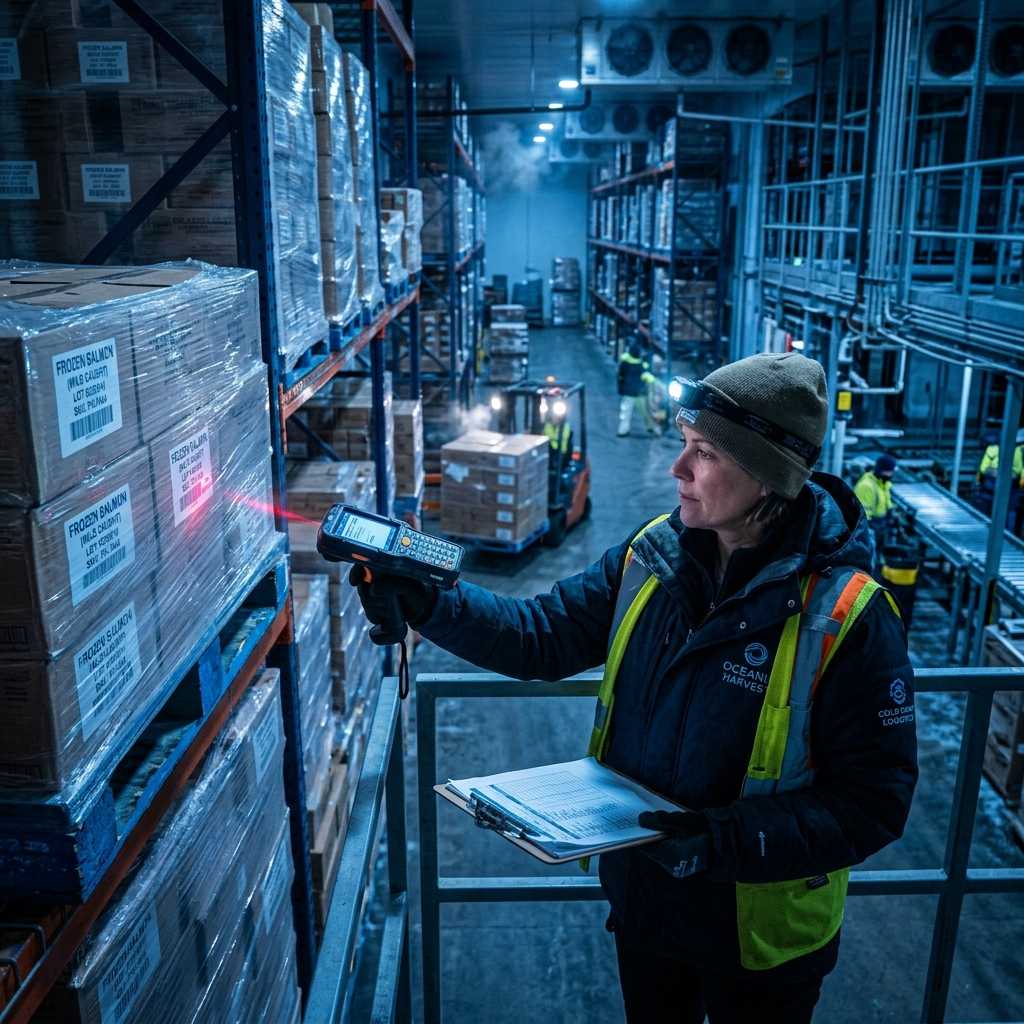
- QC Staff’s perspective: Tracing a defective tuna batch on the old software took 3 days of rummaging through files. The international Lot/Batch Tracking feature only needs one barcode scan, the entire Traceability Tree appears in detail in 15 seconds.
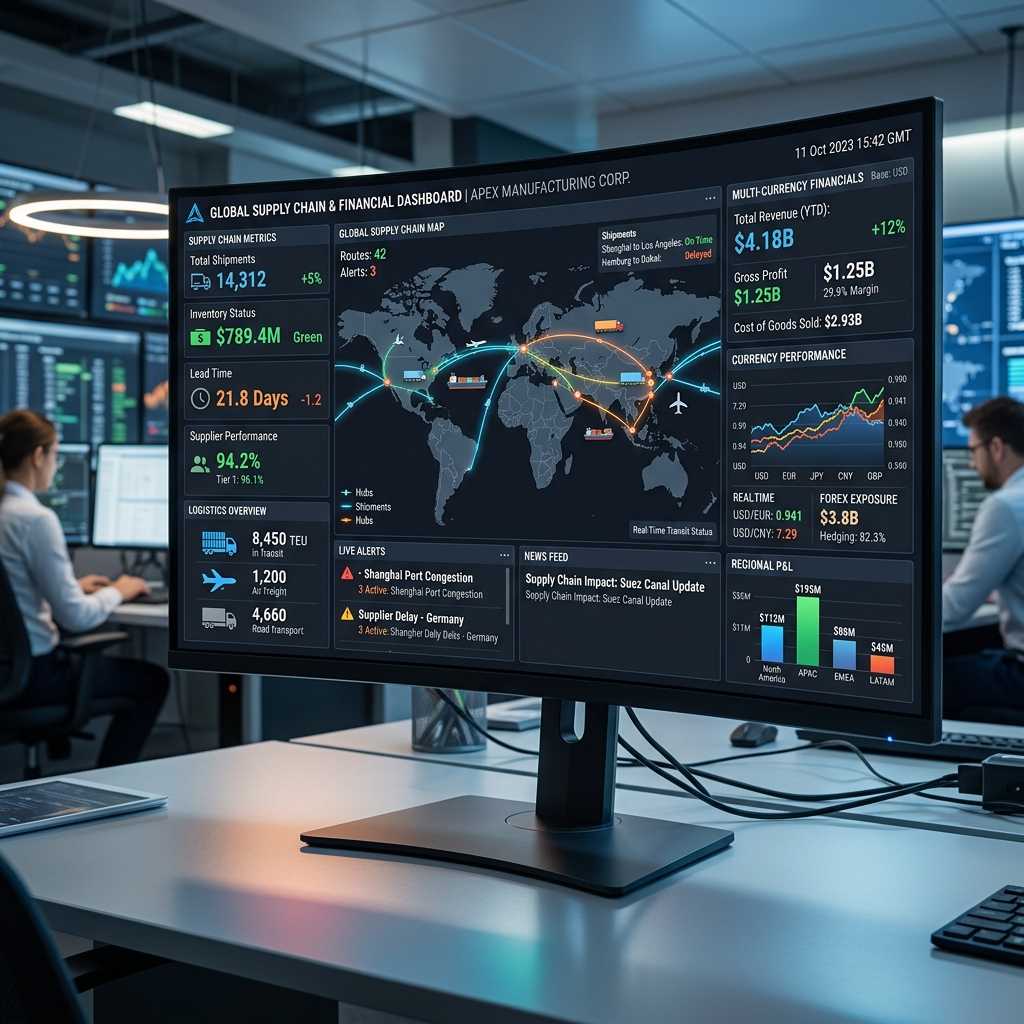
- CEO’s perspective: Accountants using Vietnamese software had to manually multiply and divide exchange rates, causing billion-dong discrepancies due to daily fluctuations. The international management platform automatically synchronizes exchange rates from the central bank, automatically accounts for differences, and instantly exports P&L reports in USD.
3. Risk Matrix of choosing the wrong system
Instead of comparing mere features, let’s analyze the risks when a business chooses a domestic ERP versus an international system:
| Risk Category | Domestic ERP Software (Low Cost) | ERP Platform (International Standard) |
|---|---|---|
| Data Risk | Extremely high. Disjointed data, manual entry multiple times leads to uncontrollable Human Error. | Extremely low. “Single Source of Truth” data, automatically and tightly synchronized from warehouse to accounting. |
| Process Risk | High. The habit of custom coding to pamper customers turns the system into a digitized pile of flawed processes. | Low. Forces businesses to comply with standard processes, promoting lean manufacturing. |
| Scalability Risk | Extremely high. Whenever adding a factory, the system easily bottlenecks or must be completely rewritten. | Extremely low. Flexible architecture, ready to replicate processes for dozens of transnational branches. |
| Financial Risk (TCO) | Huge Hidden Costs: Lost orders due to late deliveries, petty bug maintenance fees, hiring extra data entry staff. | High initial license fee, but lowest Total Cost of Ownership (TCO) in 10 years because the system runs extremely stably. |
| Audit Risk | High. FDI corporations often do not trust reports exported from local software without international certificates. | Zero. Operating on a global platform is a golden ticket to pass the strictest audits. |
Frequently Asked Questions (FAQs)
Question 1: Does an international system force my employees to change their working habits? Answer: Yes and No. Yes, because it forces the business to abandon arbitrary working habits (a common issue with domestic ERP ). However, you can completely set up flexible Approval Workflows or add User-Defined Fields (UDF) through the configuration interface without interfering with the programming core (Hard-code).
Question 2: Why do domestic ERP systems often “freeze” when calculating Material Requirements Planning (MRP)? Answer: The MRP algorithm requires recursive queries through dozens of BOM levels. Vietnamese software uses old-style relational databases, scanning millions of data lines on magnetic hard drives causes memory bottlenecks. International platforms use In-Memory Computing (Computing on RAM), accessing data extremely fast.
Question 3: If I keep the current accounting software and only buy an external foreign MES System to plug in? Answer: This is a risky decision creating Data Silos. When connecting an international MES with a disjointed management platform via APIs, data will continuously jam because both sides completely differ in material structure. A synchronized ecosystem from root to top is always the top advice.
Question 4: What is the biggest hidden cost when using domestic ERP that CEOs often don’t see? Answer: It is the “Lost opportunity cost”. If miscalculating material norms causes the factory to deliver export goods late, you not only lose the contract penalty but also lose that customer forever. The cost of feeding an IT team to patch system errors every day also erodes profits.
Question 5: Is investing in an international system too much for a business (SME) in Vietnam? Answer: No. Currently, there are Pre-configured solution packages specifically designed for the SME market. Along with the rapid deployment method (Agile/Activate), the Go-live time is only 3-6 months, helping SMEs in Vietnam recover capital (ROI) at lightning speed.
Register for a Demo of an in-depth solution for your factory at INFOASIA!

InfoAsia Việt Nam trở thành nhà cung cấp dịch vụ phần mềm số hóa nhà máy sản xuất cho thương hiệu giày hàng đầu thế giới NEW BALANCE
Công ty TNHH Mây Tre Hà Linh
SAP ERP MES and IOT Project for FVIV Factor
Buwon Industry Co, Ltd
KANGLONGDA VIETNAM PROTECTION TECHNOLOGY COMPANY LIMITED
Shini Group
TA TING PLASTIC (HAI DUONG ) CO., LTD
CÔNG TY TNHH MTV BIÊN HOA SCM