




In the digital economy era, implementing a CRM system to manage customer information instead of scattered Excel files has become a vital requirement for businesses. Without this platform, a salesperson resigning could lead to the disappearance of all potential customer data, or a marketing campaign costing thousands could fail to measure its final conversion rate.
To completely resolve these operational “pain points,” let’s delve into analyzing the true nature of Customer Relationship Management platforms, breaking down their critical features, classifying systems, and anticipating the AI trends reshaping how businesses interact.
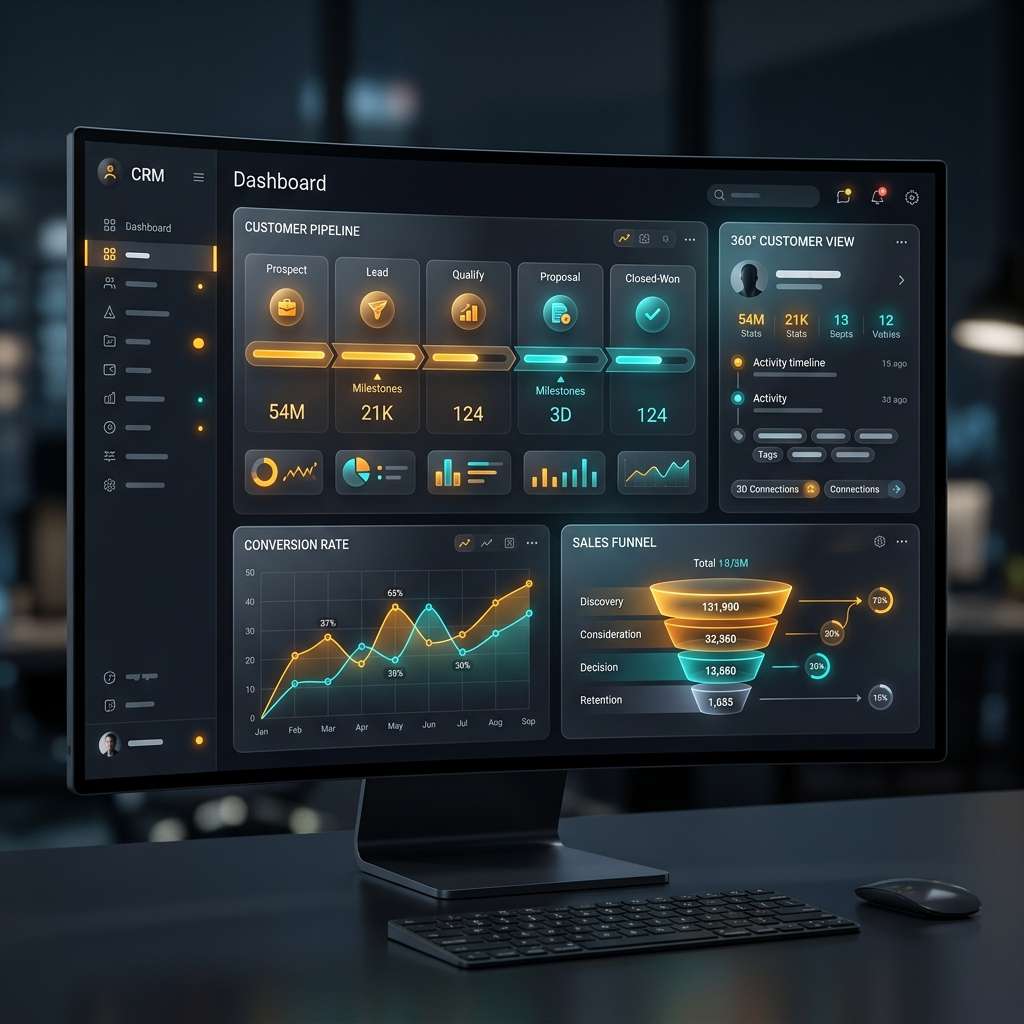
1. What is the true essence of CRM software?
1.1 In-depth Concept
CRM (Customer Relationship Management) is not simply an “electronic phonebook”. Strategically, it is a customer-centric business philosophy. Technologically, customer relationship management software is a unified platform that helps record, analyze, and manage all Touchpoints between a business and its customers — from the first glance at a website and consulting calls to closing a contract and post-sales care.
The ultimate mission of this platform is to create a “Single Source of Truth”. When an employee opens a customer’s profile, they will see the entire history: which advertising campaign this customer came from, how many orders they have purchased, and what complaints they currently have with the customer service department.
1.2 Who benefits directly from this system?
CRM
According to reputable global reports, proper application can drive revenue growth up to 30% and improve customer retention rates by 32%. This power comes from connecting all departments into a unified block:
- Sales Department: End the scenario of forgetting customer appointments. Manage the Pipeline, remind care schedules, and automatically assess the probability of closing deals.
- Marketing Department: Accurately analyze which campaigns are bringing in Qualified Leads rather than just measuring virtual engagement.
- Customer Service/Support Department: Receive multi-channel Tickets and resolve them quickly thanks to grasping the customer’s entire purchasing history.
- Accounting & Finance Department: Connect directly to track payment progress, record revenue, and manage debts closely for each contract.
- C-level Executives: Own a real-time Dashboard to measure business health, evaluate personnel KPIs, and forecast revenue.

2. 5 “Vital” Features Constituting a Modern Solution
To not be confused with regular POS sales software, a true solution must possess the following 5 technological pillars:
- Customer 360 Data Management: The system not only stores contact information but also tracks behaviors (opening emails, visiting websites). This data allows Segmentation for executing sharp Personalization campaigns.
- Workflow Automation: The system automates repetitive tasks: sending welcome emails, automatically distributing Leads (business opportunities) to Sales by region, and issuing alerts when contracts are nearing payment deadlines.
- Analytics & Reporting: Provides dozens of real-time chart templates. Directors can instantly see the conversion rate of the Sales Funnel, the average time to close a deal (Sales Cycle), and identify “bottlenecks” in the process.
- Sales Forecasting: Based on deal-closing history and the proportion of Opportunities in the funnel, AI can forecast total revenue for the next period with high accuracy, helping Chief Financial Officers (CFO) proactively manage cash flow.
- Omnichannel & API Integration Capabilities: A robust platform must communicate smoothly with other core systems like ERP, virtual Call Center software, or social media platforms for centralized conversation management.
3. 5 Strict Criteria for Evaluating a Solution for Businesses
To choose the right system, managers need to evaluate based on core filters:
- Fit-gap with Specific Processes: Don’t buy for fame, buy because it solves your specific processes. B2B sales (Large projects, long cycles) will need a completely different workflow than B2C sales (Retail, short cycles, high-volume transactions).
- Total Cost of Ownership (TCO) Optimization: Costs include License fees, Implementation fees, and training support fees. For small and medium enterprises, the cloud software (SaaS) model is the safest choice to avoid physical server maintenance costs.
- Vendor Support Capability: Prioritize providers with quick-responding local support teams. If the system fails and takes days to get support, the business process will be paralyzed.
- Scalability and API Integration: When the staff scale increases tenfold, will the system operate stably? The system’s openness (Open API) is a vital criterion for connecting data flows to accounting or ERP software in the future.
- Mobility: Modern sales teams need to handle work in the field. It must come with a smooth Mobile App, allowing employees to check-in locations, take photos of contracts, and update reports directly on their smartphones.
4. The Big Picture: System Classification and AI Trends Shaping the Future
Instead of searching for software haphazardly, leadership needs a clear understanding of the system’s classifications to invest wisely.
4.1. Functional Classification Matrix
CRM
Businesses need to clearly identify where their biggest “pain point” lies to choose the right type of system:
| Classification | Mission and Core Role | Practical Operational Application |
| Operational | Digitizes and automates the entire repetitive workflow of Sales, Marketing, and Customer Service departments. | Pipeline management, automatic Lead allocation for Sales, setting up automated email campaigns. |
| Analytical | Acts as the data processing brain. Analyzes interaction history to support leadership in strategic decision-making. | Multi-dimensional revenue reporting, shopping behavior forecasting, customer segmentation by value. |
| Collaborative | Breaks down internal information barriers (Data Silos), creating a seamless communication flow between departments. | Sales, Marketing, and CS departments jointly exploit and update on a “Single source of truth”. |
| Strategic | Orients long-term vision, putting the customer at the center to nurture Customer Lifetime Value. | Building loyal customer policies, designing Loyalty programs to increase retention rates. |
Practical Perspective: Advanced platforms in Vietnam today (like MISA AMIS) often tend to integrate all 4 of these functional groups into a unified ecosystem.
4.2. CRM Classification by Deployment Architecture
The infrastructure architecture will directly determine the budget and scalability:
- On-Premises CRM: Physically installed on the business’s own servers. Absolute security, but infrastructure investment and maintenance costs are substantial.
- On-Cloud CRM: Hosted on the provider’s servers, accessed via the Internet (SaaS). This is the leading trend due to low setup costs, rapid deployment, and anytime, anywhere access.
- Open Source CRM: Provides source code for the internal IT team to program and customize deeply (Example: Odoo, SuiteCRM).
- Packaged CRM: Pre-designed solutions with industry-standard Best Practices, immediately meeting common management needs.
- Custom CRM: Writing exclusive code from scratch to serve businesses with highly unique process chains.
4.3. AI CRM Trends 2026: From “Recording Data” to “Proactive Action”
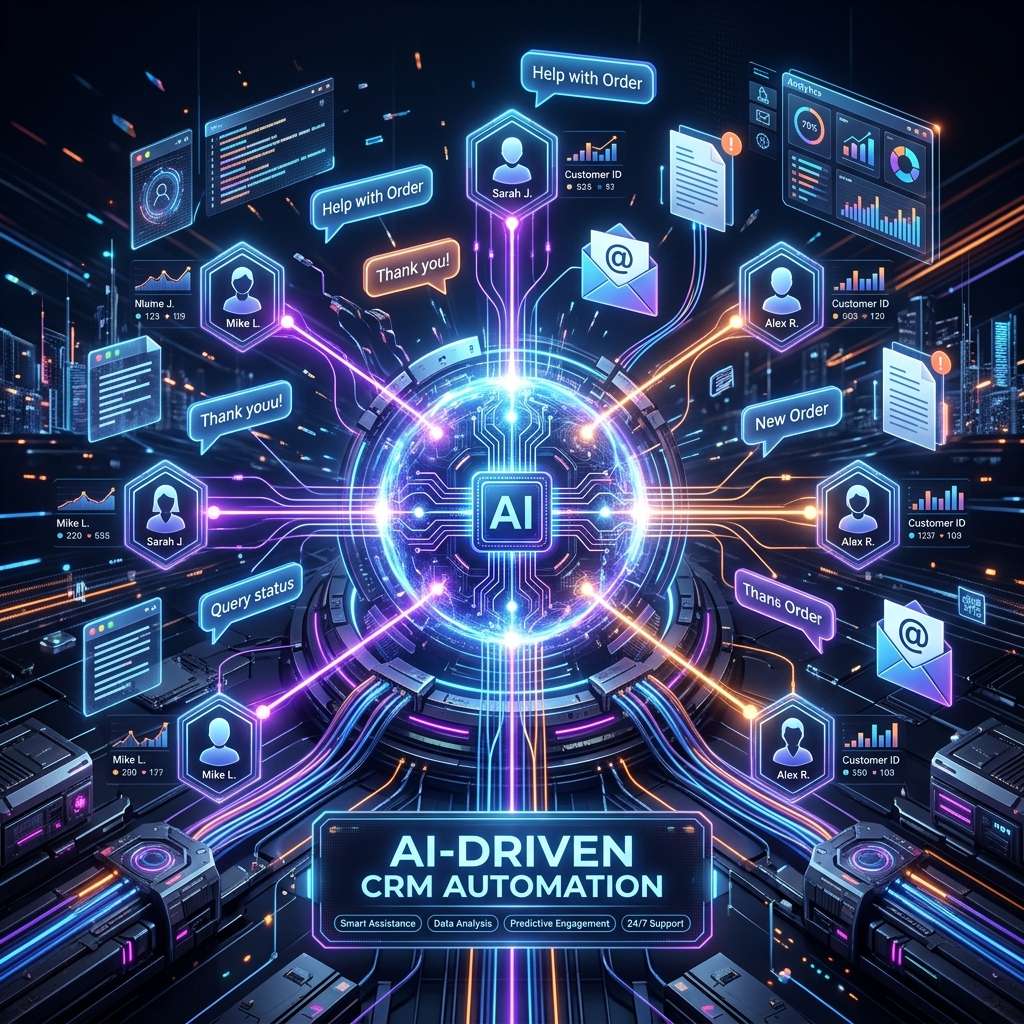
The future of customer management will be shaped by AI CRM (Artificial Intelligence Integration). The core of this trend is the creation of AI Agents that upgrade operational capabilities:
- Business Analysis Assistant: Automatically reviews data, sends reports and risk alerts to management; acts as a “consultant” on deal-closing scripts for the Sales team.
- Omnichannel AI Chatbot: A 24/7 consultant that self-learns and understands natural language to answer queries on social media channels without human effort.
- Machine Learning Behavior Forecasting: AI cross-analyzes history to predict the probability of a customer leaving (Churn rate) and determine the perfect “drop point” for their next purchase.
- Conversation Processing Automation: Transcribes audio recordings, summarizes calls with customers, and immediately suggests Next-best actions for Sales.
The benchmark difference: The biggest boundary between AI CRM and traditional CRM is the shift from a “Passive reception” stance to “Proactive recommendation”. For example: When an inactive B2B customer is detected for 30 days, the AI Agent will automatically flag the risk and suggest that Sales call with a specialized care script, turning dead data into profitable action.
5. Summary: Choosing a CRM – Choosing a Companion
Digital transformation is not about buying a magic tool. Technology accounts for only 30% of success; the remaining 70% depends on standardizing processes and the determination to change the working mindset of the entire organization.
Depending on the budget, departmental structure, and growth ambitions, businesses need to make appropriate platform architecture decisions. Businesses that pioneer the application of CRM — especially catching the AI CRM wave — will hold an overwhelming competitive advantage to serve customers with the fastest speed, deepest personalization, and operate the machinery with the most optimal costs.

InfoAsia Việt Nam trở thành nhà cung cấp dịch vụ phần mềm số hóa nhà máy sản xuất cho thương hiệu giày hàng đầu thế giới NEW BALANCE
Công ty TNHH Mây Tre Hà Linh
SAP ERP MES and IOT Project for FVIV Factor
Buwon Industry Co, Ltd
KANGLONGDA VIETNAM PROTECTION TECHNOLOGY COMPANY LIMITED
Shini Group
TA TING PLASTIC (HAI DUONG ) CO., LTD
CÔNG TY TNHH MTV BIÊN HOA SCM