




In the modern manufacturing landscape, the concept of “Digital Transformation” is no longer just theoretical; it has become a matter of survival. To address the vital metrics of S-Q-C-D (Speed – Quality – Cost – Delivery), many managers believe that equipping their business with ERP software is sufficient. However, the reality on the shop floor often tells a different story: production orders are still delayed, work-in-progress inventory continues to pile up, and no one knows the true performance of each machine shift.
This is where an MES (Manufacturing Execution System) steps in to bridge the “information blind spot” between the executive office and the shop floor. Join InfoAsia as we explore in detail what an MES is, its core functions, and why it is a mandatory piece of the puzzle that an ERP can never replace.
1. What is an MES System? Defining the Boundaries Between MES and ERP
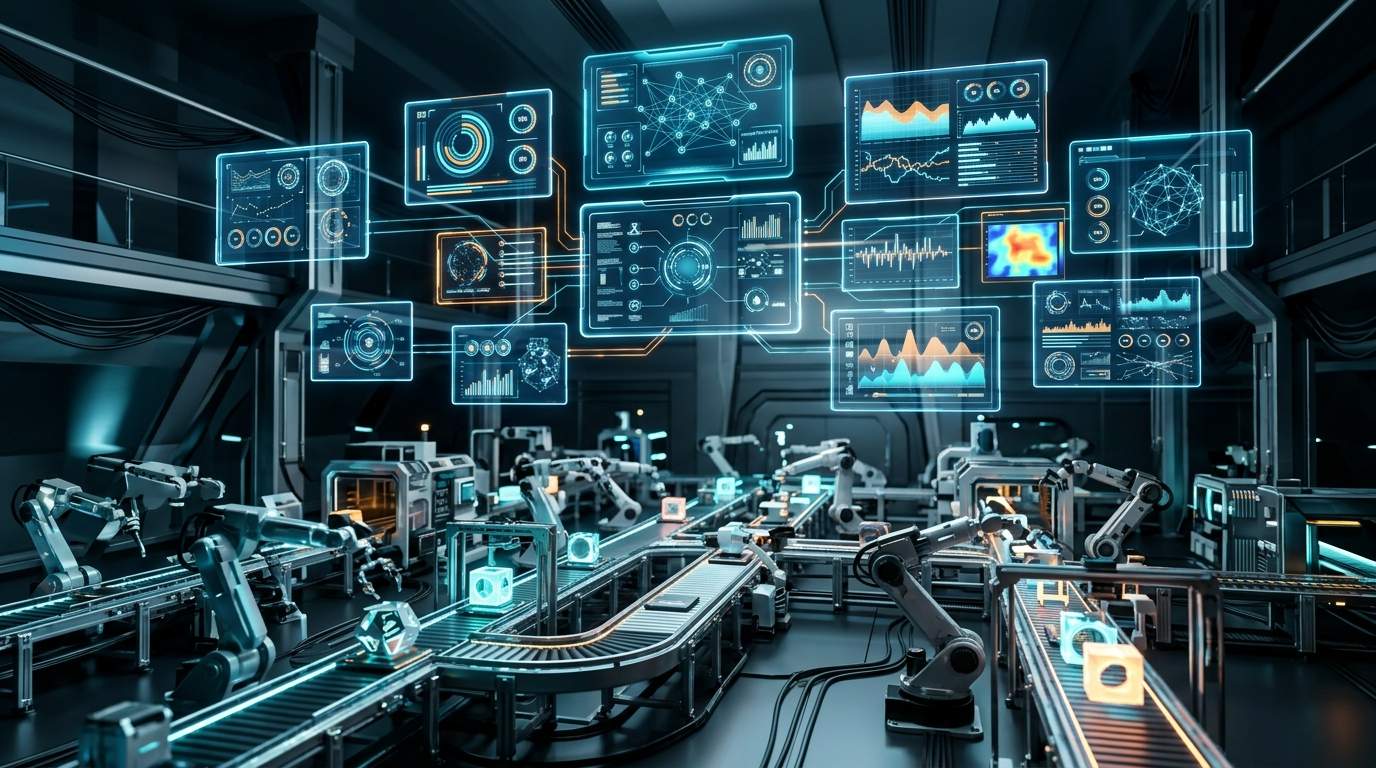
MES (Manufacturing Execution System) acts as the specialized technological “nervous system” of a factory. It continuously collects, monitors, and controls all physical activities on the shop floor in real-time.
Regarding system architecture:
- ERP (Enterprise Resource Planning) is the “Planning Brain”. Its role is to manage overall resources, create production plans, calculate raw material requirements, manage cash flow, and account for the cost of goods sold. ERP Software operates on macro-financial cycles.
- MES is the “Execution Heart”. It receives plans from the ERP, allocates tasks to specific machines, workers, and materials, and then monitors actual progress second by second.
Simply put: ERP tells you “What needs to be done this month to be profitable,” while MES ensures “Making those things as quickly as possible, with the fewest errors, right on the production line.” The fragmentation between planning and execution is precisely why businesses that already have an ERP still absolutely need to integrate an MES.
2. 10 Core Functions of a Standard MES System
Since 1997, the MESA Association (Manufacturing Enterprise Solutions Association) has shaped the standards for MES. Building on that foundation, a modern MES System today must encompass the following 10 functional pillars:
1. Resource Allocation and Status
Managing all operational “assets” on the shop floor: whether CNC machine #3 is running or stopped, which temporary storage holds the batch of virgin plastic, or if worker A has the proper certification to operate machine B. This prevents assigning the wrong tasks or wasting idle resources.
2. Operations/Detail Scheduling
This is a core feature consistently emphasized by manufacturing experts like Boyum Solutions. An MES (often integrated with APS software) automatically breaks down the master production order from the ERP into detailed routing steps. It prioritizes runs based on current machine capacity, helping to optimize setup times and minimize production bottlenecks.
3. Data Collection/Acquisition
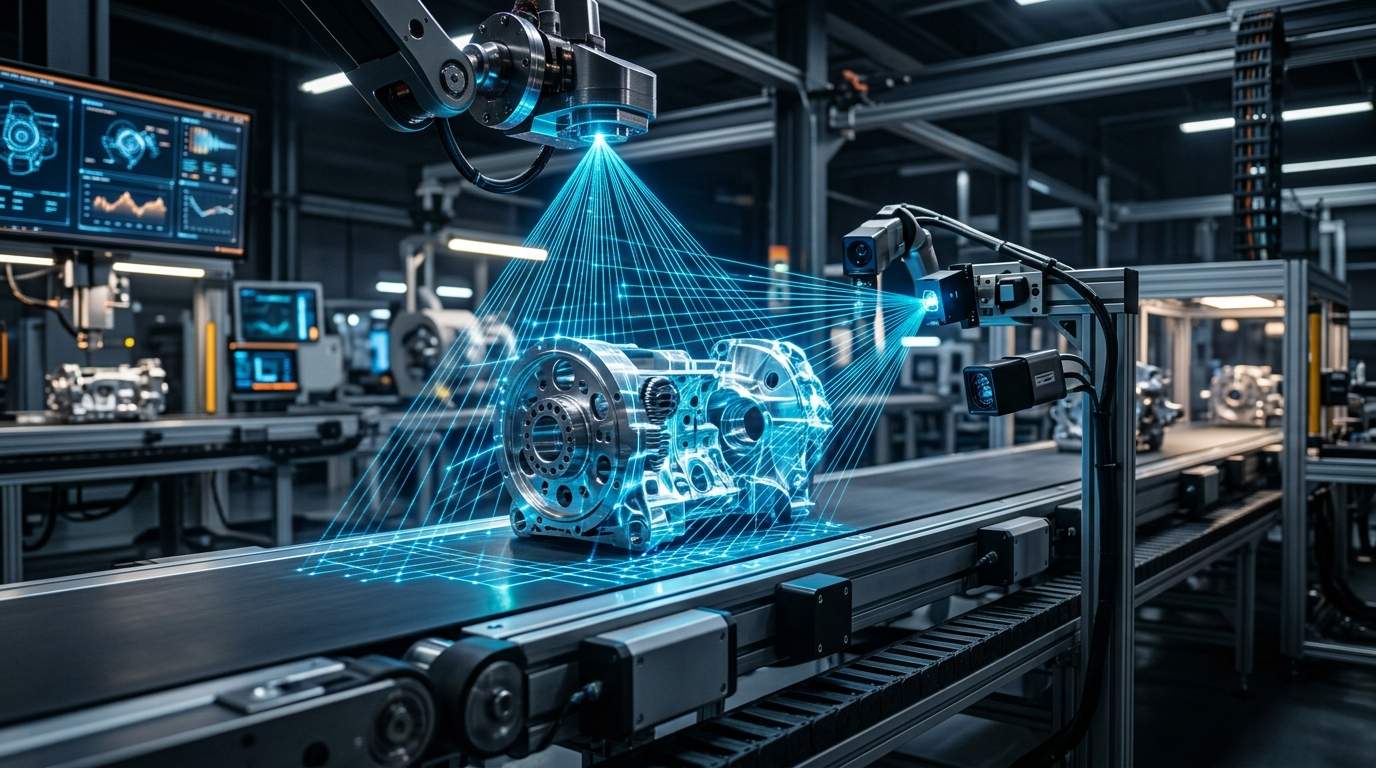
An MES doesn’t wait for workers to input reports at the end of a shift. It connects directly with IoT sensors or PLC/SCADA systems to automatically capture data. As a result, a floor manager simply needs to look at the dashboard to see the current running speed of the entire factory.
4. Dispatching Production Units
Ensuring the workflow remains uninterrupted. As soon as phase A is completed, the system automatically issues a command for phase B to prepare for receiving, while simultaneously notifying the warehouse to supply materials just-in-time to reduce wasted waiting periods.
5. Process Management / BOP
Guaranteeing every product is made exactly to spec. If a chemical mixing batch requires an exact temperature of 80°C, the system will alert operators or automatically lock the machine if it detects out-of-bounds parameters, keeping quality consistently uniform.
6. Document Control
Storing and distributing technical drawings (CAD), standard operating procedures (SOP), and formulations. Workers only need to open a tablet screen on the line to view the latest document versions, completely eliminating the risks associated with using outdated paper prints.
7. Quality Management
From incoming material inspection (IQC) and in-process quality control (PQC) to outgoing quality control (OQC). Quality data is tracked in the system rather than written in notebooks, making it easy for the QA/QC department to analyze defect rates and identify root causes.
8. Product Tracking and Genealogy
Using Barcodes, QR Codes, or RFID technology to identify each product batch. In strict industries like Food & Beverage or Pharmaceuticals, if a recall occurs, the MES helps businesses trace the entire “genealogy” of a product in just one minute: what materials were used, the exact intake date, and who operated the machine.
9. Maintenance Management
Providing preventive maintenance alerts based on actual machine operating hours or collected vibration and temperature parameters. This helps businesses proactively replace parts before unexpected machine failures paralyze the production line.
10. Overall Equipment Effectiveness (OEE) Analysis
Automatically calculating the OEE index, which reflects the true strength of a factory based on 3 variables:
– Availability: Is the machine running for the scheduled amount of time?
– Performance: Is the machine running at its designed speed?
– Quality: What is the percentage of generated scrap/defects?
3. Measurable Benefits of Implementing MES
Implementing an MES is not an expense; it is an investment with a clear Return on Investment (ROI). Research from MESA International highlights impressive figures:
- Eliminating administrative downtime: Reduces manual data entry time by over 75% on average and cuts paperwork passed between shifts by 61%, allowing workers to focus 100% on production.
- Freeing up working capital: Tight production scheduling helps reduce Work In Progress (WIP) by up to 24%. No more scenes of unfinished goods piling up and taking up floor space.
- Shortening Cycle Time: Reduces the time to create a finished product by up to 45% by eliminating waiting periods for materials or commands from superiors.
- Enhancing long-term competitiveness: Controlling quality with real data helps reduce scrap rates by 18%, increasing customer satisfaction and giving businesses the confidence to pass rigorous audits from FDI partners (such as ISO, GMP).
4. Which Manufacturing Plants Need an MES System?
Not every business requires an MES. If you are just a small-scale machining shop with simple processes, using basic accounting or ERP software is generally sufficient.
However, an MES System is a mandatory requirement if your business falls into the following categories:
- Assembly / Precision Mechanics / Electronics: Needs to manage complex product structures and requires rigorous Lot/Serial traceability.
- F&B / Pharmaceuticals / Chemicals: Recipe-based production requiring strict control of temperature, pressure, humidity, and expiry date management.
- Plastics / Packaging / Construction Materials: Industries with thin profit margins that require machines to run continuously 24/7 and must measure OEE to optimize every penny of cost.
In the architecture of a Smart Factory (Industry 4.0), MES is an indispensable communication layer. It sits at level 3 (according to the ISA-95 model), receiving data directly from machines (the SCADA/PLC layer) and reporting it up to the ERP system, turning all physical data into actionable business data.
5. Future Trends for MES in the Digital Transformation Era
Today’s MES platforms are no longer rigid blocks of software. Technological convergence is reshaping the face of production management:
5.1 AI and Machine Learning Integration (Predictive Maintenance)
MES no longer just measures the present; it “forecasts the future.” Artificial intelligence will analyze historical data to warn: Spindle #4 is at risk of failure in the next 72 hours due to a sudden spike in vibration. This feature completely transforms how businesses handle Predictive Maintenance.
5.2 The Boom of IIoT (Industrial Internet of Things)
Affordable sensors allow MES to extend its “tentacles” to collect all kinds of data: from power consumption and compressed air pressure to warehouse humidity. All signals are transmitted wirelessly to servers in real-time.
5.3 Seamless Communication with Global Standard ERP Ecosystems
To avoid the risks of a disjointed setup, manufacturers tend to choose solution suites designed to be synchronized from the start. For example, the combination of SAP software Business One (ERP) and the specialized manufacturing management system Beas Manufacturing (MES) creates a closed data loop: When the shop floor reports the consumption of one ton of plastic on the MES, the cost of goods sold on the SAP B1 financial ledger is automatically and perfectly updated.
5.4 Intuitive Interfaces and Mobility
Workers no longer have to navigate complex DOS-like interfaces. Modern MES platforms are equipped with highly intuitive touch-screens or integrated into tablets, allowing operators to learn how to use them in just a few minutes.

Conclusion
Investing in an ERP system is necessary to standardize finances and commercial flows. However, if you want to directly optimize productivity, control quality down to every millimeter of a product, and unlock the full capacity of your machinery lines, equipping an MES is a strategic step that cannot be delayed.
Let MES transform your factory from a “black box” into a transparent, lean production machine ready to conquer the world’s most demanding supply chains!
6. Frequently Asked Questions (FAQs) About MES
1. How long does it usually take to implement an MES?
Depending on the scale, industry specifics, and the complexity of the production process, an MES implementation typically takes anywhere from 3 to 9 months. This process includes stages such as process surveys, software customization, connecting with hardware devices (IoT, PLC), and practical user training at the plant.
2. Can an MES operate independently without an ERP?
Yes. An MES can operate entirely independently to monitor, schedule, and collect data right on the shop floor. However, to maximize the value of digitalization, experts always recommend that businesses integrate their MES with ERP software to create a closed data loop from ordering and planning to calculating the ex-factory cost.
3. Should small businesses invest in an MES?
For small processing shops with simple workflows, an immediate investment in an MES might not be cost-optimal. Even so, if your business is in a scale-up phase or operates in industries requiring strict traceability (F&B, Pharmaceuticals), adopting an MES early on will build a solid data foundation for breakthrough growth.

InfoAsia Việt Nam trở thành nhà cung cấp dịch vụ phần mềm số hóa nhà máy sản xuất cho thương hiệu giày hàng đầu thế giới NEW BALANCE
Công ty TNHH Mây Tre Hà Linh
SAP ERP MES and IOT Project for FVIV Factor
Buwon Industry Co, Ltd
KANGLONGDA VIETNAM PROTECTION TECHNOLOGY COMPANY LIMITED
Shini Group
TA TING PLASTIC (HAI DUONG ) CO., LTD
CÔNG TY TNHH MTV BIÊN HOA SCM