




YOAST SEO METADATA
Focus Keyword: SAP software deployment services
Meta Description: Looking for professional SAP software deployment services? Discover how to optimize license costs and master data for efficient factory management.
SAP software deployment services are essential. In the management world, purchasing a license for a world-class Enterprise Resource Planning (ERP) system like SAP is an easy decision if a business has a sufficient budget. However, the failure or cost-overrun rate of ERP projects remains consistently high. The root cause is that businesses often confuse “software installation” with “data restructuring”. To ensure success, choosing a partner deeply knowledgeable about factory operations is a vital factor.
To change the familiar perspective, this article will apply a top-down information structure: Going straight into practical solutions from a reputable deployment partner, dissecting in-depth technology optimization strategies, before returning to decode the core financial nature of the SAP system.
1. InfoAsia – Redefining SAP Software Deployment Services in Vietnam
Instead of looking for an IT team to install software, businesses need a “chief architect” to restructure their financial and operational flows. InfoAsia affirms its position as a consulting partner and provider of in-depth SAP software deployment services, bringing a completely different approach.
We are not just a software provider, but a unit that solves management problems using technology. InfoAsia’s core competency is built on 3 platforms:
- ERP & Beas Manufacturing system ecosystem: A comprehensive management solution, especially powerful in solving multi-level Bill of Materials (BOM) structures and optimizing production scheduling (supported by a specialized APS software system).
- Mastering deep data technology: High expertise in database intervention to fine-tune system performance.
- InfoAsia e-Office interconnected ecosystem: Digitizing the entire document approval flow, connecting smoothly with the SAP data core.
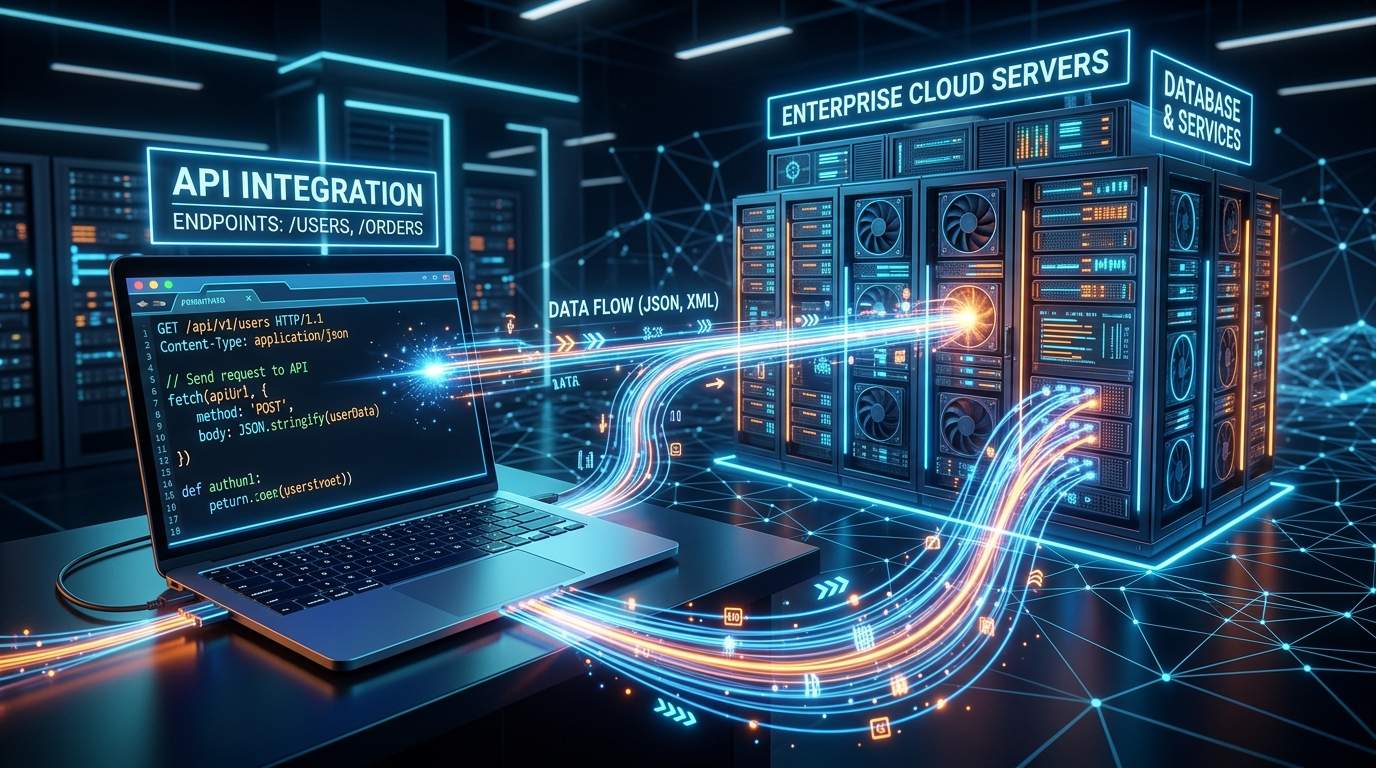
2. Budget Breakthrough: Optimizing License Costs with SAP DI API Technology
One of the biggest barriers of SAP projects is the extremely expensive user license cost. Many businesses have to reluctantly cut down users, causing the system to experience information breakage. InfoAsia completely solves this bottleneck with its extensive programming capabilities.
- Utilizing Application Programming Interface (SAP DI API): Instead of requiring businesses to buy hundreds of licenses for employees who only occasionally need to log in, InfoAsia’s technical team develops internal applications that communicate directly via API (learn more about official SAP technology).
- Cloning core features: Operations such as creating Purchase Requests or Purchase Orders are copied to a satellite software environment. Hundreds of employees can interact, and valid data automatically flows into the SAP core without the business bearing additional license purchasing costs from the vendor.

3. Database Power: Customization and Acceleration with SQL Server
When business data swells after a few years of operation, reports on the ERP often take hours to extract. The speed of the system depends entirely on the database processing techniques of the deployment unit.
- Performance Tuning: InfoAsia’s team of experts has the ability to write and optimize complex query scripts (SQL Stored Procedures) and Views.
- Big Data Processing: By applying the most optimal Complex Joins logic, InfoAsia ensures the SAP machine can scan through millions of material records and accounting vouchers, returning Dashboard results in the blink of an eye without overloading server resources.

4. Decoding Operational “Blind Spots”: The Disconnect Between IT and the Financial Core (First-Principles)
Why are the in-depth techniques in Section 2 and Section 3 needed? The answer lies in the first-principles of SAP. SAP is not administrative storage software; it is a machine that translates physical actions into the language of Accounting – Finance.
Many projects fail because the deployment team is only good at IT but clueless about production accounting.
- The nature of automatic journal entries: When a forklift moves goods from warehouse A to warehouse B (an activity recorded by the MES system), the system does not just record the location change. It must automatically generate a Debit/Credit entry on the account ledger.
- The Work In Process (WIP) cost bottleneck: If consultants do not understand the Absorption Costing allocation method, they will not be able to configure the material consumption data flow from the factory floor pushed to SAP. The consequence is that accounting cannot close the Standard Costing for the period, and the Profit/Loss report is completely skewed.
5. The “Tailor-made” Closed System Roadmap
To ensure all technological functions correctly serve financial goals, the process of providing SAP software deployment services must follow a Top-Down architectural roadmap:
- Blueprint Design: Starting from the Board of Directors’ requirements for macro reporting indicators, then reverse-engineering the micro-level data entry process for each department.
- Master Data Discipline: Cleaning and standardizing the entire chart of accounts and material category codes. The system only returns correct results when the input data is set up accurately.
- Integrating digital approval flows: Calculated data from the ERP software system is directly connected to the electronic office system (InfoAsia e-Office). Inventory issue and procurement approval requests (related to MRP calculations) are executed using digital signatures on mobile devices, creating a paperless operating space with zero latency.
Register to experience a Demo of the ERP system solution customized specifically for your factory’s operational map at INFOASIA today.
6. Frequently Asked Questions (FAQs)
Why is the cost of purchasing an SAP License so expensive and how to optimize it?
The License cost is expensive because you are paying for the core management brain and international standard data integrity. However, by using satellite applications connected via the SAP DI API developed by InfoAsia, you only need to purchase Licenses for key personnel, while regular data entry staff can use the internal app to save billions of dong.
How long does an SAP deployment project usually last?
Depending on the scale and complexity of the data, a standardization project typically takes from 6 to 9 months. Most of the time is not spent on installation, but on the “Master Data Discipline” stage – cleaning material codes and restructuring accounting processes to match the system.
How to know if a deployment partner is capable enough?
Do not just ask them about IT techniques. Ask them to explain how the system automatically accounts for Work In Process (WIP) costs or how to handle standard costing variances. A capable provider of SAP software deployment services must be excellent at both Production Accounting and SQL Data Structures.
Can the SAP system connect to machines on the factory floor?
Absolutely. The ERP core can connect to the MES (Manufacturing Execution System) via APIs or Middleware. The MES will collect data from CNC machines, PLCs, or barcode scanners and push it directly to SAP in real-time.

InfoAsia Việt Nam trở thành nhà cung cấp dịch vụ phần mềm số hóa nhà máy sản xuất cho thương hiệu giày hàng đầu thế giới NEW BALANCE
Công ty TNHH Mây Tre Hà Linh
SAP ERP MES and IOT Project for FVIV Factor
Buwon Industry Co, Ltd
KANGLONGDA VIETNAM PROTECTION TECHNOLOGY COMPANY LIMITED
Shini Group
TA TING PLASTIC (HAI DUONG ) CO., LTD
CÔNG TY TNHH MTV BIÊN HOA SCM