




An MRP implementation company in Vietnam plays a crucial role in the industrial manufacturing environment, where material management is always a fierce tug-of-war between two extremes: Overstocking leads to “Dead Capital” and massive warehousing costs; yet, the shortage of a single small component is enough to halt entire billion-dong assembly lines. To break this dilemma, a Material Requirements Planning (MRP) system is the mandatory technological solution.
However, MRP software is essentially just a calculating machine. Purchasing packaged software is completely different from putting it into actual operation. This process requires a deployment unit with a seamless combination of industrial engineering knowledge and database processing capabilities.
Below is an in-depth picture of the nature of the material problem, a standard 5-step implementation roadmap manual, and the criteria to identify a capable MRP implementation provider.
1. The nature of the material problem and the Consequences of operating without MRP
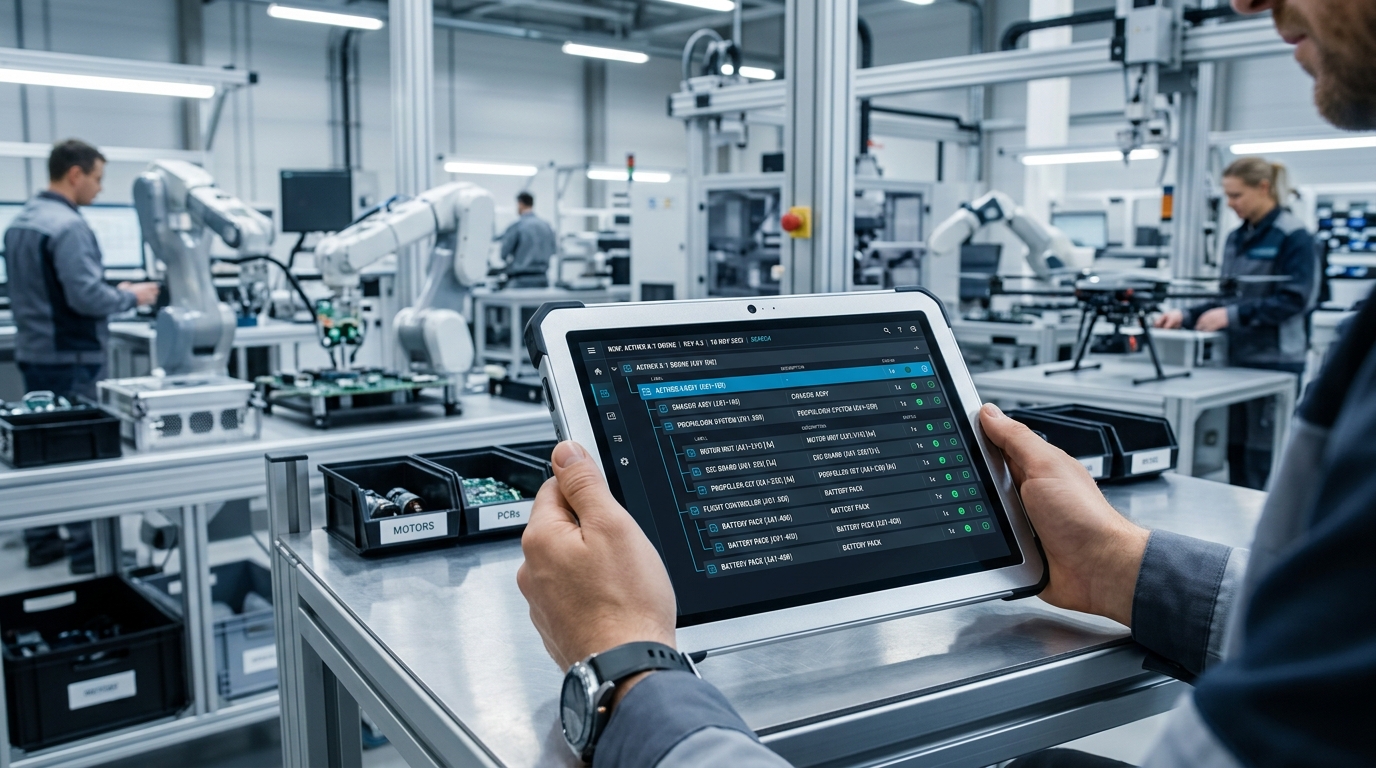
MRP system for efficient material management
To understand why MRP implementation is a matter of survival, we need to look at the physical nature of the manufacturing process (First-principles). A finished product is not naturally created; it is composed of dozens, or even thousands, of small components through a structure called the Bill of Materials (BOM).
The limits of manual calculation
When a factory receives a production order for 5,000 electric bicycles, the challenge is not just buying 10,000 tires. The Planning department must break it down deeply into multi-level auxiliary materials (Multi-level BOM): How many meters of electrical wire, how many copper coils for the motor, how many screws are needed?
The most complex issue lies in Lead Time. A battery imported from abroad takes 45 days, while a locally purchased tire takes only 3 days. If using Excel or human effort to calculate the time to issue purchasing orders for each material code so that they arrive at the warehouse “at the same time” for assembly, the manual system will inevitably collapse.
Consequences of technological disruption
Without a standard MRP system, factories often fall into operational blind spots:
- The “Just-in-case” culture: Fearing a machine stoppage due to shortages, the Purchasing department tends to over-order. Warehouses bulge, the rate of expired materials (in F&B, Pharma industries) soars, directly eroding gross profit.
- Continuous “Firefighting” effect: The running assembly line suddenly stops because a box of labels is found missing. The procurement team must frantically place emergency orders via air freight with exponentially higher shipping costs.
- Inability to commit to schedules (low OTIF): Sales cannot accurately tell customers what date the goods will be delivered because they do not know when the materials will fully arrive.
Precisely because of these bottlenecks, the MRP machine was born as a “brain” that calculates backward from the delivery date (Backward Scheduling), automatically reviewing tens of thousands of material codes to generate Purchasing/Production proposals accurate to the minute. That is also why any professional MRP implementation company in Vietnam always considers this process the heart of supply chain management.
2. The 5-step roadmap to put the MRP system into actual operation
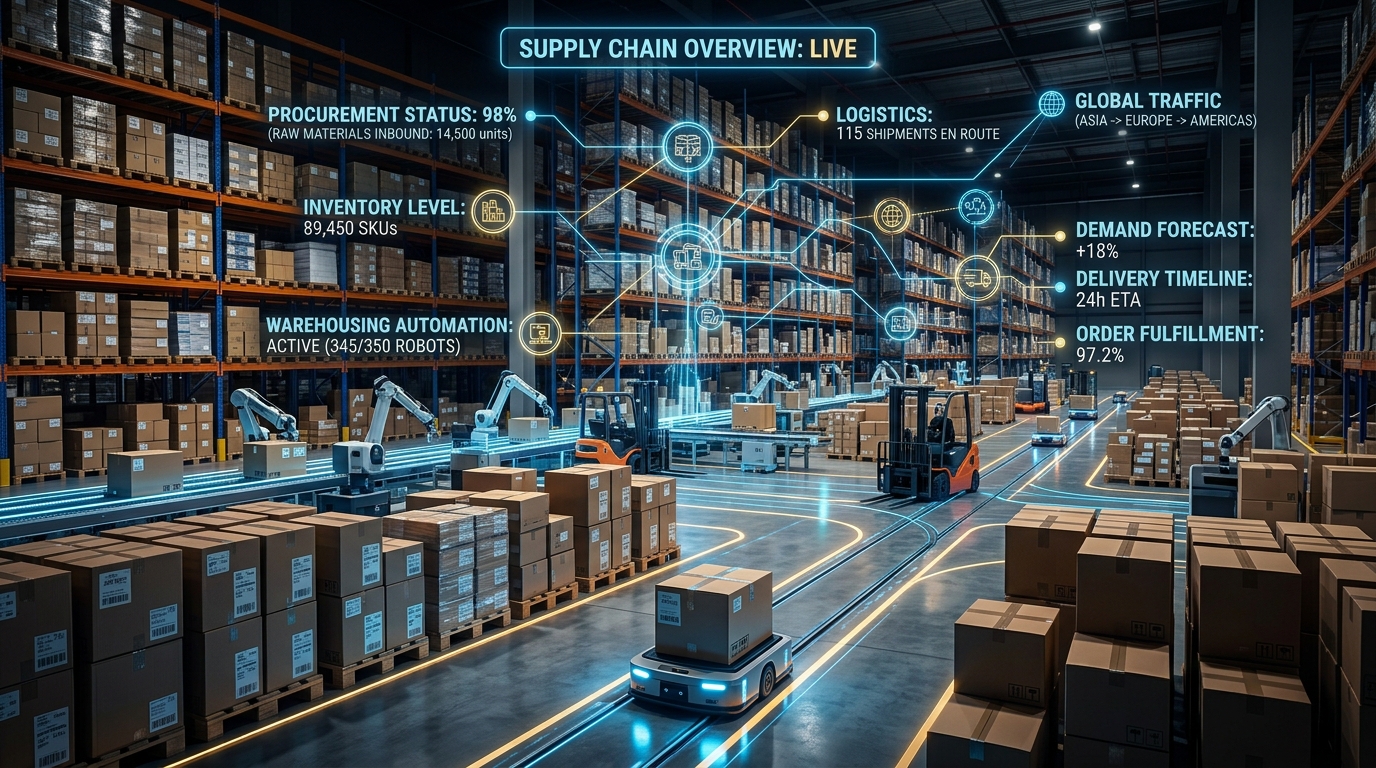
MRP system for efficient material management
Digitizing an MRP system is a major surgery on processes. Below is a 5-step manual that a professional deployment unit will execute to ensure the project lands safely.
Step 1: Master Data Engineering
The MRP algorithm operates on absolute cause and effect: Garbage In, Garbage Out. The deployment unit will not rush to configure the software without first “cleaning” the source data.
– Standardizing the BOM structure: Breaking down Excel BOM files into a multi-level BOM structure on the software. Ensuring all Scrap rates at each stage are clearly defined.
– Measuring Lead Time: Accurately updating the order lead time from suppliers and internal processing time.
– Closing Inventory books: Organizing comprehensive physical inventory counts. The MRP algorithm will calculate completely wrong if the inventory balance on the software does not match reality.
Step 2: Setting up Deduction Algorithms and Financial Variables
After having clean data, experts will configure mathematical variables so the MRP correctly simulates the enterprise’s supply chain strategy.
– Configuring Order Modifiers: Setting up rounding parameters when machines calculate odd numbers. For example: Minimum Order Quantity (MOQ), Order Multiples, and Safety Stock.
– Financial Integration: Setting up the accounting flow so that when MRP triggers a material issue order, the Accounting system automatically records the correct Work in Process (WIP) account structure.
Step 3: Running Scenario Simulations and Stress-Test
Do not apply actual running immediately. The deployment unit will build a test environment (Sandbox) to run rigorous scenarios.
– What-if Analysis: Simulating a scenario where an order suddenly increases production volume by 40%. Observing how long it takes for the MRP machine to react and generate additional Purchase Proposals.
– Optimizing Database performance: At this step, IT experts will fine-tune SQL queries (SQL Optimization) to ensure the server does not “freeze” when the MRP has to scan through millions of data records simultaneously.
Step 4: Integrating the automatic Approval workflow ecosystem
The MRP result (e.g., A proposal to buy 10 tons of plastic resin) will lose its value if it gets stuck in the paper-based approval stage.
– Digitizing the expense approval process: Converting Purchase Requisitions (PR) into electronic signing workflows. The Board of Directors receives Push Notifications and approves directly on mobile devices.
– Automatic PO Generation: Once approved, the system automatically generates a Purchase Order (PO) and sends it to the supplier, establishing a touchless supply chain.
Step 5: Operational Handover and Establishing Discipline
Technology only accounts for 30% of success, the remaining 70% is the human factor.
– Change Management: Training the Planning and Purchasing teams to abandon Excel reconciliation.
– Establishing Data Discipline: Applying strict operational rules (e.g., warehouse issues must be recorded on the system within the shift) to ensure the data running the MRP is always Real-time.
3. InfoAsia – An MRP implementation company in Vietnam creating a comprehensive supply chain ecosystem
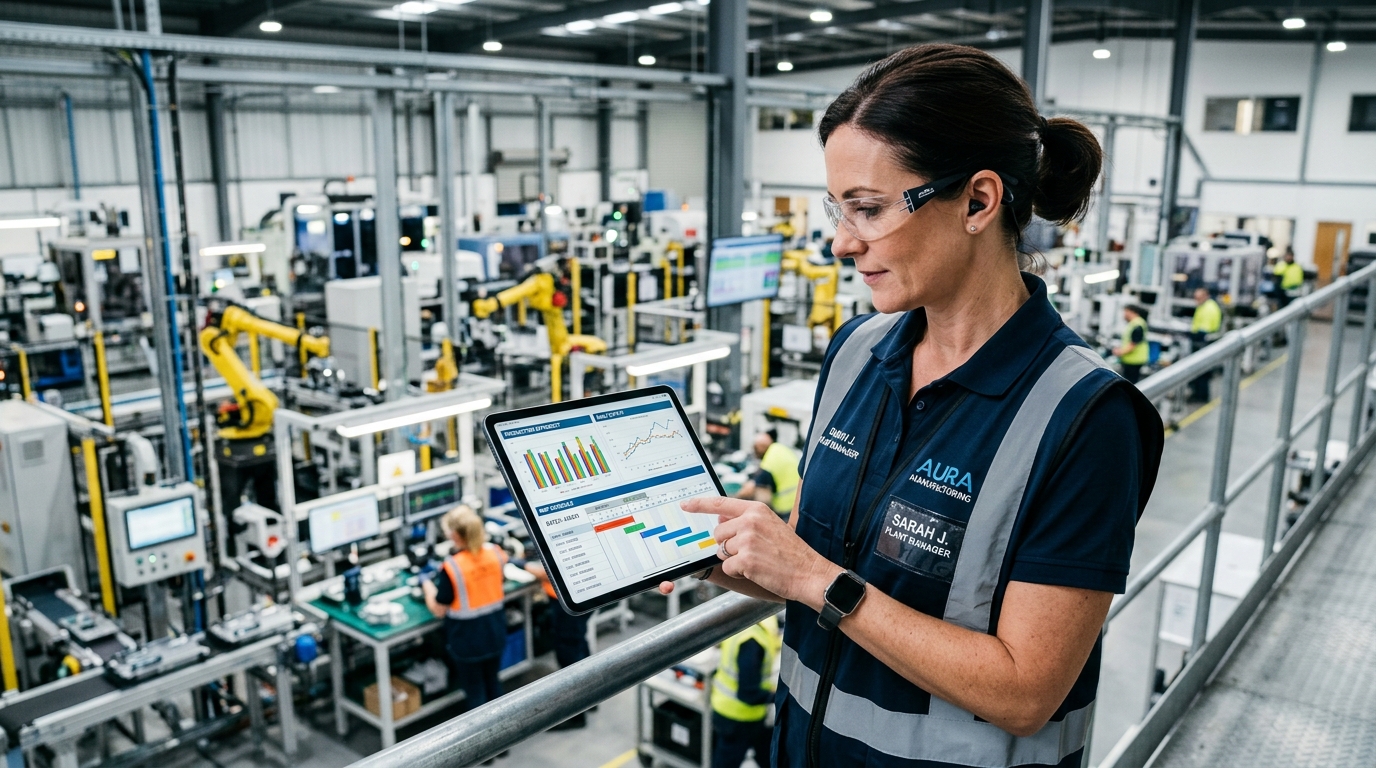
MRP system for efficient material management
To safely reach the destination of the 5-step roadmap above, enterprises need an MRP implementation partner that converges in-depth financial consulting, an understanding of manufacturing system engineering, and mastery of deep data technology like InfoAsia.
The core strengths that shape InfoAsia’s implementation capabilities include:
- Mastering the core platforms SAP Business One & Beas Manufacturing: InfoAsia deploys MRP systems based on the globally standard SAP software management platform, combined with the specialized MES software solution and manufacturing solution Beas Manufacturing. This architecture helps smoothly process the most complex multi-level BOM matrices of the electronic assembly, mechanical engineering, textile, and F&B industries, while tightly integrating with the Finance – Accounting module.
- High-speed Database Mastery: Running the MRP algorithm in a large-scale factory requires the ability to process millions of concurrent calculations. InfoAsia’s team of experts has high competence in designing, writing, and fine-tuning performance (Performance Tuning) for storage scenarios (SQL Stored Procedures, Views). As a result, the enterprise’s MRP machine always operates at maximum speed, outputting instant results without overloading hardware resources.
- Interconnecting operational flows with InfoAsia e-Office: We do not let the MRP’s Purchase Requisitions (PR) lie dormant on the software. All calculation results will be automatically synchronized to the InfoAsia e-Office digital workplace platform. This process creates a secure, fast, and completely Paperless signing and approval workflow chain, helping the leadership make procurement decisions anytime, anywhere.
- First-Principles Consulting approach: InfoAsia’s team of Consultants will accompany the factory right from Step 1. By directly going down to the workshop to break down and standardize BOM data and Routing processes, we ensure the data structure is always “clean” and reflects exactly 100% of the physical reality.
The decision to digitize with an MRP system is a turning point that brings the factory out of emotional “just-in-case” management to advance to a proactive, data-driven coordination model. With a standard roadmap and the companionship of InfoAsia, enterprises fully hold the key to freeing up working capital, optimizing inventory, and establishing an overwhelming competitive advantage.
4. Frequently Asked Questions (FAQs)
What is the average time for an MRP implementation company in Vietnam to complete a project?
Depending on the scale, data status, and complexity of the BOM structure, an MRP implementation project usually lasts from 3 to 6 months. This time ensures enough space to clean data and help users get accustomed to the new process.
Can an MRP system stand alone, or must it be integrated with other software?
Theoretically, MRP can operate independently, but to maximize efficiency, MRP is often integrated as a core module in ERP software to connect directly with financial, sales, and warehouse data.
Do small and medium enterprises really need a professional MRP deployment agency?
Absolutely necessary. Regardless of the scale, material shortages cause significant damage. The methodical application of an MRP system helps businesses accurately manage the supply flow, creating a perfect stepping stone to upgrade to more advanced APS systems in the future when scaling up.

InfoAsia Việt Nam trở thành nhà cung cấp dịch vụ phần mềm số hóa nhà máy sản xuất cho thương hiệu giày hàng đầu thế giới NEW BALANCE
Công ty TNHH Mây Tre Hà Linh
SAP ERP MES and IOT Project for FVIV Factor
Buwon Industry Co, Ltd
KANGLONGDA VIETNAM PROTECTION TECHNOLOGY COMPANY LIMITED
Shini Group
TA TING PLASTIC (HAI DUONG ) CO., LTD
CÔNG TY TNHH MTV BIÊN HOA SCM