




An IoT factory deployment company is the vital factor deciding success or failure when entering the Industry 4.0 era. When automation using mechanical machinery has reached the boundary of optimization, the next bottleneck is not about how fast the machines run, but whether they can communicate and “speak up” about their condition.
However, digitizing a factory is not simply plugging a sensor into a power outlet. It is a complex integration problem between decades-old legacy machines and modern telecommunication systems. Therefore, the capacity of a specialized IoT factory deployment company is the key for the project to become a smart “central nervous system”, not a useless mess of cables. Below is a picture that uncovers the root architecture of the IoT ecosystem.
1. The core nature of factory IoT (First-Principles Perspective)
To correctly evaluate the role of IoT, we need to look from a first-principles perspective. In a factory, the value creation process is a physical and chemical transformation (temperature, pressure, cutting speed, vibration). Previously, these were Analog signals. Humans cannot process millions of Analog signals simultaneously, leading to localized “information blindness”.
The nature of factory IoT is the process of digitizing physical signals (Analog to Digital Conversion).
Capture: Industrial sensors act as “senses”, measuring the variations of the physical world and converting them into a binary data stream (0 and 1).
Edge Computing: Unlike consumer IoT, industrial data is generated in milliseconds. A professional IoT system does not push all raw data to the server (Cloud) because it would cause bandwidth congestion and latency. Edge Gateways placed right next to the machines will filter, analyze, and eliminate junk data, only sending valuable information (e.g., only alarming when the temperature exceeds 80°C).
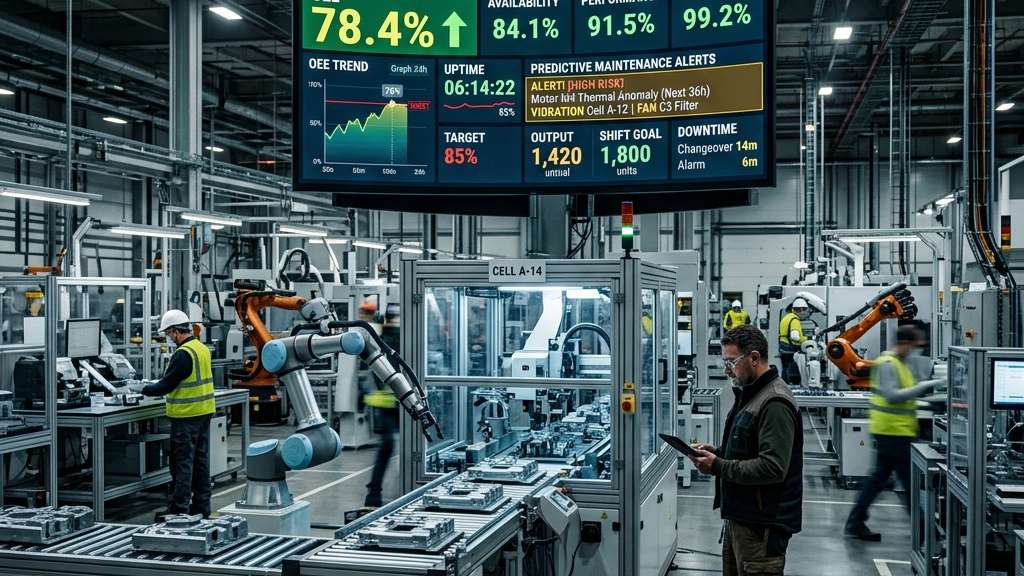
2. Decoding operational “Blind spots” and the Overall Equipment Effectiveness (OEE) problem
Without IoT, the workshop manager operates based on “intuition” and delayed paper reports. This disruption causes huge losses hidden beneath the tip of the iceberg:
The illusion of capacity and OEE Losses: Overall Equipment Effectiveness (OEE) is composed of 3 variables: Availability × Performance × Quality. Without IoT, you cannot accurately measure why a machine stops (Lack of materials? Chuck jammed? Or workers absent?). A machine idling consumes electricity but produces no products, causing the actual OEE of many factories to be only at 40-50% while reports always show 80%.
Huge costs from Reactive Maintenance: The “fix it when it breaks” method or fixed-schedule maintenance both cause waste. By analyzing the vibration and acoustic frequency of bearings, the IoT system can warn 2 weeks in advance that the spindle of a CNC milling machine is about to fail, avoiding unexpected downtime.
Traceability Blackbox: When there is a defective batch, a factory without IoT will spend weeks rummaging through record books to find out which machine ran that batch and what the oven temperature was at that time to isolate the error.
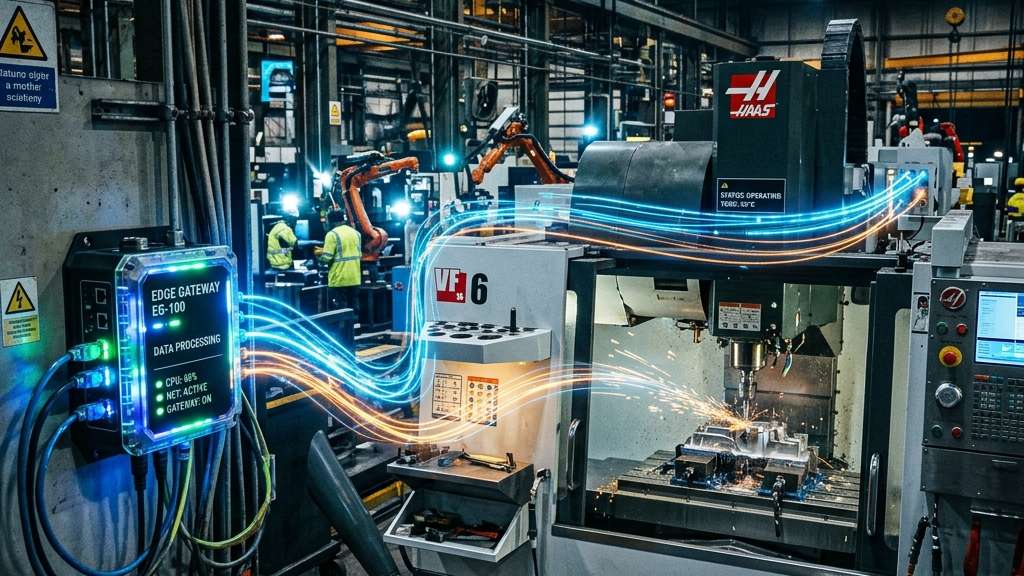
3. Standard 3-layer architecture of an industrial IoT ecosystem
Deploying IoT is not about buying equipment. It requires a cross-compatible 3-layer data architecture:
Layer 1: Edge/Sensor Layer (Physical devices & Conversion technology)
The factory is a heterogeneous environment. The deployment unit must know how to Retrofit by attaching peripheral sensors (optical sensors, CT current sensors) to 30-year-old stamping machines without interfering and losing the warranty of the original machine.Layer 2: Network & Protocol Layer (Communication network & Industrial protocols)
Machines from Siemens, Mitsubishi, and Fanuc speak different “languages”. It is necessary to establish IoT Gateways acting as “interpreters”, using standard industrial protocols such as OPC UA (Multi-platform device communication standard), Modbus TCP, or MQTT to consolidate data into a standardized hub.Layer 3: Application/Data Lake Layer (Application & Visualization)
After synchronization, data will be stored in a Data Lake. Here, algorithms start running to draw real-time dashboards, set up Andon alerts, and prepare clean data to push to MES or ERP system management software.
4. Core criteria defining a prominent IoT factory deployment company
The combination of mechanics, electronics, telecommunications networks, and software makes IoT one of the toughest projects. The Board of Directors needs to use the following 4 filters to appraise partners:
IT/OT Convergence: OT is the machinery on the shop floor; IT is software, servers. A unit only strong in IT will not know how to read PLC signal pulses. A unit fluent in OT will not know how to secure data streams to the Cloud. The partner MUST master both.
Cybersecurity: It requires structuring end-to-end encryption and physically separating the OT network (factory) from the IT network (office) to prevent hackers from executing ransomware attacks.
Time-Series Database processing capacity: Must have expertise in optimizing SQL queries (SQL Database Optimization) to smoothly extract reports from millions of records generated every day.
Seamless integration with core ERP: Data on how many products a machine runs will be meaningless if it doesn’t automatically deduct materials in inventory and account for costing on the ERP.
5. InfoAsia – IoT ecosystem Architect and Smart Factory Management
On the corporate management technology map in Vietnam, InfoAsia goes beyond the definition of a simple software provider. We position ourselves as an IoT factory deployment company and System Architect, perfectly connecting the physical world of the production floor and the core financial world. Our capacity is proven through:
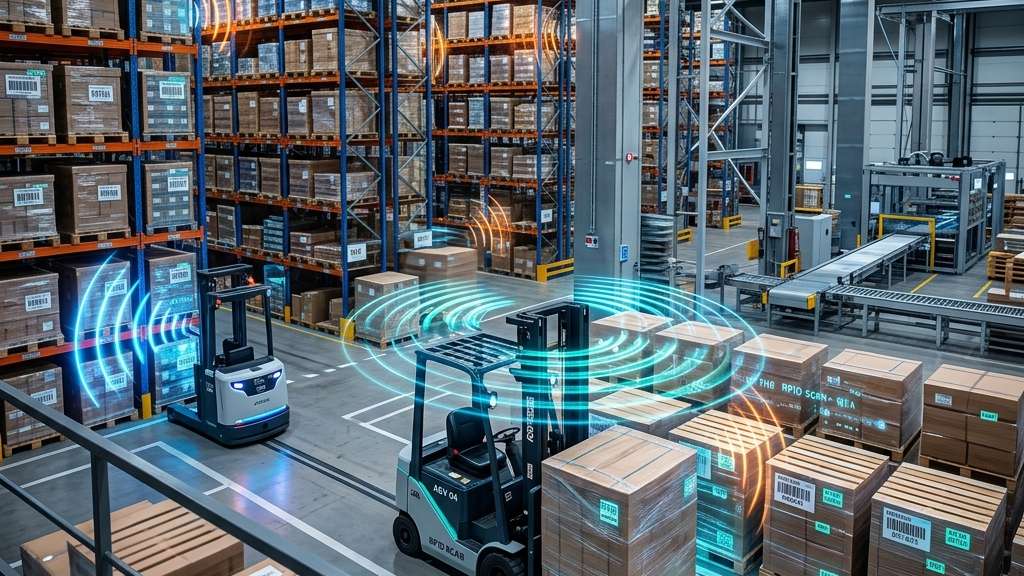
RFID Infrastructure Integration Experts: Replacing manual recording and barcode scanning processes with an RFID tag ecosystem. IoT technology automatically identifies batches of materials moving through magnetic gates, instantly digitizing WIP (Work-in-progress) inventory data.
Interconnecting IoT data with SAP Business One “Brain”: InfoAsia’s absolute differentiator is the ability to establish a seamless data flow. Product counting and machine running time data from the IoT Gateway are integrated directly into the SAP ERP platform via the Beas Manufacturing module for automatic material inventory deduction (Backflush) and costing.
Database engineering mastery: With a massive amount of data pushed back from IoT, the InfoAsia team performs performance tuning for complex Stored Procedures, ensuring the ERP always maintains the speed to load immediate OEE reports.
Expanding management flow with InfoAsia e-Office: Machine maintenance alerts from IoT will be automatically triggered into proposals, spare part procurement requests, and pushed directly to the e-Office platform for the Board of Directors for 100% digitized approval.
6. Frequently Asked Questions (FAQs)
Q1: Can IoT be applied to a factory using entirely old machines without connectivity ports?
A: Absolutely. Experts will use a Retrofit solution by installing additional peripheral sensors (vibration, optical, temperature sensors) and use an IoT Gateway to translate Analog signals into Digital without deeply interfering with the core structure of old machines.
Q2: Does sending all machine data to the Cloud congest the factory’s network bandwidth?
A: To avoid this situation, the system architecture applies Edge Computing techniques. Instead of sending everything, raw data will be filtered and processed locally right at the machine via an Edge Gateway. Only cleaned data or critical alerts will be pushed to the Cloud.
Q3: Why is IoT data security (Cybersecurity) vital?
A: When industrial machines connect to the Internet, they become targets for hackers. Without segregating the operational network (OT) and the computer network (IT) as well as encrypting the transmission line, hackers can infiltrate, take control of the machines, or encrypt data for ransom (Ransomware), paralyzing the entire production line.

InfoAsia Việt Nam trở thành nhà cung cấp dịch vụ phần mềm số hóa nhà máy sản xuất cho thương hiệu giày hàng đầu thế giới NEW BALANCE
Công ty TNHH Mây Tre Hà Linh
SAP ERP MES and IOT Project for FVIV Factor
Buwon Industry Co, Ltd
KANGLONGDA VIETNAM PROTECTION TECHNOLOGY COMPANY LIMITED
Shini Group
TA TING PLASTIC (HAI DUONG ) CO., LTD
CÔNG TY TNHH MTV BIÊN HOA SCM