




The other day, I had coffee with Mr. Hung, the Director of a large electronic components factory in Binh Duong. He took a sip of coffee, sighing heavily: “Last month during inventory check, I was shocked to find a shortage of 200 expensive component reels. We checked all security cameras, reviewed every manual goods receipt/issue slip from the storekeeper, and cross-checked with the accounting software… everything matched, but the goods vanished into thin air. At this rate of invisible loss, all our production profits will go down the drain!” Mr. Hung’s pain is not isolated. It is a chronic disease of thousands of factories in Vietnam struggling with manual warehouse management processes. Entrusting a massive asset to the memory and eyes of a few storekeepers always harbors fatal bottlenecks. The only way out to completely stop the “bleeding” of materials is to apply the Internet of Things (IoT) combined with a professional manufacturing execution system.
Key Takeaways:
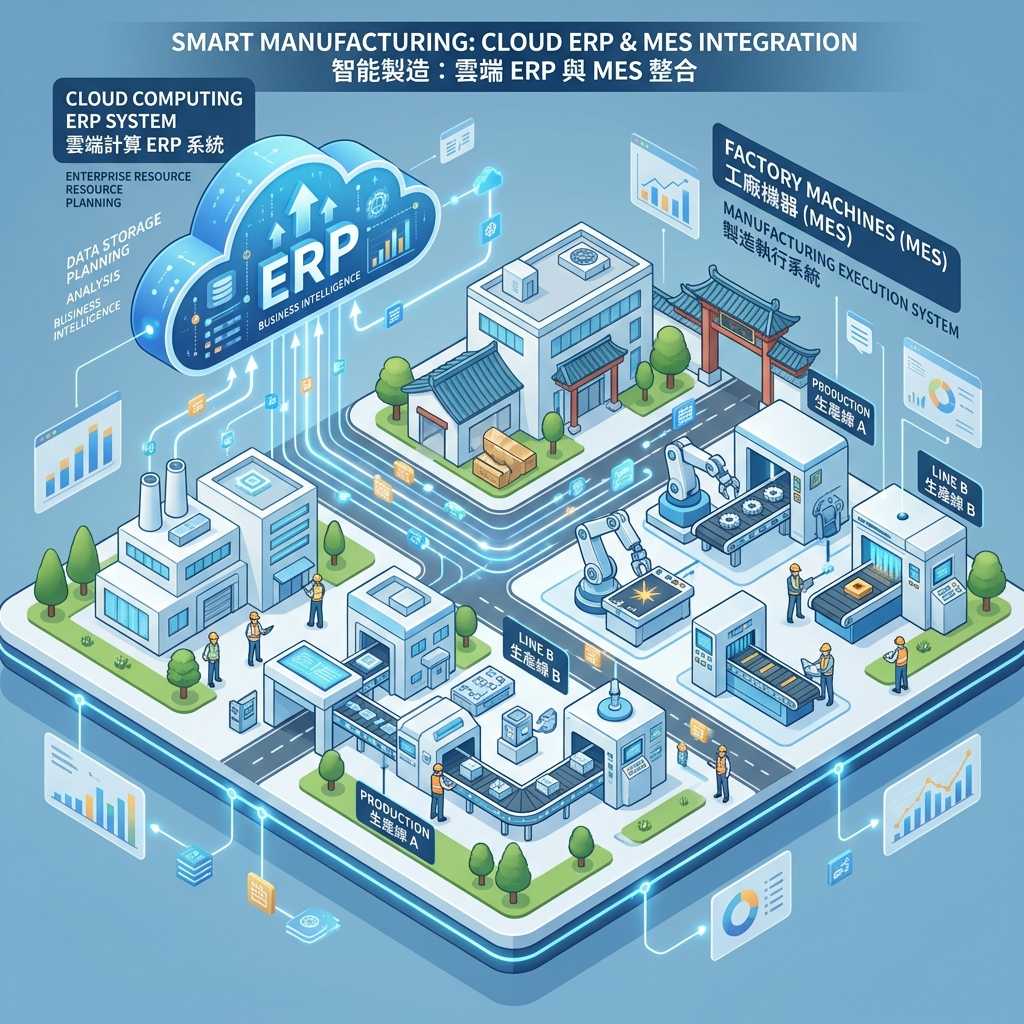
Material loss in factories mainly stems from data “blind spots” when communication between humans, machines, and software is disrupted. IoT (Internet of Things) technology acts as a central nervous system, directly connecting hardware devices (Sensors, Electronic scales, RFID barcode scanners, AGVs) with the core SAP ERP system. When applying the WMS (Warehouse Management System) module of Beas Manufacturing, every warehouse movement from receiving and storing to issuing is automatically recorded in Real-time. The system completely eliminates handwritten paper slips, prevents issuing materials beyond the BOM limit, and instantly sounds an alarm if there is any weight or quantity discrepancy at any stage. Consequently, enterprises not only plug all loopholes for loss but also strongly actualize the Lean Manufacturing philosophy.
1. The disease of material “bleeding” from traditional warehousing and the IoT solution
Many factories mistakenly believe that simply installing plenty of security cameras and hiring more storekeepers can prevent theft. However, material loss in production rarely comes from someone carrying goods out the gate. It happens silently through system loopholes: workers casually taking a few extra coils of wire for convenience, storekeepers writing down the wrong Lot Number, or materials expiring and needing disposal. When the data on the books is out of sync with reality by 1-2 days, the board of directors loses the ability to intervene promptly.
IoT technology completely changes the game by assigning each package a “digital ID” (via Barcode, QR code, or RFID tag). Smart sensors arranged along the material flow automatically read data and communicate directly with the server. No one needs to hold a pen to write or type into an Excel file. At this point, the warehouse is no longer a static storage area but transforms into a dynamic ecosystem where every “heartbeat” of raw materials is clearly displayed on the Director’s Beas APS Dashboard.

2. Smart checkpoints preventing loss with IoT and Beas Manufacturing
Integrating IoT electronic scales to control input weight
- In industries like food processing, chemicals, or plastic injection, raw materials are often measured in kilograms or tons. If the storekeeper just looks at the number on the scale screen and handwrites it in a ledger, the risk of fraud or visual error is extremely high. By connecting IoT-enabled electronic scales directly with the SAP ERP software via Beas Manufacturing APIs, the weight of materials the moment they are placed on the scale is transmitted straight to the electronic goods receipt on the system. No individual can intervene to modify this number. If the actual weight falls short of the supplier’s invoice beyond the permitted margin, the software immediately triggers a red alarm bell, locks the receiving process, and sends an urgent email notification straight to the Purchasing Manager’s phone. This mechanism ensures the factory always pays exactly for what it receives, severing the risk of shrinkage right from the first control gate.
RFID gates for automatic touchless material issuance
- The process of issuing materials to the shop floor is where the “take extra just in case” situation happens most often. Under the old process, workers take a material requisition slip (usually a flimsy piece of paper) to the warehouse; the storekeeper picks the goods, counts them manually, and hands them over. Replaced with RFID (Radio Frequency Identification) technology, every box of materials is affixed with a tiny identification chip. When a forklift carrying a pallet of goods passes through the IoT magnetic gate at the warehouse door, the antenna scans hundreds of chips simultaneously in just 1 second. This data is instantly cross-checked with the running Work Order on the SAP ERP system. If the forklift carries beyond the approved Bill of Materials (BOM) limit, or mistakenly carries a chemical drum not belonging to that production order, the barrier gate will not open and the alarm siren will blare. This ruthless yet precise control completely eliminates the habit of workers taking excess materials, saving thousands of hours of manual counting for storekeepers each year.
Automatic environmental monitoring to prevent material spoilage
- Material loss is not just a loss in quantity but also a degradation in quality. Many expensive raw materials like semiconductor components, biochemicals, pharmaceuticals, or agricultural products require preservation under extremely strict temperature and humidity conditions. Sending someone to measure warehouse temperature every 2 hours with a handheld thermometer is both labor-intensive and lacks continuity, especially at night. IoT temperature and humidity sensors pasted directly onto shelves measure the environment 24/7. These parameters are continuously sent to the central control panel of Beas Manufacturing. As soon as the humidity in the electronic component room exceeds the 60% threshold (posing a rust risk), the system automatically activates the industrial dehumidifier via smart relays, while sending an SMS warning to the maintenance engineer. This is how the system automatically protects assets, preventing goods from having to be destroyed just because of a midnight AC failure.
Comparison Table: Traditional Warehouse Management vs. IoT Automated Warehouse
| Criteria | Traditional Warehouse (Handwriting / Excel) | IoT Automated Warehouse & Beas Manufacturing |
|---|---|---|
| Data Recording | Manual, 8 – 24 hours delay, relies on clerk’s typing speed. | Automatic, Real-time in milliseconds. |
| Material Issue Control | Intuitive, easy to over-issue or issue wrong items due to workers taking freely or storekeeper’s visual error. | RFID/Barcode gate checkpoint strictly cross-references BOM limits with absolute precision. |
| Inventory Accuracy | Prone to discrepancies, requires costly monthly downtime for physical inventory counts. | 99.9% accurate, SAP ERP data always matches reality, supporting cycle counting. |
| Quality Protection | Manual temp/humidity logging; spoilage usually discovered after the fact. | 24/7 sensors; automatic warnings and interventions before materials degrade. |
| Fraud Prevention | Easy collusion between storekeepers and drivers to alter paper records. | Data transmits directly from scales/gates to software, impossible to edit or delete. |
3. Five real-world examples proving the anti-loss efficiency of IoT
- Case study 1: Animal feed manufacturing plant. Receiving tens of tons of corn kernels daily always harbored the risk of weight shortage due to driver fraud. After the plant integrated an IoT electronic truck scale straight into the SAP ERP system, drivers just swipe a magnetic card across the sensor pillar, the truck rolls onto the scale, and raw weight data transmits straight to the server. Instantly, the algorithm deducts standard tare weight and calculates net weight. This process is completely devoid of human intervention. In just the first month of application, the plant discovered and recovered 15 tons of shorted corn due to previous sophisticated siphoning tricks, saving over $6,000.
- Case study 2: Mobile phone assembly shop. The component warehouse holds millions of tiny, expensive chips. Previously, storekeepers struggled to issue the exact number of chip reels according to production orders, and it was common for workers to break a chip, throw it away, and sneakily grab a new one. When the factory deployed Beas Manufacturing’s RFID scanning gates, every component reel received an ID tag. As workers push a component cart out of the warehouse, the magnetic gate scans it instantly, cross-checks with the Work Order code, and deducts inventory immediately. The end-of-day component discrepancy dropped from 3% to 0.01%, helping the factory retain nearly $80,000 in material loss value every quarter.
- Case study 3: Frozen seafood processing company. Raw shrimp must be stored at -18 degrees Celsius. One night, the refrigeration compressor broke down; warehouse temperature spiked to -5 degrees, but the security guard fell asleep and missed the patrol. The next morning, 5 tons of shrimp turned into scrap. Pained by this lesson, the CEO decided to install IoT temperature sensors connected to the software. A few months later, a similar gas leak occurred. But this time, as soon as the temp edged up to -15 degrees, the SAP ERP system automatically auto-dialed an emergency call to both the director and the technical manager. The incident was resolved within 30 minutes, successfully saving a batch worth hundreds of thousands of dollars.
- Case study 4: Textile dyeing workshop. The biggest nightmare is issuing the wrong dyeing chemicals. Just picking the wrong chemical drum with an old Lot Number or wrong code ruins thousands of meters of fabric, turning it into seconds. The plant upgraded its process by equipping the storekeeper with Smart Glasses integrated with a barcode reading sensor. When the storekeeper looks at a chemical drum that doesn’t match the Work Order, the glasses immediately flash a red warning light. The system guides the storekeeper to take the right aisle and pick the right drum according to the FEFO principle. The NG (No Good) rate due to wrong dye colors instantly dropped by 80%, completely solving the quality problem.
- Case study 5: Precision machining plant. Cutting tools (CNC inserts) are very expensive consumables. Workers often had a habit of replacing old tools with new ones while the old ones were still usable, skyrocketing material costs. The factory decided to deploy an IoT-connected Vending Machine for automated tool dispensing. Workers wanting a new CNC tool must swipe their employee badge. The cabinet only opens the specific drawer containing the tool allocated for the active Work Order, while automatically updating the tooling cost into the product cost on the ERP system. The factory’s CNC tool consumable cost immediately decreased by 25% in the first quarter of application because workers could no longer take items indiscriminately.
Frequently Asked Questions (FAQs) about IoT in Warehouse Management
Does installing IoT devices like sensors and electronic scales disrupt the factory’s current layout?
Modern industrial IoT devices today mostly use wireless connection technology (Industrial Wifi, LoRa, 5G). Therefore, you don’t need to break floors or run tangled network cables. The installation of pasting sensors or setting up RFID gates is very quick and neat, without interrupting or affecting the shop’s current production schedule.
If the IoT electronic scale loses Internet connection, will the goods receipt data be lost?
Rest assured. Professional IoT devices always have Edge Computing capabilities. If the local network connection fails, the device will automatically store the weight data locally. As soon as the LAN or Wifi is restored, they will automatically push the entire stored data packet intact back to the SAP Business One server.
Can the IoT system integrate with Automated Guided Vehicles (AGVs) to make the warehouse fully automated?
Absolutely. Powerful core software like Beas Manufacturing’s MES or WMS systems are designed with open API communication standards. They can transmit picking orders directly to the AGV controller, requesting the vehicle to automatically drive to the correct rack, lift the right pallet, and move to the outbound area without a human in sight.
What is the battery life of IoT sensors pasted on warehouse shelves? Do they need constant replacement?
IoT sensors use ultra-low energy transmission standards (like BLE, Zigbee, LoRaWAN). In periodic data reporting mode, a standard coin cell battery can sustain the sensor’s operation for 3 to 5 continuous years. The software system also has an automatic alert function when a particular sensor is running low on battery, allowing maintenance engineers to proactively replace it.
Is it feasible to apply IoT technology for a small-scale factory with under 50 workers?
The answer is absolutely feasible and necessary. The investment does not require you to cover the entire factory at once. You can start with the biggest “bottlenecks”, for example, installing 1 IoT scale at the raw material receiving gate and 1 RFID gate at the finished goods shipping area. As the business expands, you simply buy more devices and easily “Plug and Play” thanks to the flexible architecture of the warehouse management software.
Register to experience a Demo session of the customized MES Manufacturing Execution System tailored for your factory’s operational layout at INFOASIA!

InfoAsia Việt Nam trở thành nhà cung cấp dịch vụ phần mềm số hóa nhà máy sản xuất cho thương hiệu giày hàng đầu thế giới NEW BALANCE
Công ty TNHH Mây Tre Hà Linh
SAP ERP MES and IOT Project for FVIV Factor
Buwon Industry Co, Ltd
KANGLONGDA VIETNAM PROTECTION TECHNOLOGY COMPANY LIMITED
Shini Group
TA TING PLASTIC (HAI DUONG ) CO., LTD
CÔNG TY TNHH MTV BIÊN HOA SCM