




When deciding to step into digital transformation, “How much does ERP implementation cost?” is always the question that overshadows every Executive Board meeting. The market records extremely diverse price points, ranging from hundreds of millions to tens of billions of VND. This massive gap makes many Chief Financial Officers (CFOs) wonder: Why is there such a discrepancy? What is the true limit of a technology project?
In reality, pricing an Enterprise Resource Planning (ERP) system is not like buying a packaged product. It is like building a factory: The price depends on the scale, level of automation, and the data foundation.
The article below will anatomize in detail each structural layer that makes up the ERP budget, strip away potential financial risks, and bring cost optimization solutions from experts at InfoAsia (visit https://infoasia.com.vn/).
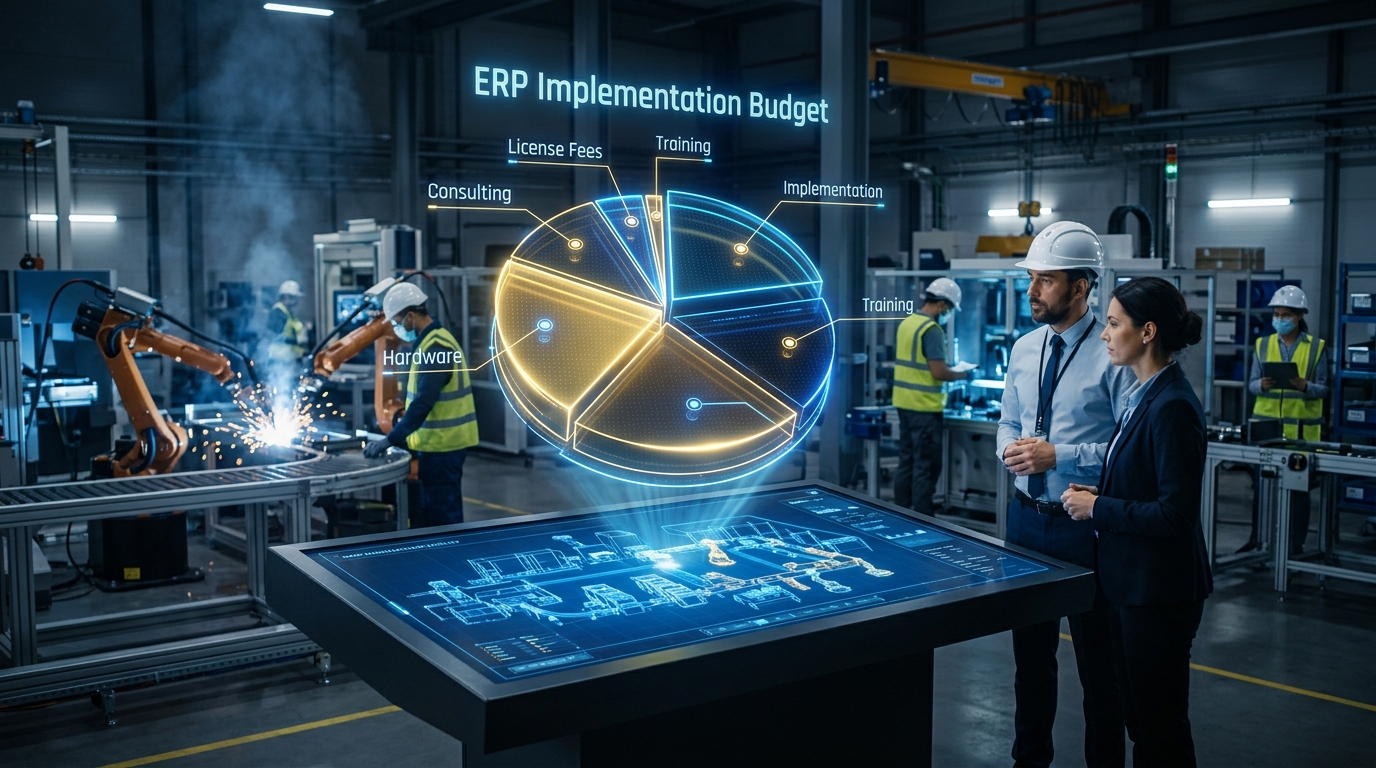
1. How much does an ERP cost? Should you use free ERP software?
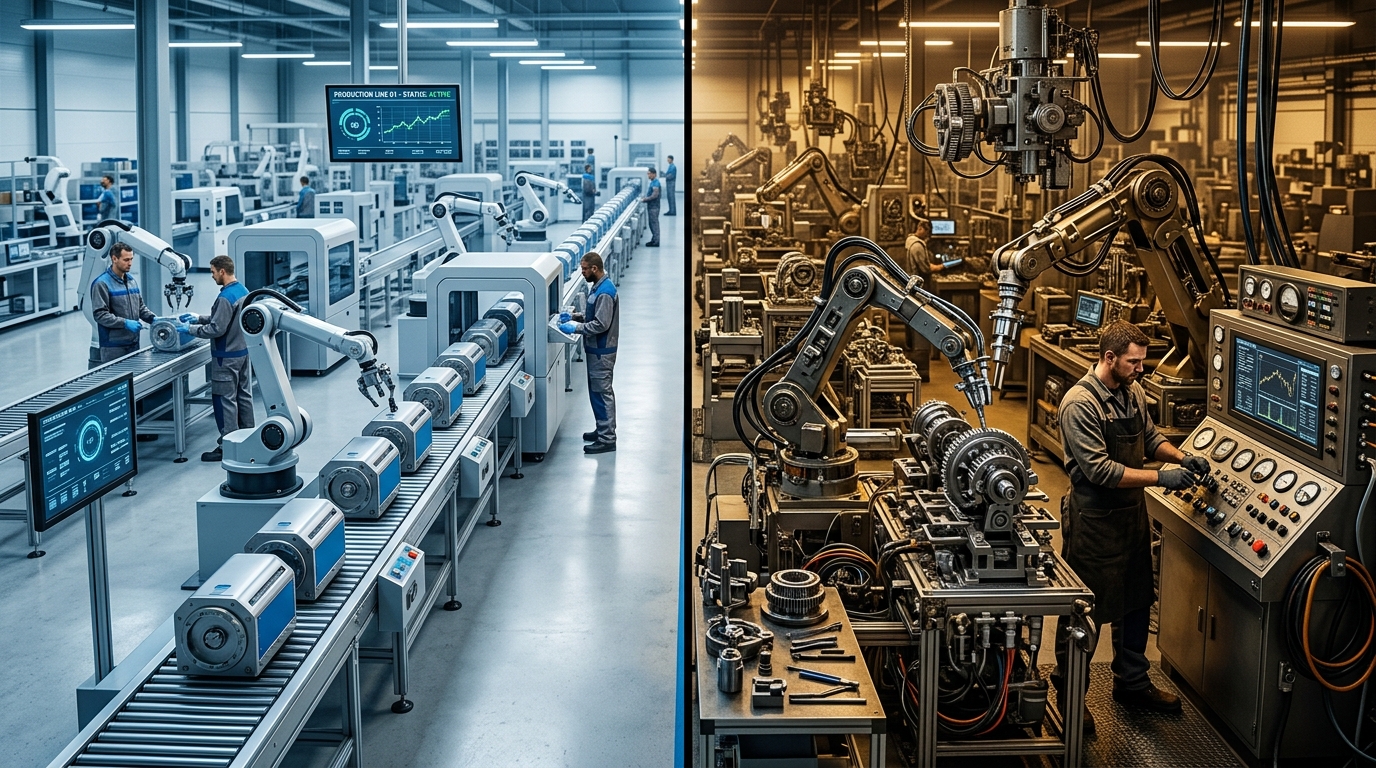
There is no single fixed quote for all businesses. The overall cost of an ERP project is constituted by the complexity of the supply chain and the actual number of users. According to statistics from Gartner, the average cost to operate an international standard ERP system can consume from several thousand to tens of thousands of USD per user over a 5-year cycle.
Besides the visible fees, the Leadership Board needs to budget for “Hidden Costs”, especially the cost of Change Management – which includes persuading, internal communication, and breaking the old working habits of personnel so they adhere to the new system.
Faced with financial pressure, many organizations have been attracted to free ERP software (Open Source). However, through the lens of governance, this is a “technical debt trap”. Free software only frees the source code. For this system to account correctly according to Vietnamese Accounting Standards (VAS) or calculate multi-level production costs, you are forced to hire a team of programmers (IT) to rewrite the code.
The total salary cost for the IT team to maintain and fix bugs over 2 years often far exceeds the amount you invest in a standard paid software. Furthermore, these “patched-up” systems are highly prone to database collapse when transaction volumes swell.
2. Factors affecting ERP software implementation costs
To accurately plan the budget (Budgeting), enterprises need to project their needs through the following 4 lenses:
Scale and specific characteristics of the enterprise
The biggest factor determining the budget is the “Physical Complexity” of the organization.
A trading and distribution company only needing to manage basic Buy – Sell – Inventory flows will have a very light implementation cost. Conversely, an industrial manufacturing plant requires the system to break down multi-level Bill of Materials (BOM), manage Routing processes through each CNC machine, and calculate Work-in-Progress (WIP) costs. This mathematical and financial complexity requires advanced algorithms, leading to an investment cost that is many times higher.
Required level of customization
The immutable principle of ERP is: The less Customization, the cheaper the cost and the more stable the system.
- Using Standards (Standard): The enterprise’s willingness to tear down old cumbersome processes to comply with the vendor’s available Best Practices will help bring programming costs to 0.
- Deep Customization: If you ask the implementation partner to write custom specific modules and change core accounting logic, the budget will balloon limitlessly. Deep customization also breaks the original structure, making upgrading the software to new versions in the future extremely expensive.
ERP Deployment Model
The infrastructure structure shapes the enterprise’s payout cash flow:
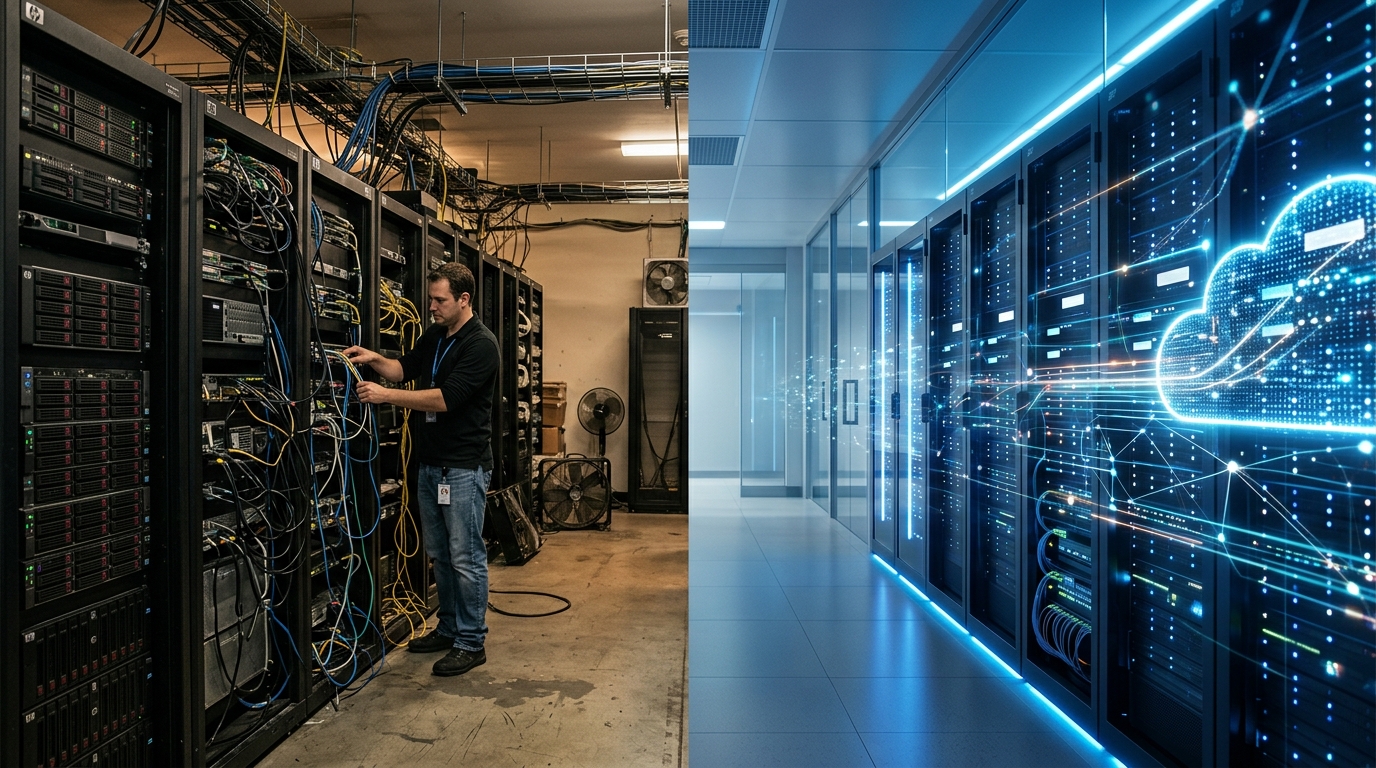
- On-Premise: The enterprise buys a permanent license outright and equips its own Servers. The initial capital expenditure (CAPEX) is very high, but in the long run (after 5-7 years), the total cost of ownership will be cheaper.
- Cloud ERP: The system is hosted on the vendor’s server. The enterprise only pays a subscription fee (OPEX) monthly/annually. This model helps eliminate the burden of initial hardware procurement costs and minimizes IT maintenance risks.
Integration capabilities with existing systems
A management system does not stand alone. If the factory is using electronic weighbridges, fingerprint time attendance systems, or separate Customer Relationship Management (CRM) software, creating Application Programming Interfaces (APIs) to force these platforms to “talk” and automatically synchronize data back to the ERP will incur technical costs.
3. Main types of costs during ERP implementation
When embarking on a project, the implementation contract will be divided into specific fee categories. Understanding the nature of each number helps CFOs avoid waste.
- Software License Fees: This is the passport to use the vendor’s intellectual property. Global ERP vendors usually charge based on the number of User Licenses. A Full User (like a Chief Accountant) will have a much more expensive license price than a Limited User who only has view or voucher creation rights. Choosing a domestic or international platform also causes this category to fluctuate from hundreds of millions to tens of billions of VND.
- Customization and Feature Extension Costs: As mentioned, this is the fee paid for the “brainpower” of programmers for them to intervene in the system. Invoice printing templates and internal management reports tailored to the Board of Directors’ “taste” are all included in the feature extension category.
- Existing System Integration Fees: For the ERP to automatically receive commands from machines down on the factory floor (MES) instead of forcing workers to type manually, system engineers must design Middleware or APIs. The complexity of the old system’s database will dictate the price of this integration fee.
- ERP User Training Costs: A hundred-billion system will become scrap metal if users input the wrong data (Garbage In, Garbage Out). Training costs are not just software usage teaching sessions, but the cost of dispatching experts directly to the enterprise for practical guidance, resolving psychological barriers, and issuing standardized process documents for each department.
- Post-Implementation Maintenance and Support Costs: ERP is a living entity that needs to be protected. For On-Premise systems, vendors typically collect an Annual Maintenance Contract (AMC) fee ranging from 15% – 22% of the license value to provide security patches, update new tax standards, and offer technical support when the system is overloaded.
4. Long-term benefits of ERP implementation vs Initial investment costs

Do not look at ERP from the perspective of an “Expense” (Cost). Look at it as a “Profitable Investment” (ROI). A standard ERP architecture has the ability to recoup its capital after only 18-24 months of operation.
- Increasing management and operational efficiency: The absence of an ERP causes personnel to waste 40% of their time on non-value-adding tasks such as checking Excel reconciliations and re-entering data from one department to another. An ERP creates an information highway. A barcode scan for outbound inventory automatically completes the delivery note, deducts inventory, and records liabilities. Personnel productivity is pushed to the maximum.
- Improving decision-making capabilities based on real data: Without a centralized system, the CEO often makes decisions based on reports that have “gone cold” a month prior. An ERP establishes a Real-time data flow. You know exactly right now how much money is stuck in Work-in-Progress (WIP) and which SKU is yielding the highest profit margin, allowing you to instantly adjust business strategies without guesswork.
- Enhancing market competitiveness: Absolute precision in Material Requirements Planning (MRP) helps enterprises eliminate dead inventory, freeing up cash flow. When the Cash Conversion Cycle is shortened, combined with On-Time In-Full (OTIF) delivery capabilities approaching 100%, the enterprise will easily surpass competitors struggling with a mess of manual management.
5. InfoAsia – The optimal cost ERP solution for businesses
Finding a reputable ERP platform is only half the journey; the other half is determined by the capability of the implementation unit. InfoAsia is proud to be the Chief Architect, bringing a comprehensive digital ecosystem that helps Medium and Large enterprises optimize every cent of their investment budget. Breakthrough technological advantages shape InfoAsia’s solutions:
- Global standard ERP brain with optimal cost: InfoAsia chooses to deploy the SAP financial platform combined with the specialized Beas Manufacturing module. This architecture comes pre-wrapped with the most advanced algorithms for cost accounting and BOM breakdown. Enterprises will save a massive budget that would otherwise have been spent on Customization.
- Protecting cash flow with SAP DI API technology: Understanding the burden of License Costs, engineers at InfoAsia apply API interfaces to develop internal satellite application platforms. As a result, hundreds of personnel can participate in the process flow (creating purchase requests, factory reports) validly, with data pouring straight into the SAP core without the Board of Directors needing to spend billions on redundant Licenses.
- Mastering SQL Server techniques (Infrastructure Optimization): A sluggishly operating system is the greatest obsession. InfoAsia possesses high-level database mastering experts. By intervening, writing, and Performance Tuning complex queries, your ERP machine always operates at high speed on moderate hardware platforms, saving Server procurement costs.
- Closing the operational loop with InfoAsia e-Office: All procedures for budget approval, leave requests, and out-of-norm inventory issue requests will be separated from the ERP and interconnected to the InfoAsia e-Office digital workplace system. This solution creates a 100% paperless workspace, allowing Leadership to sign digitally instantly right on mobile devices.
Investing in an ERP is a major surgery of financial structures and processes. The companionship of a partner converging sufficient accounting depth, mastering high-speed data techniques, and possessing budget-protecting extension solutions like InfoAsia is the most solid guarantee for your project to reach success at the most optimal cost.
6. Frequently Asked Questions (FAQs)
1. How much does an ERP implementation cost for a small business?
For small businesses, costs can range from tens to hundreds of millions of VND depending on whether they use a domestic software or the standard version of an international platform (Cloud). Adopting available standard processes helps strictly minimize costs.
2. How to accurately estimate ERP implementation costs?
Enterprises need to coordinate closely with consulting partners to survey actual processes. From there, clearly define the number of User Licenses to buy, mandatory business modules, and strictly limit unnecessary Customization requests to get the closest quote.
3. How long does it take for an ERP system to start becoming profitable (ROI)?
An ERP project that is successfully implemented and well-complied by users usually has the ability to recoup investment capital within 18 to 24 months. Profits come from reducing inventory costs, optimizing personnel productivity, and accelerating order processing speeds.
4. Should we cut costs by skipping the training step?
Absolutely not. Training accounts for a small proportion of the total budget but determines 100% of the project’s survival. If users do not know how to operate it or input incorrect data, the entire system will become worthless.

InfoAsia Việt Nam trở thành nhà cung cấp dịch vụ phần mềm số hóa nhà máy sản xuất cho thương hiệu giày hàng đầu thế giới NEW BALANCE
Công ty TNHH Mây Tre Hà Linh
SAP ERP MES and IOT Project for FVIV Factor
Buwon Industry Co, Ltd
KANGLONGDA VIETNAM PROTECTION TECHNOLOGY COMPANY LIMITED
Shini Group
TA TING PLASTIC (HAI DUONG ) CO., LTD
CÔNG TY TNHH MTV BIÊN HOA SCM