




In the digital era, a core management system is likened to the “central nervous system” of an organization. However, the failure rate of technology projects globally remains alarmingly high. The root cause lies not in the software’s source code, but in the capability gaps of the ERP implementation consulting firm.
Purchasing standard software is merely the first step. To transform that dry code into a smoothly operating machine, perfectly aligned with financial flows and production specifics, businesses need a “chief architect”. This in-depth article uncovers the true nature of system consulting, the hidden risks that shatter budgets, and the essential criteria for selecting a capable partner.
Key Takeaways:
- The failure rate of ERP management projects stems primarily from the capability gaps of the ERP implementation consulting firm, not software defects.
- The essence of implementation consulting is restructuring financial flows and reengineering production processes, rather than just providing data entry instructions.
- A lack of management depth leads to license cost crises, database bottlenecks, and broken product costing processes for factories.

1. The True Nature of an ERP implementation consulting firm from First-Principles
Viewed from first-principles thinking, a management system is not an administrative data entry tool. At its core, it is a system that translates the physical activities of a business into financial language.
- A Financial Core Approach: Every operation on the shop floor, warehouse, or purchasing department must ultimately lead to a Debit/Credit entry on the General Ledger. A consulting partner must structure the chart of accounts and cash flow so that when a batch is completed, the system automatically accounts for work-in-progress (WIP) and standard costing. At a textile factory in Binh Duong, the IT team improperly set up the WIP accounting flow, causing the accounting department to export to Excel at month-end and manually recalculate all yarn and labor costs—completely defeating the purpose of digitalization.
- Process Reengineering: A team of experts must proactively review, tear down outdated manual processes, and establish automation workflows. Instead of warehouse staff manually creating material issue slips when moving goods to the shop floor, the system will automatically deduct inventory (Backflush) via the MRP algorithm based on the Bill of Materials (BOM) the moment a production order is confirmed and scheduled by the APS system. This completely eliminates data latency. At an electronic component assembly plant, applying this technology reduced end-of-shift inventory counting time by 80%.

2. The “Blind Spots” that Destroy Budgets and Partner Selection Criteria
Choosing implementation units purely based on IT skills, without deep financial management and database structure knowledge, pushes businesses into fatal “blind spots” that severely damage project budgets.
- License Bloat and Database Bottlenecks: Global software vendors charge based on the number of users (User License). If the partner lacks satellite technology solutions, the business will have to buy expensive licenses even for employees who only occasionally access the system. Furthermore, as data swells after 1-2 years, reporting systems become sluggish because the data structure wasn’t optimally planned. SQL queries become bottlenecked due to the implementation unit’s lack of Performance Tuning capabilities.
- Broken Production Costing Processes: Applying commercial processes blindly to a factory is a deadly mistake. Failing to properly configure Absorption Costing methods or correctly calculate period-end WIP will completely skew the Profit & Loss (P&L) reports.
- Capability Evaluation Matrix: To ensure the highest Return on Investment (ROI), the Board of Directors needs to screen partners based on a strict evaluation structure with 3 capability axes:
| Capability Factor | Detailed Requirement Description | Benefits |
|---|---|---|
| Hybrid Expertise | The consulting team must deeply understand Accounting – Finance AND actual Operations Management. They must know how to book ledger entries before configuring the software. | Prevents cash flow and costing disruptions, ensuring transparent reporting data. |
| Top-Down Implementation Structure | Starts by defining macro-management goals for the Board, then reverse-engineers micro data entry processes for each department. | Prevents garbage data and eliminates redundant worker operations. |
| Deep Technical Intervention | Ability to write and optimize complex SQL Server scripts (Stored Procedures, Views) to handle specific calculation logic. | The system runs smoothly even with massive data, meeting 100% of unique requirements. |
3. InfoAsia – The Solution for Deep Management Ecosystem Integration
A world-class partner will not let the management system become an isolated “island”. They plan comprehensive integration strategies to maximize management capabilities. In Vietnam’s enterprise management technology landscape, InfoAsia asserts its position as a professional solution implementation partner.
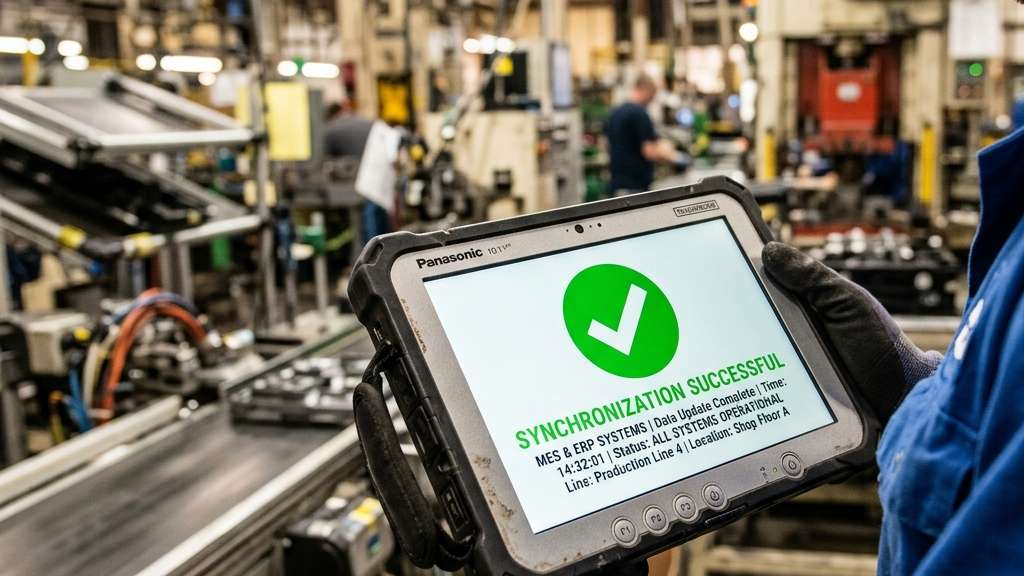
- Vertical Integration and Physical Automation: Connecting the ERP with specialized software like MES (Manufacturing Execution Systems) enables real-time quality and production control. Factory managers can immediately spot productivity bottlenecks thanks to this instant data synchronization. Additionally, consulting on transitioning to an RFID ecosystem allows goods flow to automatically update into the database without manual input.
- Deep Expertise in SAP Solutions & Production Accounting: InfoAsia’s experts thoroughly understand top-tier international management platforms like SAP, with a core strength in Finance. By combining this with the advanced manufacturing module Beas Manufacturing, we help factories automate WIP accounting, manage multi-level BOMs, and calculate costs with absolute precision.
- Optimizing License Costs with DI API: To solve the heavy burden of expensive License costs, InfoAsia proudly develops internal Web Clients using the DI API programming interface. Hundreds of users can interact with the system without the business spending tens of thousands of dollars on extra licenses. Massive factory data is extracted using strict condition statements and performance tuning, ensuring report extraction speed is always maximized.
Conclusion
The decision to select an implementation partner dictates the success or failure of the entire digital transformation journey. An organization that deeply understands original financial flows, possesses database optimization techniques, and has the capability to develop integrated tools like InfoAsia will be a reliable “architect”.
Register to experience an ERP software solution Demo customized specifically for your factory’s operational layout at INFOASIA!
Frequently Asked Questions (FAQs)
1. How to evaluate an implementation unit’s capabilities before signing a contract?
The Board should focus on 3 factors: Understanding of Finance – Accounting combined with operations management; the ability to structure the system from macro to micro goals; and deep technical intervention capabilities (SQL optimization). Ask them to present a case study on production cost allocation to verify.
2. How can an implementation unit help businesses minimize License costs?
Instead of forcing businesses to buy expensive licenses for every employee, a skilled partner (like InfoAsia) will use APIs (like DI API) to develop internal Web/App applications. Workers or purchasing staff can use these apps for basic data entry without consuming a core system License.
3. Why do manufacturing businesses need a partner who understands MES rather than just commercial management?
Production processes require calculating WIP, multi-level BOMs, and managing machine capacity. If the partner doesn’t understand specialized solutions (like Beas Manufacturing), they will blindly apply commercial buy-sell processes, leading to completely skewed profit and actual cost reports.
4. My company’s data is currently very messy, how will the technical team handle this step?
A professional team will not indiscriminately import garbage data into a new system. They will restructure material codes, eliminate redundant processes, and establish standardized data entry flows with cross-checks before proceeding with Data Migration.

InfoAsia Việt Nam trở thành nhà cung cấp dịch vụ phần mềm số hóa nhà máy sản xuất cho thương hiệu giày hàng đầu thế giới NEW BALANCE
Công ty TNHH Mây Tre Hà Linh
SAP ERP MES and IOT Project for FVIV Factor
Buwon Industry Co, Ltd
KANGLONGDA VIETNAM PROTECTION TECHNOLOGY COMPANY LIMITED
Shini Group
TA TING PLASTIC (HAI DUONG ) CO., LTD
CÔNG TY TNHH MTV BIÊN HOA SCM