



During digital transformation consulting for hundreds of manufacturing enterprises, technology experts frequently encounter a classic question from factory directors and CFOs:
“Our company already has accounting software running smoothly with inventory and cost calculation modules. Why should we invest significantly more in an SAP ERP system?”
Confusing Accounting Software with an ERP System is the number one trap causing chronic hidden financial losses in manufacturing: rush orders delayed by component shortages, billions locked in stagnant inventory while machines sit idle, and accounting teams drowning in manual reconciliation of thousands of paper vouchers every month.
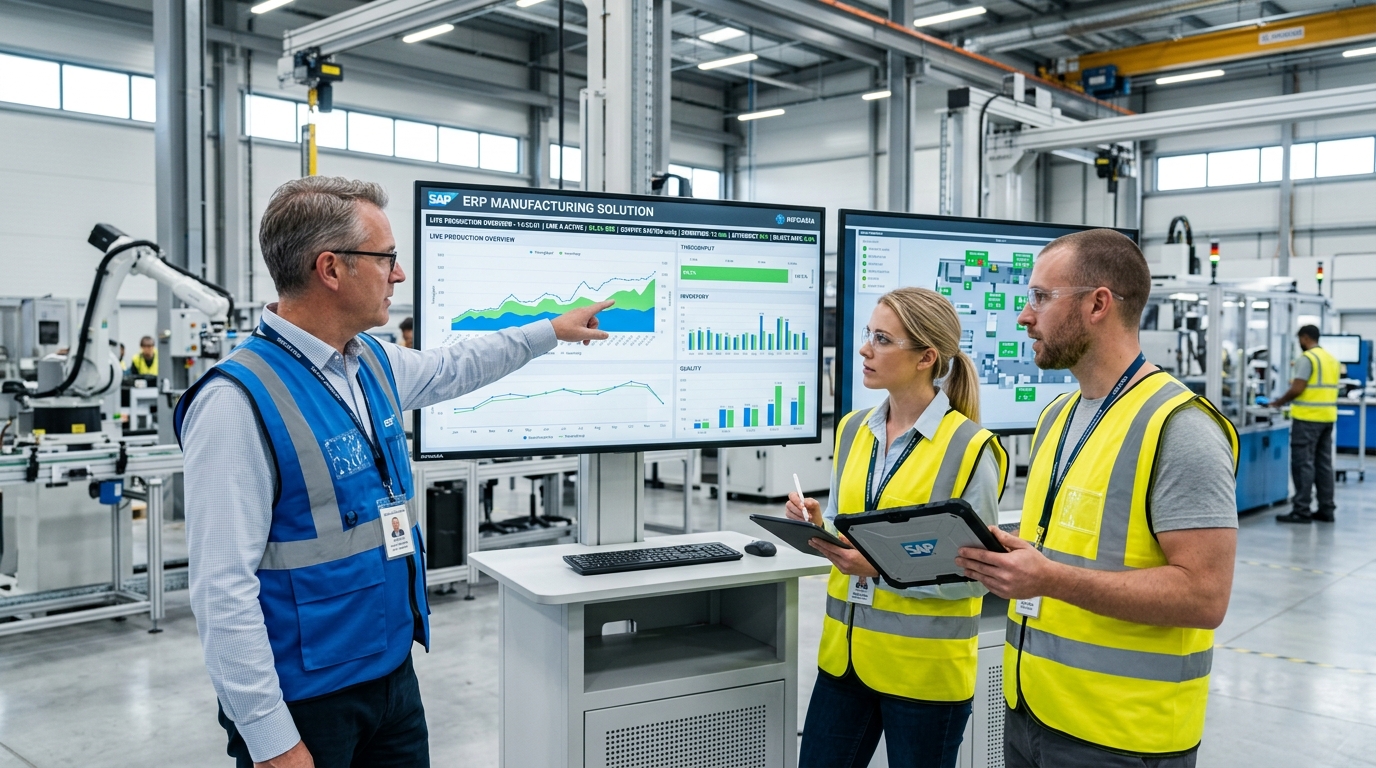
This comprehensive article breaks down the fundamental differences between accounting packages and SAP ERP, equipping leadership with deep insights to make informed technology investments.
1. Core Paradigm: “The Rearview Mirror” vs. “The Real-Time Cockpit”
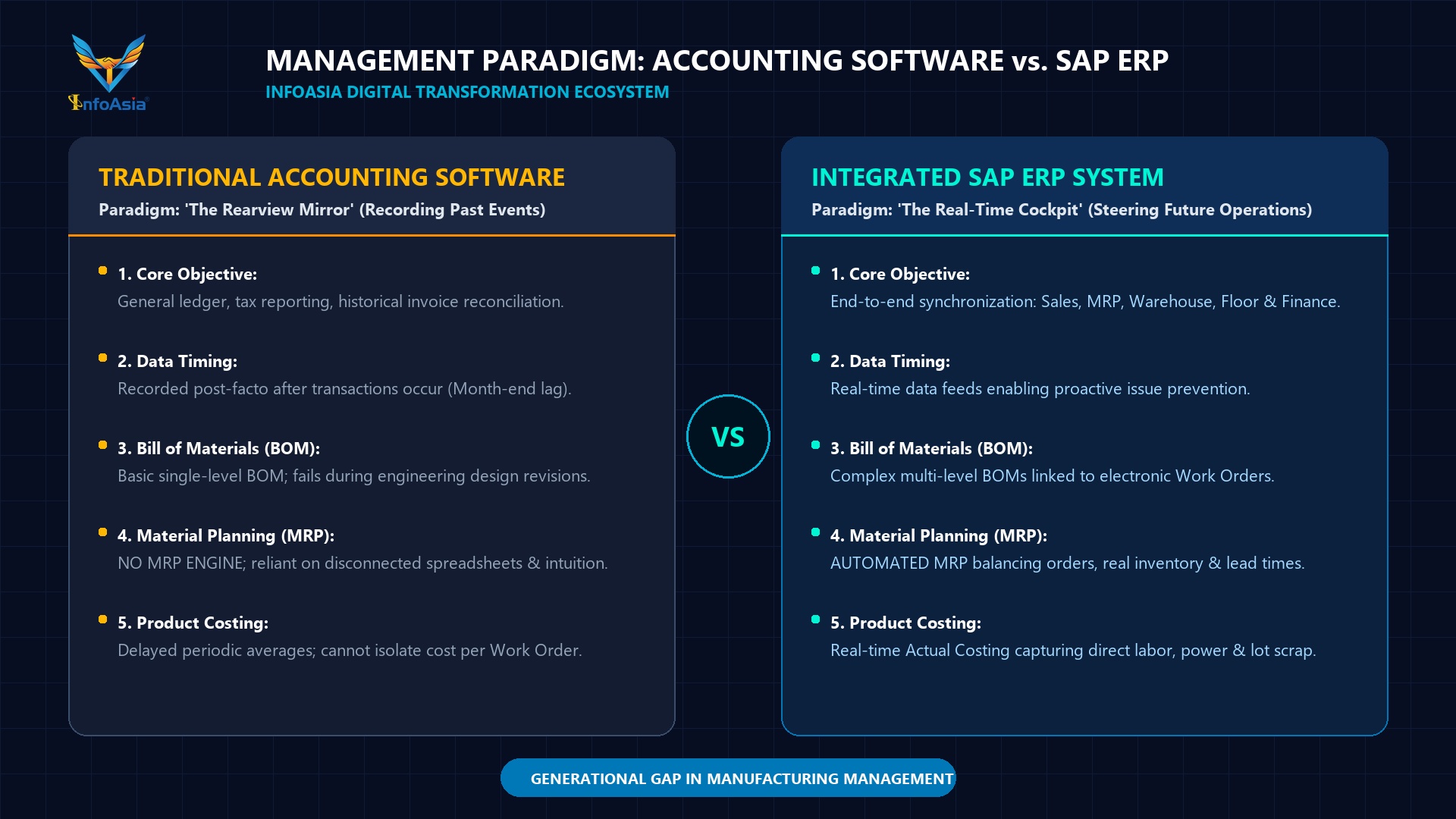
- Accounting Software: Designed specifically for post-transaction record-keeping, tax compliance, and general ledgers. It informs you of what happened last month—after expenses have been incurred and financial losses are locked in.
- SAP ERP System: Seamlessly synchronizes every functional node: Sales, MRP, Purchasing, Warehouse, Shop Floor Operations, Quality (QA/QC), and Corporate Finance. It provides instant real-time intelligence: Do we have enough raw materials for tomorrow’s rush order? Which workstation is bottlenecked? Are production costs exceeding BOM allowances? — enabling proactive intervention before issues escalate.
2. 6 Critical Functional Differences on the Factory Floor
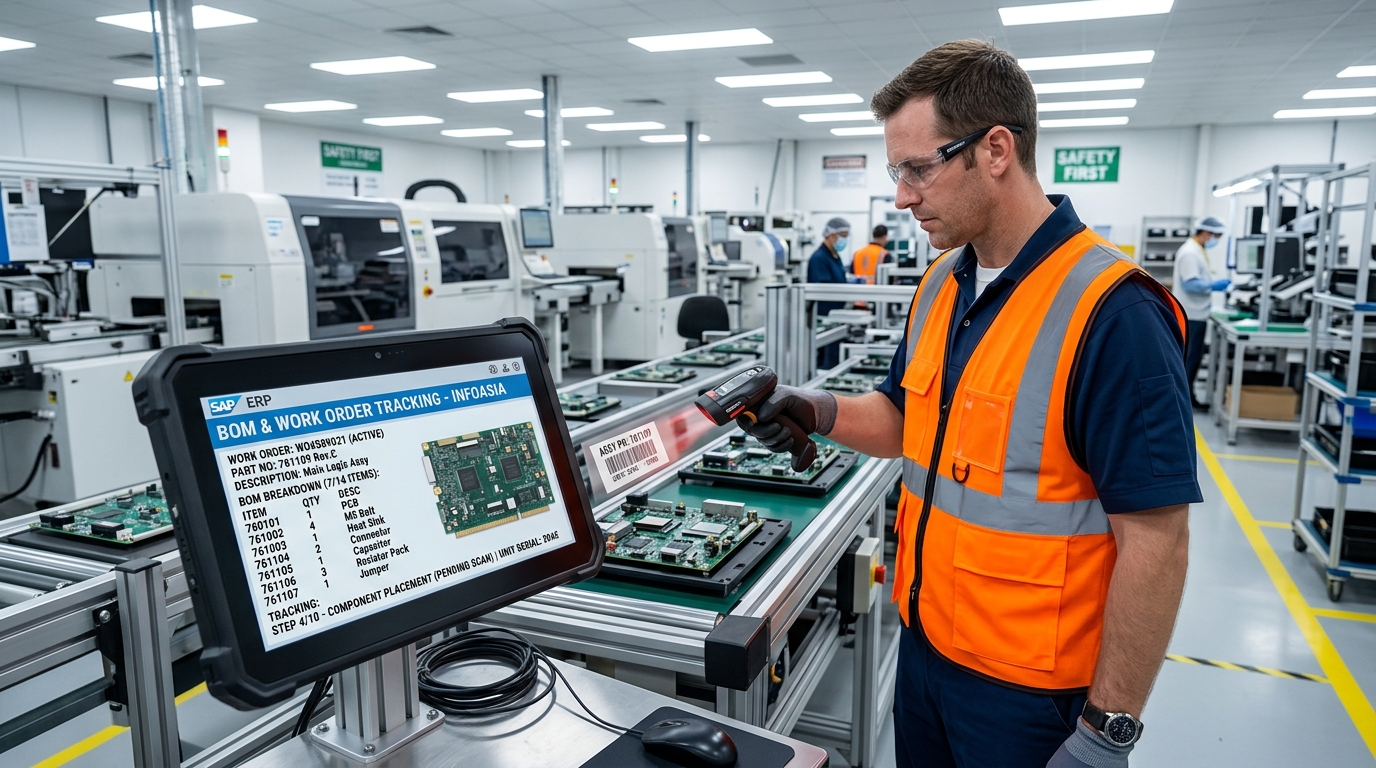
2.1. Bill of Materials (BOM) & Electronic Work Order Management
- Accounting Software: Limited to static single-level formulas with theoretical post-production deductions. It fails when engineering design revisions (ECO) occur, causing severe mismatches between accounting books and floor stock.
- SAP ERP: Manages complex multi-level BOM structures with infinite tiers. BOMs link dynamically to routing operations, machinery, and labor stations, issuing Electronic Work Orders directly to shop floor terminals for real-time progress and variance tracking.
2.2. Automated Material Requirements Planning (MRP)
- Accounting Software: Completely lacks an MRP calculation engine. Purchasing relies on intuition and disconnected spreadsheets, resulting in erratic inventory swings and costly emergency freight.
- SAP ERP: Automated multi-variable MRP balances: Sales Orders + Available Stock + In-transit Orders + Multi-level BOMs + Supplier Lead Times to generate precise, date-specific purchase proposals.
2.3. Product Costing: “Month-End Averages” vs. “Granular Actual Costing”
- Accounting Software: Uses periodic weighted averages 15 to 30 days after month-end. Management cannot isolate the true profit or loss of specific custom production runs.
- SAP ERP: Collects direct material consumption, machine-hour labor, and utility depreciation in real-time, delivering granular Actual Costing for every Work Order and production Lot.
2.4. Data Flow: “Manual Redundant Entry” vs. “Single Source of Truth”
- Accounting Software: Sales works in Excel, floor supervisors write logbooks, warehouse issues paper dockets, and accountants manually re-type entries weekly—introducing 15-20% human error.
- SAP ERP: “Enter once at the source” architecture. A confirmed Sales Order instantly triggers MRP purchasing, schedules shop floor machines, and auto-deducts inventory upon barcode scanning via MES solutions.
2.5. Warehouse Operations: “Book Stock” vs. “Real-Time WMS Bin Management”
- Accounting Software: Displays only total aggregate quantities on paper, with no visibility into rack locations, Lot numbers, or shelf-life expiry dates.
- SAP ERP: Manages detailed warehouse locations (Zone – Rack – Bin) via QR/Barcode scanners, enabling full forward and backward traceability within 30 seconds for quality audits.
2.6. Scalability & FDI Global Supply Chain Credibility
- Accounting Software: Built for single domestic entities under 50 staff; unaccepted by multinational supply chain auditors (Samsung, LG, US/EU OEMs).
- SAP ERP: Globally recognized gold standard. Supports multi-plant, multi-currency, and SAP Cloud ERP environments, maximizing bidding prestige with FDI clients.
3. 10-Criteria Comparison Matrix: Accounting Software vs. SAP ERP
| Evaluation Criteria | Extended Accounting Software | Integrated SAP ERP Ecosystem (Infoasia) |
|---|---|---|
| Core Scope | Finance & accounting department only. | End-to-end: Sales, MRP, Purchasing, Warehouse, Floor, Finance. |
| Primary Users | Accountants (3 – 5 users). | All departments: Sales, Buyers, Planners, Supervisors, C-Suite. |
| Data Nature | Historical data (Events that already concluded). | Real-time operational streams and predictive planning. |
| MRP Material Planning | Not supported (Spreadsheet guesswork). | Automated multi-variable MRP based on Work Orders & Lead Times. |
| BOM & Work Orders | Basic single-level formula; theoretical backflush. | Complex multi-tier BOMs with live ECO revision control. |
| Actual Costing | Rough periodic weighted averages (15-30 day lag). | Granular Actual Costing per Work Order & Lot batch. |
| Shop Floor IoT Integration | No integration capabilities. | Native connectivity with Barcode/RFID, Terminals, PLC & MES. |
| Reporting Latency | 5 – 15 days post month-end closing. | Real-time executive dashboards (Live P&L, OEE, Scrap). |
| System Scalability | Low; crashes under high transaction volume. | Unlimited scalability across multi-plant and multi-currency setups. |
| FDI Audit Compliance | Low credibility for international audits. | Globally recognized benchmark; unlocks Tier-1 supply chains. |
4. Expert Perspective: When Does Accounting Software Become “Too Small a Suit”?
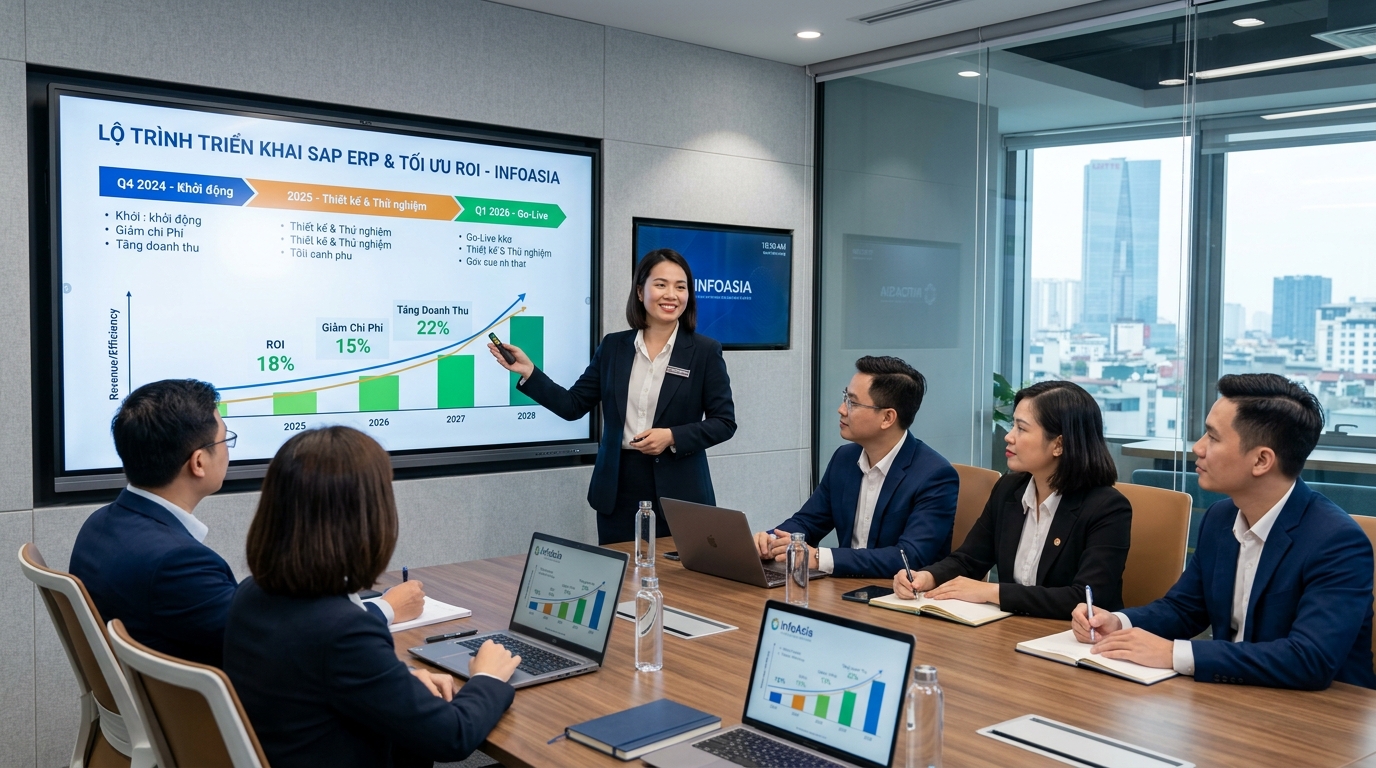
“Accounting software was conceived for ledger book-keeping and tax filing; it was never engineered to run the complex operational dynamics of a manufacturing plant. Attempting to force accounting software to act as an ERP is like installing a motorcycle engine into a heavy freight truck. As factory scale expands, the operational disconnect between floor and office bleeds hidden losses that vastly eclipse the cost of implementing a standardized SAP ERP ecosystem.”
— Principal Enterprise Digital Transformation Consultant, Infoasia
Manufacturers should initiate transition via Infoasia’s enterprise digitization services when reaching key milestones: annual revenue exceeding $2M-$3M USD, workforce surpassing 50-100 workers, or inventory exceeding 1,000 active SKUs. (Explore our customer transition case studies).
5. Frequently Asked Questions (FAQs)
Q1: Do we need to retain our old accounting software when deploying SAP ERP?
Answer: NO. SAP ERP includes a world-class Financials & Controlling (FI/CO) module fully compliant with local Vietnamese Accounting Standards (VAS) and global GAAP/IFRS. You run your entire business on a single unified platform.
Q2: Will our existing accounting personnel struggle to adapt to SAP ERP?
Answer: Modern SAP ERP interfaces are highly intuitive. Infoasia’s senior consultants provide role-specific hands-on training, enabling accounting teams to master daily workflows within 2 to 3 weeks.
Q3: What is the typical ROI payback period for SAP ERP compared to accounting software?
Answer: By reducing dead inventory by 15-25%, cutting order errors by 80%, and boosting operational throughput by 15-20%, manufacturers achieve full ROI payback within 12 to 18 months.
Q4: Does Infoasia support data migration from legacy accounting software?
Answer: YES. Infoasia provides proven migration tools to cleanse, extract, and seamlessly import chart of accounts, beginning inventory balances, customer/vendor master data, and fixed assets from legacy packages (MISA, FAST, Bravo, etc.) into SAP ERP.

InfoAsia Việt Nam trở thành nhà cung cấp dịch vụ phần mềm số hóa nhà máy sản xuất cho thương hiệu giày hàng đầu thế giới NEW BALANCE
Công ty TNHH Mây Tre Hà Linh
SAP ERP MES and IOT Project for FVIV Factor
Buwon Industry Co, Ltd
KANGLONGDA VIETNAM PROTECTION TECHNOLOGY COMPANY LIMITED
Shini Group
TA TING PLASTIC (HAI DUONG ) CO., LTD
CÔNG TY TNHH MTV BIÊN HOA SCM