




Running a business based on intuition or fragmented Excel spreadsheets is now synonymous with self-elimination. As the pressure to protect profit margins mounts, establishing an Enterprise Resource Planning system to eradicate “blind spots” in inventory and cash flow has become a prerequisite.
However, business leaders often fall into a loop of stagnation when facing a “matrix” of vendors. This in-depth article will restructure your entire perspective on current ERP software, moving from foundational principles to evaluation criteria, and introducing a comprehensive architectural solution from InfoAsia (https://infoasia.com.vn/) to help businesses correctly position their investments.
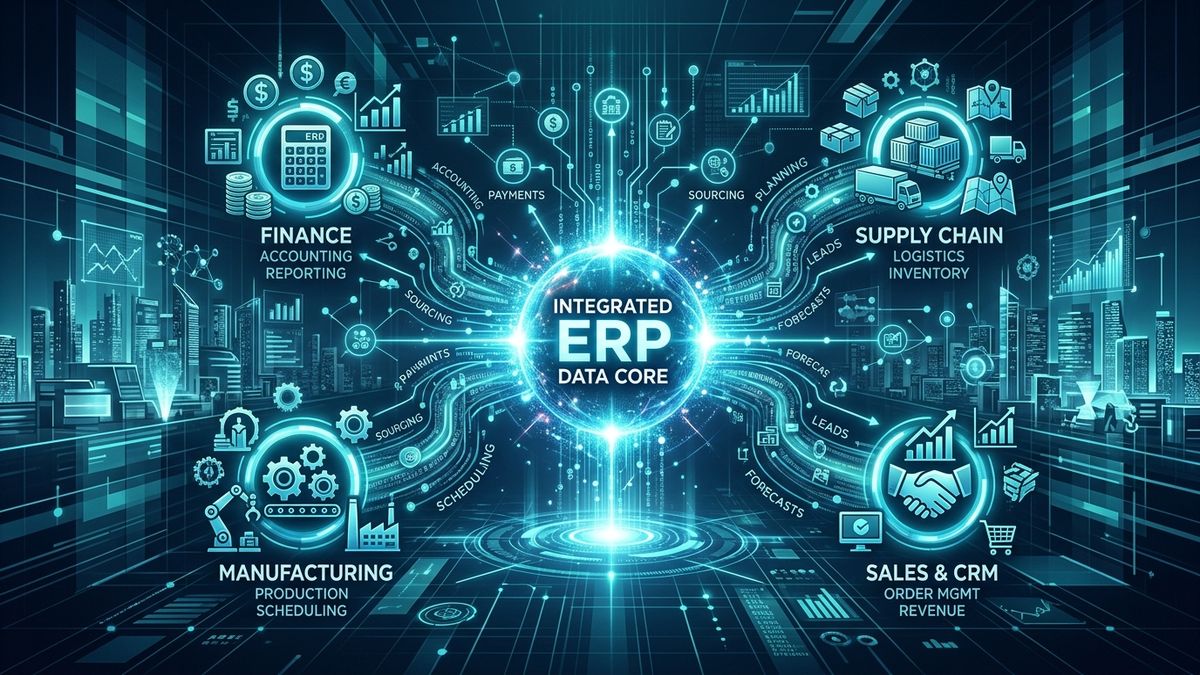
Benchmarking Popular ERP Platforms (2026)
To give the Board of Directors a macro view before diving into details, here is an analysis of the market position of prominent core enterprise management systems:
| Platform Name | Core Competitive Advantage | Risks & Bottlenecks | Segment & Estimated Cost |
|---|---|---|---|
| SAP | • Global financial accounting standards. • Excellent production costing capabilities (via Beas Add-on). • Real-time data, absolute transparency. | • Requires implementation partners with deep Production Accounting expertise & high SQL Server optimization skills. | • Suitable for medium & large enterprises. • Strategic projects (Supports deep customization). |
| Microsoft Dynamics 365 | • Integrated into the Microsoft ecosystem (Teams, Power BI). • Perfect intersection between operations and CRM. | • Requires complex configurations to match local Tax standards. | • Suitable for medium & large enterprises. • High monthly Cloud License costs. |
| Odoo | • Open-source platform, diverse modules. • High flexibility, assemble as needed. | • Risk of corrupting the source code structure if customized recklessly. • Hard to maintain if the IT partner lacks capability. | • Suitable for Startups, medium enterprises. • Has Community (Free) & Enterprise (Paid) versions. |
| BRAVO | • Domestic solution, 100% compliant with VAS. • Accepts “tailoring” to the old habits of businesses. | • Completely dependent on the skills of the implementation team. • Hard to meet requirements when businesses want international standardization. | • Suitable for domestic manufacturing/trading enterprises. • Long-term investment cost. |
| MISA AMIS | • Cloud platform, lightning-fast deployment speed. • Friendly UX/UI, strong in Accounting – Tax. | • Production management capability for multi-stage processes is still thin. • Lacks flexibility when handling idiosyncratic operations. | • Suitable for small & medium enterprises. • Annual subscription fee, easily accessible budget. |
1. The Original Nature of ERP Software (First-Principles)
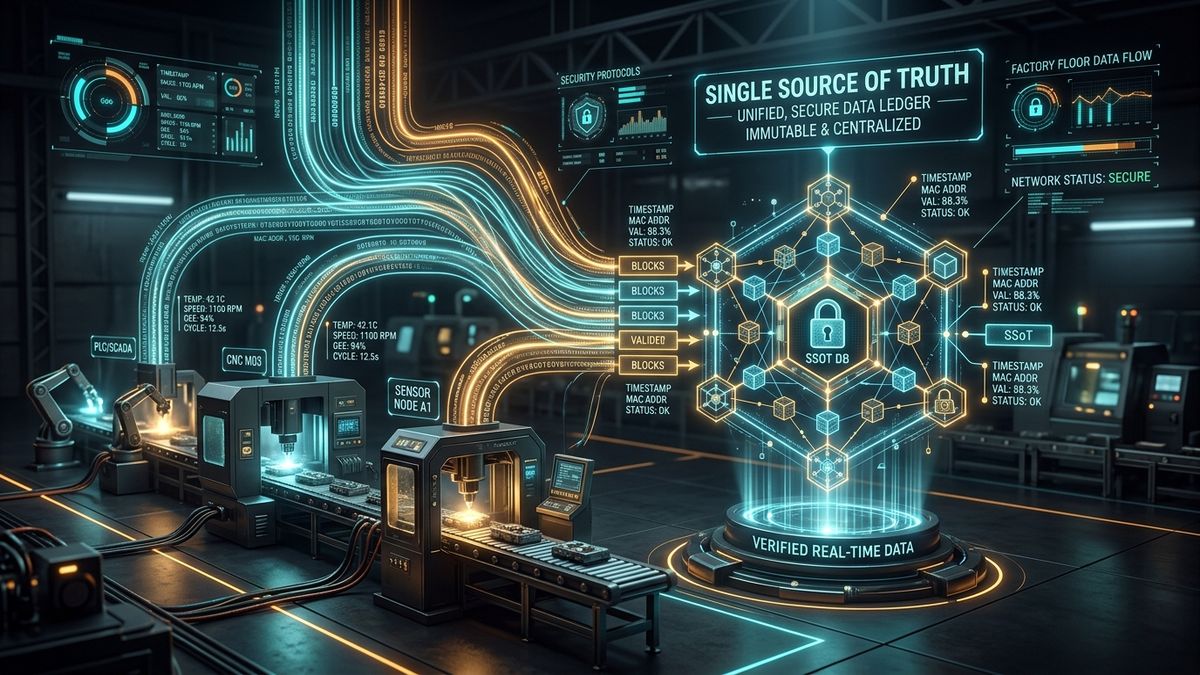
From a first-principles perspective, ERP software is absolutely not just an IT tool for storing information. Its essence is an engine that converts physical events into Financial language.
While fragmented tools create “data silos” that force the Accounting department to laboriously reconcile data manually, this technology operates on a single philosophy: Single Source of Truth.
Chain reaction: When the warehouse issues a roll of copper wire, the system doesn’t just record a quantity reduction. Immediately, an automated accounting entry debiting Work-In-Progress (WIP) and crediting Raw Materials is recorded in the general ledger.
The ultimate goal: The system is born to serve the Board of Directors. It ensures the Balance Sheet and Income Statement accurately reflect the business reality down to the second (Real-time).
2. Three Value Levers Solving Operational Challenges
Businesses do not spend billions just to buy a software interface; they buy control through current ERP software.
Workflow Automation & Standardization: All departments (Sales, Procurement, Warehousing, Accounting) are forced to run on a common track. When Sales closes an order, the software automatically checks inventory and triggers a Purchase Request if there’s a shortage. Information breakdowns are completely eliminated.
Eradicating the “Dark Zones” of Costs: The ability to dissect Work-In-Progress (WIP) value is the sharpest weapon of this management platform, especially in manufacturing. The system specifies exactly which machine station experienced material waste, and how overhead costs are allocated, ending the practice of emotionally distributing costs evenly at month-end.
Data-Driven Decisions: Reporting metrics are extracted directly from the system core in real-time. The CEO can immediately deploy countermeasures instead of waiting days for staff to aggregate data.
3. The 5 “Backbone” Modules of a Standard Architecture
Despite dozens of brands on the market, a complete architecture is always built around 5 core modules:
- Sales & Revenue Management: Closes the cycle from Quotation -> Sales Order -> Delivery -> Invoice. Sales and accounts receivable are updated instantly by the system.
- Supply Chain Management (Procurement): Automatically issues purchasing suggestions based on Safety Stock levels. Strictly manages partner delivery schedules and accounts payable.
- Multi-Branch Warehouse Management: Controls inventory down to the exact Bin Location, Batch code, and Expiration Date. Completely eliminates discrepancies between software quantities and actual physical goods.
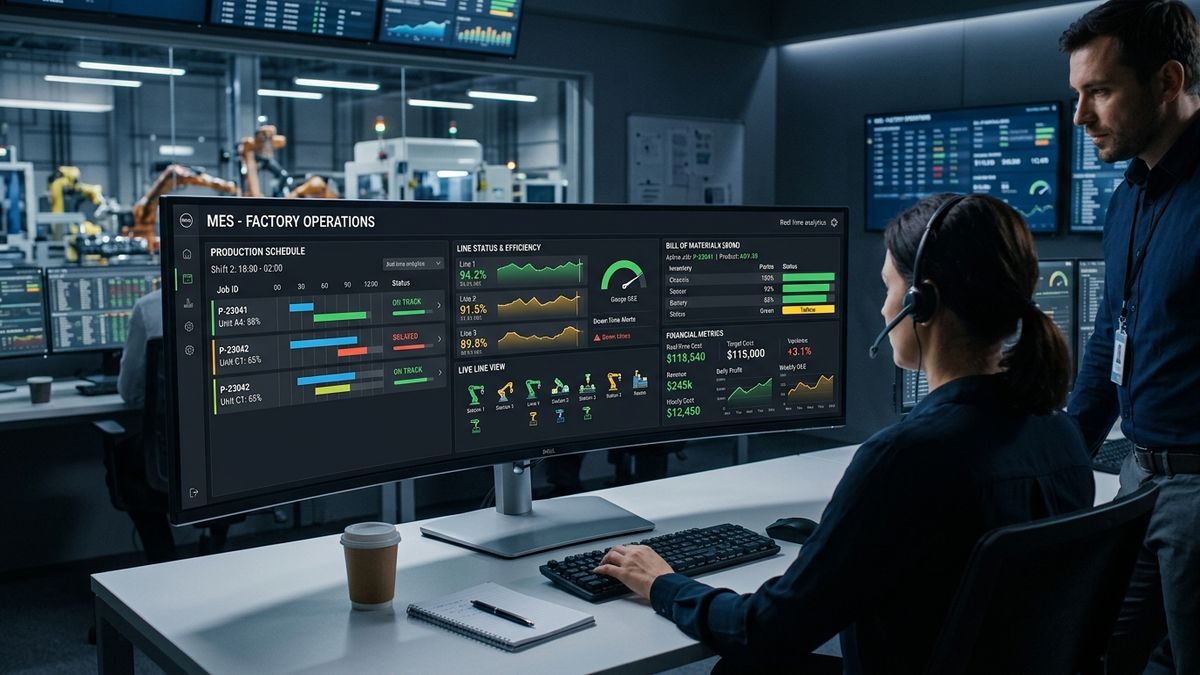
- Production Management & Costing: Considered the “heart” of the factory. This module establishes the Bill of Materials (BOM), runs capacity planning algorithms, can integrate with manufacturing execution solutions, and automatically accounts for Standard Costing.
- General Finance – Accounting: The convergence point of all data flows. Automates journal entries and exports financial reports compliant with both domestic and international standards (IFRS).
4. Dissecting the Philosophies of Current Software Groups

To avoid a mismatch, businesses need to clearly understand the design philosophy behind each software group:
The Global “Giants” (SAP, Microsoft Dynamics, Oracle)
- Philosophy: Applies the world’s best operational standards (Best Practices). Businesses need to restructure workflows to match the system.
- Reality: Extremely tight financial control. The biggest barrier lies in the expensive License budget and the strict requirements for the Implementation Partner’s Data/Accounting processing capabilities. Solutions from the global SAP corporation are the clearest testament to profound governance power.
Open-Source Group (Odoo)
- Philosophy: Like Lego pieces, businesses install the features they need.
- Reality: Low initial cost, extremely high customization. However, if the source code is tampered with without architectural thinking, the system becomes an un-upgradable mess.
Lean Cloud & Local Group
- Philosophy: Friendly interface, adheres to local user habits, and quickly processes Tax reports.
- Reality: Helps small businesses deploy rapidly. Some units are strong in “tailoring” to specific manufacturing operations, but the data structure can reveal limitations when Big Data volumes swell.
5. The Gold Standards for Evaluating a System
Buying ERP software is not like buying hardware. To prevent the project from reaching a dead end, the Board of Directors should use these 6 filters:
- Compatibility with Business Specifics: An international standard system will become useless if it’s too rigid. The platform must be capable of parameterization to accurately reflect the physical supply chain.
- Perfect Legal Compliance: The system must support local Accounting standards, integrate electronic invoices, and current Tax regulations.
- User Experience (UX/UI): The direct data entry personnel are workers and storekeepers. If the interface is too complex, they will develop resistance, leading to skewed input data (Garbage In, Garbage Out).
- Scalability: Can this tool handle the load when the factory size triples in the next 5 years? The ability to integrate advanced modules is mandatory.
- Practical Capability of the Implementation Partner: This is a vital factor. Does your partner understand production accounting, or are they just code typists?
- Commitment to After-Sales Support: Data architecture is a living organism needing constant tuning. The vendor must have the capacity for on-site support, technical troubleshooting, and continuous training for new personnel.
6. Money-Burning “Traps” Causing Project Failures
Numerous businesses have thrown billions out the window by making these classic mistakes:
- Falling for the Foreign or Cheap Trap: Buying the world’s most expensive tool just to show off, or choosing the cheapest to save money, both lead to failure. The key is the “fit” with the current operational structure.
- Failing to Define the “Pain Point”: Deploying a system following a trend without clearly defining the objective will leave the project struggling, bloated with useless features.
- Outsourcing Entirely to the IT Department: This is a major surgery on Finance and Processes. If the CEO doesn’t directly take command, the project will certainly be silently boycotted by other departments.
- The “Turnkey” Illusion: No software works perfectly right out of the box. It requires iron discipline in standardizing Master Data and breaking old work habits.
7. Preparations Before “D-Day”: What Do Businesses Need?
To increase the success rate of an ERP software project, the Board of Directors must immediately execute these 3 steps:
- Organizational Health Diagnosis: Map the entire current process flow. Isolate the “bottlenecks” (Where is data most skewed? Where takes the most time to reconcile?).
- Establish a Key Performance Indicators (KPIs) Map: Quantify expectations. (e.g., Reduce phantom inventory to 0%, shorten financial closing time from 10 days to 3 days).
- Choose the “True Love” Partner: Don’t look for a machine installer; look for a Governance Architect. Ask how they optimize SQL Server queries and how they set up cost allocation methods.
8. InfoAsia – The Architect Establishing a Comprehensive Ecosystem
Buying a license is one thing; turning it into a profitable lever depends entirely on the implementation unit. InfoAsia does not position itself as a software seller; we are the Chief Architect, re-planning the entire data flow of the business through a practical solution suite:
Core Power from SAP & Beas Manufacturing: InfoAsia brings a world-class financial system to act as the backbone, combined with the specialized Beas Manufacturing Add-on. This architecture thoroughly solves the toughest factory problems: Deconstructing multi-level BOM structures, automatic scheduling, and WIP cost accounting with absolute precision.
Mastering Database Optimization Techniques (SQL Server): A business’s biggest nightmare is reports hanging when document volume swells. By possessing the capability to write and perform Performance Tuning for complex Stored Procedures, InfoAsia’s experts ensure the storage engine always retrieves millions of Big Data records in the blink of an eye.
Optimizing Budgets with SAP DI API Technology: License costs are always a burden. InfoAsia applies Application Programming Interfaces (API) to replicate core features (creating Purchase Requests, Goods Issue Slips) onto internal satellite applications. Hundreds of users can operate validly, with data automatically pushed to the central core, saving businesses billions in licensing fees.
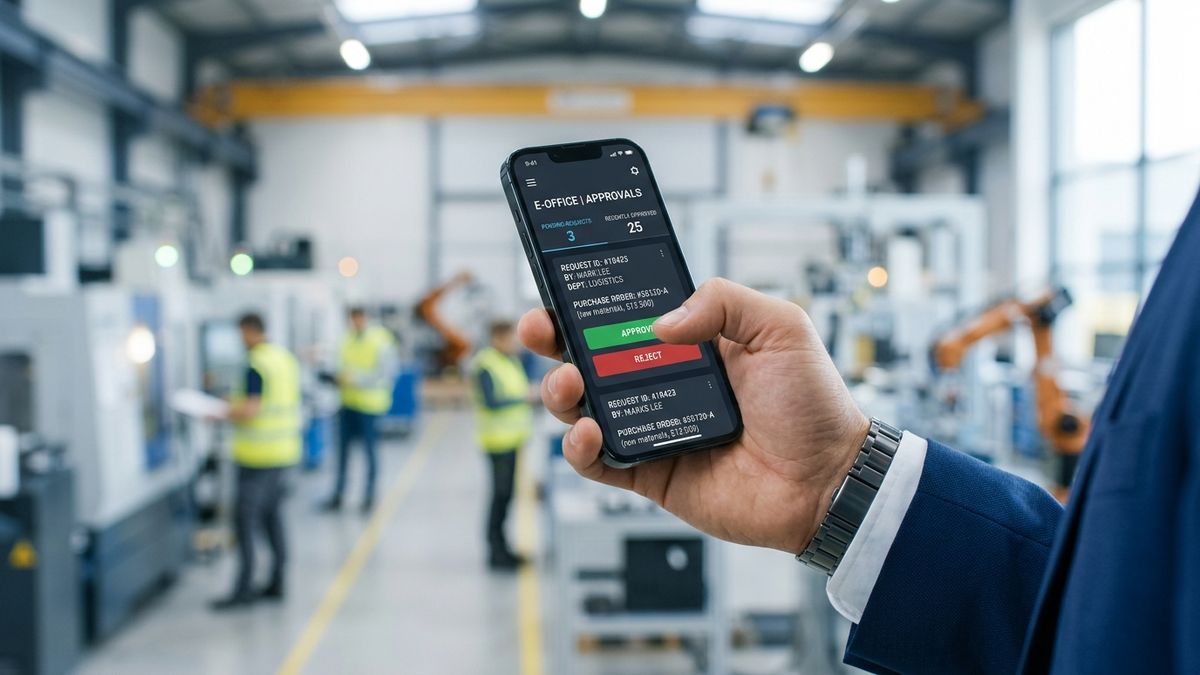
Paperless Operations with InfoAsia e-Office: We shatter all administrative barriers. Every document generated from the system is instantly linked to the InfoAsia e-Office digital workplace platform. The Board of Directors can easily approve and digitally sign anytime, anywhere, right on their mobile devices.
Transforming through current ERP software is a profound restructuring decision. Partnering with a unit that converges Financial capability, masters Database technology, and possesses a budget-protecting mindset like InfoAsia is the most solid launchpad for a business to establish a leading position.
9. Frequently Asked Questions (FAQs)
What is the best ERP software for Small and Medium Enterprises (SMEs)?
For SMEs, highly flexible solutions deployed on Cloud platforms or featuring modular customization like Odoo or Microsoft Dynamics are often prioritized due to reasonable budgets and easy scalability.
How long does it take to successfully deploy an ERP software?
The timeframe depends on the scale and complexity of the business. On average, a project can last from 3 to 6 months for a small business, and 9 to 18 months for a large corporation.
What should manufacturing businesses pay attention to when choosing a governance system?
Manufacturing specificities demand the ability to allocate Bill of Materials (BOM) accurately and calculate complex stage costs. Specialized solutions or integrating factory management add-ons are highly essential.
Is it feasible to integrate internal software with an ERP?
It is entirely feasible if the ERP software provider strongly supports Application Programming Interfaces (API). For instance, InfoAsia uses DI API to bidirectionally synchronize data seamlessly.

InfoAsia Việt Nam trở thành nhà cung cấp dịch vụ phần mềm số hóa nhà máy sản xuất cho thương hiệu giày hàng đầu thế giới NEW BALANCE
Công ty TNHH Mây Tre Hà Linh
SAP ERP MES and IOT Project for FVIV Factor
Buwon Industry Co, Ltd
KANGLONGDA VIETNAM PROTECTION TECHNOLOGY COMPANY LIMITED
Shini Group
TA TING PLASTIC (HAI DUONG ) CO., LTD
CÔNG TY TNHH MTV BIÊN HOA SCM