




In the overarching landscape of the global digital economy, optimizing operational efficiency is no longer merely about cutting costs or accelerating delivery speeds. It is a fierce race for comprehensive digital transformation capabilities. Traditional Enterprise Resource Planning (ERP) systems have long served as the “backbone” storing the core data of organizations.
However, in the face of the Big Data boom and the unpredictable fluctuations of the modern market, conventional ERP systems are gradually revealing their limitations in real-time response capabilities. According to global economic forecasts, the worldwide ERP market is projected to reach $64.7 billion, indicating the massive scale of enterprise investment in management infrastructure.
The convergence of Artificial Intelligence and enterprise management—known as AI ERP integration (or AI-driven ERP)—is reshaping the entire future of commerce and manufacturing. This article provides an in-depth analysis of the nature, trends, practical benefits, and implementation solutions of this breakthrough model for modern enterprises.

1. Nature and Vision: When Traditional ERP Meets Artificial Intelligence
According to strategic reports from the world’s leading research organizations such as Gartner and Deloitte, AI ERP integration is spearheading the enterprise technology trend in the digital era.
- From passive recording tools to proactive consulting centers: Traditional ERP systems inherently just passively record past transactions through static reports. Upon AI integration, the system transforms into a smart platform capable of learning from data, automatically uncovering hidden patterns, and providing real-time strategic recommendations.
- Comprehensive processing of unstructured data: AI helps ERP systems expand their information reception capabilities. Not only can it comprehend structured numbers in financial spreadsheets, but AI also seamlessly processes unstructured data ranging from contract text, high-quality images, and audio, to IoT logs from factory devices.
- The ultimate competitive weapon: In sectors demanding high responsiveness such as mechanical manufacturing, electronics, or logistics, possessing a smart “brain” helps businesses significantly shorten decision-making time, turning raw data into highly valuable insights. Research from MIT Sloan Management Review indicates that companies making decisions based on smart data achieve 5-6% higher performance than their competitors.
2. In-Depth Comparison: Traditional ERP vs. AI ERP Integration
To help managers clearly see the turning-point difference between the two models, the comparison table below highlights their core characteristics:
| Comparison Criteria | Traditional ERP System (Standard ERP) | AI-Integrated ERP System (AI ERP) |
|---|---|---|
| Input Data Processing | Only processes structured data; entirely dependent on manual human data entry. | Simultaneously processes both structured and unstructured data (text, images, system logs) at high speed. |
| Nature of Analytics | Descriptive Analytics: Reports what happened in the past through static charts. | Predictive & Prescriptive Analytics: Warns of risks and recommends specific actions before events occur. |
| Operational Mechanism | Manual operations following rigid processes; human intervention is required at every intermediate step. | Operates on a Closed-loop AI mechanism: Automatically detects issues and triggers actions without manual human intervention at intermediate steps. |
| Production & Inventory Planning | Operates based on static rules; requires a coordination team for manual intervention when incidents arise on the assembly line. | Automatically balances machine loads, optimizes production schedules, and autonomously reorders based on real-time demand forecasting. |
| Error and Risk Detection | Detects errors after the process is completed (e.g., detecting inventory discrepancies or accounting entry errors at the end of an accounting period). | Continuous real-time monitoring, proactively detecting early signs of anomalies, financial fraud, or equipment failure. |
3. Multi-Dimensional Impact and Quantitative Performance Metrics of AI in ERP
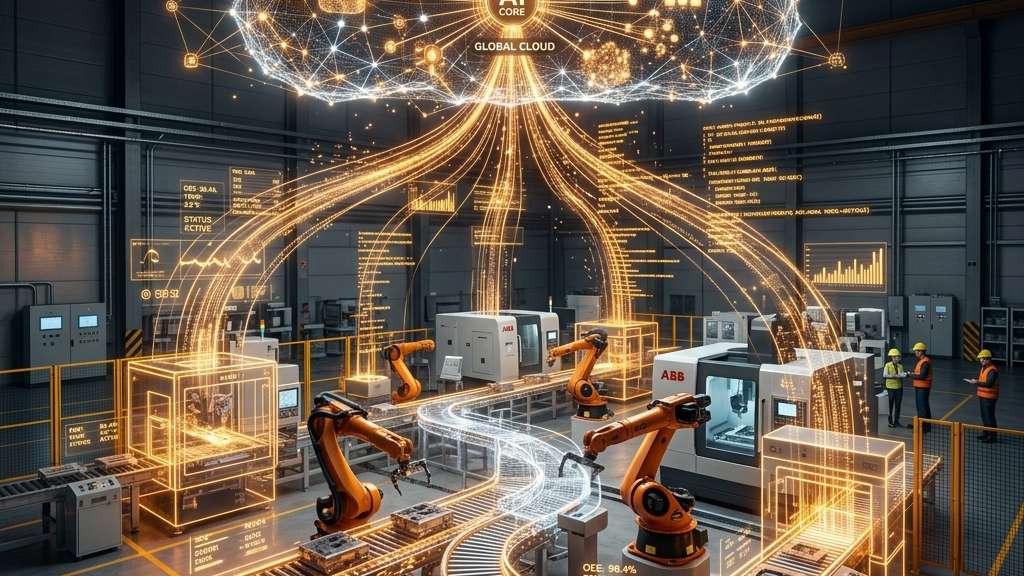
The combination of AI and ERP directly intervenes in every corner of the daily operational value chain, bringing outstanding values that have been proven by actual data:
- Demand forecasting and smart inventory management: Instead of forecasting based on intuition, AI analyzes complex factors from market trends and weather to seasonal consumer behavior. Research by Accenture shows that applying AI helps businesses reduce inventory costs by up to 30%, optimizing capital-tied inventory while ensuring no stock shortages.
- Closed-loop Automation: Thanks to autonomous mechanisms, the system doesn’t just stop at issuing warnings but automatically executes tasks such as advanced production scheduling (APS), material requirements planning (MRP), and automatically generating purchase documents. In equipment management, McKinsey & Company estimates that Predictive Maintenance models can reduce maintenance costs by 10-40% and cut production line downtime by up to 50%.
- Risk management and real-time monitoring: AI combined with IoT and GPS technology enables continuous monitoring of cargo status or equipment performance. Upon detecting abnormal signs (such as a change in cold storage temperature or an impending machine breakdown), the system proactively issues early warnings, saving significant time for inventory checking and troubleshooting.
- Smart Accounting and Finance: Automating bank reconciliation and electronic invoice processing helps reduce the monthly financial closing time by 40%, delivering absolute accuracy for management reports and saving millions of dollars in annual operating costs, according to a Deloitte report.
4. Practical Challenges When Implementing AI ERP Integration
Despite bringing immense potential, the journey of bringing AI into ERP systems is not always smooth and requires businesses to face several core barriers:
- Fragmented and poor-quality data: According to warnings from IBM, poor data quality causes an estimated loss of $3.1 trillion annually worldwide. AI cannot operate effectively if “fed” with garbage, inconsistent data across departments.
- Financial pressure and initial investment costs: Building infrastructure, purchasing AI-integrated software licenses, and training experts demand a large budget. Gartner once warned that major technology projects could exceed their initial budgets by up to 178% lacking a rigorous governance roadmap.
- Cultural resistance to change: Long-standing personnel are often apprehensive about new technology, fearing replacement or lacking operational skills. Research by Prosci shows that projects lacking Change Management are 6 times more likely to fail.
- Information security risks: Centralizing all operational and customer data onto a smart system requires extremely strict cybersecurity standards to prevent data leakage risks or cyberattacks.
5. Strategies and Solutions to Overcome Technological Barriers
To successfully turn AI ERP integration into reality, businesses need to apply a methodical and scientific implementation methodology:
- Comprehensive data digitization and standardization: Before integrating AI, businesses must prioritize digitizing manual processes, establishing a centralized database system, and conducting periodic data cleansing to ensure the AI model learns accurately.
- Phased Rollout Implementation: Start with modules that bring quick and easily measurable results, such as transportation route optimization, basic demand forecasting, or closed-loop purchasing process automation. Only then expand to more complex modules.
- Investing in human development and corporate culture: Organize internal training programs to help employees clearly understand how to use new technology, building a culture of data-driven decision-making.
- Establishing strict security policies: Apply advanced data encryption standards and tightly control access rights based on role-based authorization to absolutely protect the organization’s information assets.
6. Practical Capacity and Experience from the Implementation Unit InfoAsia
Applying artificial intelligence technology to ERP systems requires a consulting unit with strategic vision, profoundly understanding both the technological structure and the actual operational processes of the business.
- Extensive experience and a solid foundation: InfoAsia (established in 2016) is a member company under Cadmen Taiwan—a technology group developing since 1980 and firmly holding the exclusive Gold Partner position of SAP in the region. With a team of highly experienced technical experts, InfoAsia specializes in consulting, configuring, and deploying SAP ERP, MES systems, and smart integrated solutions.
- Marking a footprint through large-scale projects: InfoAsia has affirmed its capabilities through the successful implementation of ERP systems and factory digitization solutions combined with IoT for many large industrial parks and global corporations in Vietnam as well as the region (such as automation projects for the international shoe brand New Balance, FVIV factory, Buwon Industry, Shini Group, etc.).
- Smart localized solutions: InfoAsia’s outstanding strength is the ability to integrate advanced technology into standard international SAP systems, seamlessly combining with Vietnamese Accounting Standards (VAS), helping businesses both catch up with the global AI trend and strictly comply with the domestic legal corridor.

7. Frequently Asked Questions (FAQs) About AI ERP Integration
Q1: Do small and medium-sized enterprises (SMEs) really need to invest in AI ERP integration right now?
Answer: It is absolutely necessary if a business wants to break through its operational speed ahead of competitors. Today’s modern solutions allow SMEs to start from basic AI-integrated modules (like inventory forecasting, document automation) without requiring massive initial costs.
Q2: How does the Closed-loop AI mechanism actually work in ERP?
Answer: Instead of just displaying warning charts for humans to read and process manually, Closed-loop AI allows the system to automate the entire chain of actions: automatically analyzing inventory data ➔ automatically identifying reorder points ➔ automatically generating purchase requisitions ➔ automatically submitting for approval to the management level without manual human intervention at intermediate steps, saving maximum time.
Q3: What is the average time to deploy an AI-integrated ERP system?
Answer: It depends on the size of the business and the readiness of the data. For SMEs, the standard roadmap usually lasts from 3 to 6 months. For large manufacturing corporations, the time can range from 9 to 18 months.
Q4: Will a company’s data be leaked when using AI models on Cloud platforms?
Answer: No. Reputable solution providers like InfoAsia always comply with strict international security standards (such as ISO 27001, SOC 2), using multi-layered data encryption systems and tight access authorization to ensure internal information is always absolutely safe.
Q5: How does InfoAsia provide support after the AI-integrated ERP system officially goes live?
Answer: InfoAsia’s team of experts will be on standby for 24/7 technical support during the initial Go-live phase, closely monitoring the accuracy of AI models, periodically tuning system performance, and accompanying upgrade expansions in line with the business’s growth.
8. Conclusion
AI ERP integration is not just a passing technology fad, but a strategic key reshaping a business’s competitive capacity in the digital era. Although the transformation journey requires careful preparation in terms of data and resources, the long-term values of cost optimization, closed-loop automation, and decision-making speed are absolutely worth every investment.
If your business is looking for a smart transformation roadmap and an experienced practical companion, contact InfoAsia today to be consulted on the most advanced technology solutions tailored to your operational model.

InfoAsia Việt Nam trở thành nhà cung cấp dịch vụ phần mềm số hóa nhà máy sản xuất cho thương hiệu giày hàng đầu thế giới NEW BALANCE
Công ty TNHH Mây Tre Hà Linh
SAP ERP MES and IOT Project for FVIV Factor
Buwon Industry Co, Ltd
KANGLONGDA VIETNAM PROTECTION TECHNOLOGY COMPANY LIMITED
Shini Group
TA TING PLASTIC (HAI DUONG ) CO., LTD
CÔNG TY TNHH MTV BIÊN HOA SCM